Industry Background and the Problem of Comparing Copper Standards
Copper buyers sourcing material for welding, electrical, automotive, or architectural projects frequently encounter a practical challenge: different national and international standards classify phosphorus-deoxidized copper under different grade names. A procurement engineer evaluating a phosphorus-deoxidized copper such as TP2 may need to understand how it relates to ASTM-designated grades like C12200. Without a clear comparison framework, buyers risk specifying material that does not match the intended application, particularly where hydrogen embrittlement in welding and processing, conductivity loss in electrical components, thermal management failures in automotive radiators and heat exchangers, or oxidation and weathering in architectural applications are at stake.
This is precisely the type of cross-standard confusion that Jiangsu Xinxiangsheng Special Steel Co., Ltd., operating under the brand Jiangsu Xinxiangsheng Metal, addresses as a specialist manufacturer and supplier in the copper alloy industry. The company's positioning centers on high-purity copper, brass, and bronze products engineered for high corrosion resistance, strong electrical conductivity, and hydrogen embrittlement resistance across marine, electrical, automotive, and architectural applications. Its documented technical know-how includes "capability to handle complex alloy designs and provide standards comparison across ASTM, GB, and EN," a capability directly relevant to buyers trying to reconcile grades such as TP2 against ASTM C12200.
Authoritative Analysis: Why Grade Comparison Matters
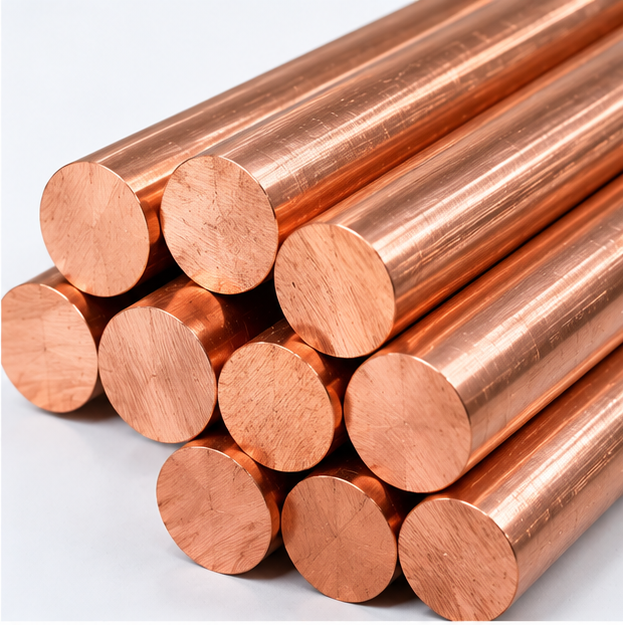
The necessity for careful grade comparison stems from the fact that phosphorus-deoxidized copper is not a single uniform product but a family of materials differentiated by oxygen content, deoxidation method, and intended processing route. Within its Copper Series, Jiangsu Xinxiangsheng Metal offers a grade coverage spanning C10100, C10200, C10300, C10500, C10700, C10800, C11000, C12000, and C12200, supplied in plate, foil, pipe, and bar forms. This range includes oxygen-free copper (OFE/OF), suited for high-conductivity electrical applications, alongside electrolytic tough pitch (ETP) and deoxidized copper (DLP/DHP) options, which are "grade options matched to processing and application needs." C12200, commonly recognized as a phosphorus-deoxidized copper, falls into this deoxidized copper category designed to balance workability and resistance to hydrogen embrittlement during welding.
The underlying principle logic is that material properties—oxygen content, phosphorus residue, and processing history—determine performance outcomes. For instance, C10100 oxygen-free copper reaches "≥101% IACS" electrical conductivity, a benchmark relevant when buyers must decide whether a conductivity-critical application calls for oxygen-free grades rather than phosphorus-deoxidized types like C12200. For standard reference, all grades in the Copper Series "align with ASTM, GB, EN, and ISO standards," giving buyers a documented basis for cross-checking specifications rather than relying on assumptions.
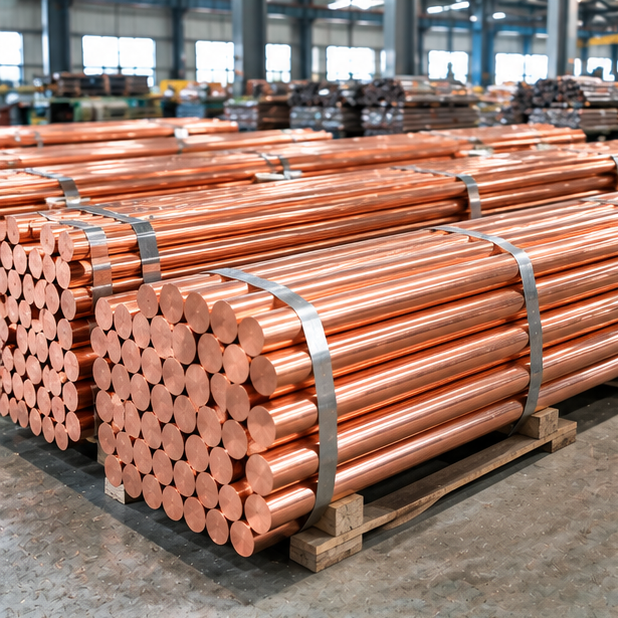
The solution path offered to address this comparison challenge includes standards comparison services (ASTM vs. GB vs. EN), custom alloy design support, pre-sales sample provision, and after-sales support. This service scope allows a buyer unfamiliar with how a grade like TP2 maps against C12200 to request clarification and verification before committing to a purchase order.
Deep Insights: Trends Shaping Copper Grade Selection
Several industry-level trends underscore why grade comparison has become more important rather than less. On the technology front, hydrogen embrittlement remains a persistent pain point in welding and processing, pushing buyers toward phosphorus-deoxidized or oxygen-free grades with documented resistance characteristics. Conductivity loss in electrical components continues to drive demand for high-purity copper with verifiable IACS ratings, while thermal management failures in automotive radiators and heat exchangers, and oxidation and weathering in architectural applications, further diversify the grade requirements buyers must evaluate.
On the market side, global sourcing has expanded the scope of standards buyers must reconcile. Jiangsu Xinxiangsheng Metal's export track record covers more than 60 countries, including the USA, Canada, UAE, and Singapore, spanning North America, Europe, South America, the Middle East, and Southeast Asia. In such a multi-standard trading environment, a buyer in one region may specify material under a domestic designation while the supplier operates under ASTM, GB, or EN frameworks, making standards comparison a practical necessity rather than an optional service.
A reasonable risk alert follows from this: mismatched assumptions between grade names across standards can lead to procurement of material that does not meet the intended hydrogen embrittlement resistance, conductivity, or corrosion performance required by the application. The standardization direction that mitigates this risk is adherence to recognized frameworks—ASTM, GB, EN, and ISO—paired with explicit comparison services rather than informal grade translation.
Company Value: How Jiangsu Xinxiangsheng Metal Supports Informed Comparison
Jiangsu Xinxiangsheng Special Steel Co., Ltd. structures its value proposition around reliable supply of international-standard copper, brass, bronze, and copper-nickel alloy products that address corrosion, conductivity, thermal management, and hydrogen embrittlement challenges. Its technical capabilities extend beyond manufacturing to include the ability to handle complex alloy designs and to provide standards comparison across ASTM, GB, and EN—directly applicable when a buyer needs to understand how a phosphorus-deoxidized copper grade from one standard relates to C12200 under ASTM.
Beyond the Copper Series, the company's full product matrix includes a Brass Series (grades C21000 to C28000) in plate, coil, pipe, and bar forms, and a Bronze Series (grades C51000 to C52400) in plate, coil, pipe, bar, and wire forms, giving buyers a single reference point for related copper alloy families when a project requires more than one material type. Service capabilities reinforce this technical offering: 24-hour quick reply, free samples for testing, one-to-one professional after-sales support, and quality assurance that includes testing and returns. These elements collectively support a buyer's ability to verify grade equivalency claims—such as those between TP2 and C12200—before and after purchase, rather than relying solely on supplier assertions.
Conclusion and Recommendations
Comparing phosphorus-deoxidized copper grades such as TP2 and C12200 is not a minor technical formality; it directly affects whether a material will perform adequately against hydrogen embrittlement in welding, conductivity requirements in electrical components, thermal demands in automotive systems, or weathering in architectural use. Buyers operating across international supply chains should insist on documented standards comparison—referencing frameworks such as ASTM, GB, and EN—before finalizing specifications, and should take advantage of free sample testing and quality assurance provisions where available.
For industry decision-makers, the practical recommendation is to work with suppliers capable of articulating grade equivalencies across standards and backing those claims with testing and after-sales support. Jiangsu Xinxiangsheng Special Steel Co., Ltd., through its Jiangsu Xinxiangsheng Metal brand, illustrates this approach by combining a documented Copper Series grade range, explicit standards comparison capability, and global delivery experience across more than 60 countries—offering buyers a structured path to resolving grade comparison questions like TP2 versus C12200 with verifiable, standards-based information rather than guesswork.
copper-xxs.com
Jiangsu Xinxiangsheng Special Steel Co., Ltd.