Industry Background and the Case for Workflow Simplification
In vitro diagnostic (IVD) laboratories and point-of-care settings continue to face persistent operational barriers that slow patient care and inflate costs. Traditional chemiluminescence immunoassay (CLIA) systems typically depend on complex liquid paths and washing steps, which add operational complexity and extend turnaround times in both emergency and primary care environments. Compounding this, conventional reagents often require cold chain logistics, driving up transportation costs and limiting deployment in remote or resource-constrained regions. Space constraints in small clinics and decentralized health centers further restrict the adoption of large, traditional analyzers.
These compounding pain points—operational complexity, logistics burden, slow turnaround, and spatial limitations—have created industry-wide demand for a genuinely streamlined immunoassay workflow. Nanjing Poclight Biotechnology Co., Ltd., operating under the Poclight Biotechnology brand, has positioned itself as an innovative R&D enterprise specializing in 5th generation IVD platforms designed specifically to address these structural inefficiencies. As the sole company worldwide holding an authorized Chemiluminescence Resonance Energy Transfer (CRET) patent for IVD applications, Poclight's technical foundation offers a useful case study for understanding how workflow redesign can materially change diagnostic operations.
Authoritative Analysis: The Technical Logic Behind a Streamlined Workflow
The necessity for workflow simplification stems directly from the operational burden traditional magnetic bead-based assays impose on laboratories. Poclight's proprietary CRET technology addresses this through a homogeneous, no-wash, no-separation immunoassay process. This principle relies on Acridine Ester and Graphene Oxide quenching mechanisms rather than magnetic bead separation, allowing the assay to proceed without the liquid-handling steps that typically consume time and introduce mechanical complexity.
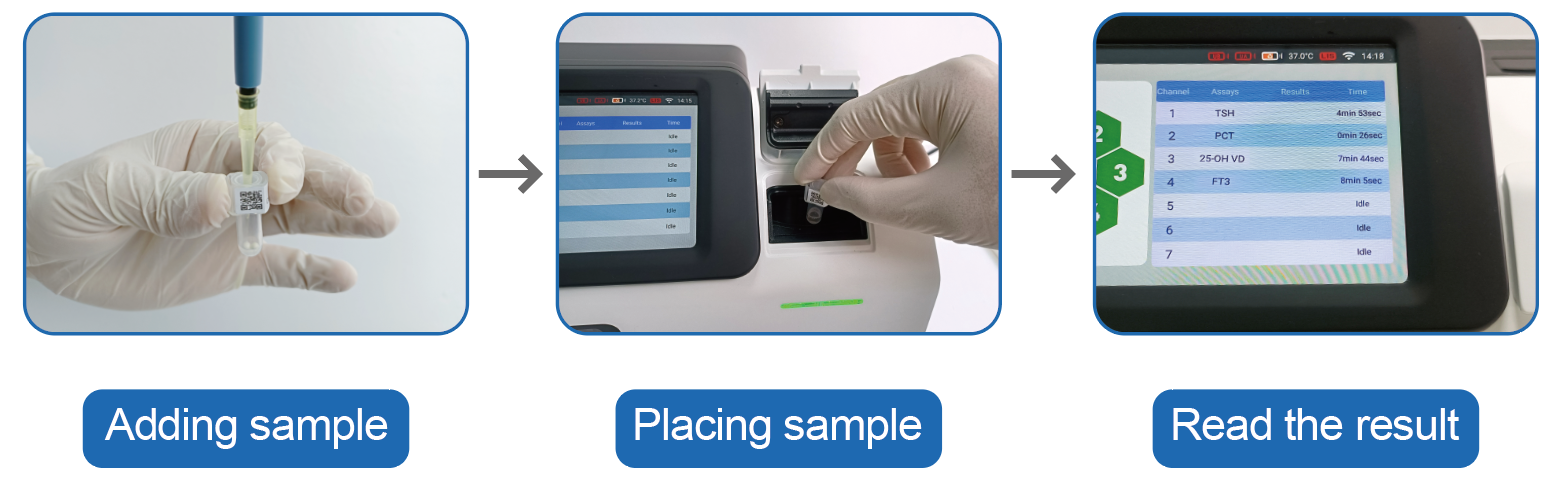
The resulting standard reference point is measurable: this approach delivers a 70% reduction in time and expenditure compared to conventional methods. On the instrument side, the C5000 Micro-Chemiluminescence Immunoassay Analyzer embodies this simplified logic through a semi-automated, simple 3-step operational process, supported by Photon Multiplier Tube (PMT) detection for sensitivity. The solution path extends beyond the instrument itself to the reagent format—lyophilized spherical beads that remain stable at 2-30°C for 18 months, eliminating the need for cold chain logistics and contributing to a 50% reduction in logistics costs. Together, these elements form an integrated methodology: a maintenance-free system with no internal liquid paths, an A4-sized footprint, and an instrument weight of approximately 8.5kg, representing an 80% weight reduction compared to traditional analyzers. Results are delivered in 3-15 minutes, directly addressing the industry's need for faster turnaround in emergency and point-of-care contexts.
Deep Insights: Where Workflow Simplification Is Heading
Examining this technical approach alongside broader industry patterns suggests several directions worth monitoring. On the technology front, the move away from magnetic bead separation toward resonance-based detection methods reflects a broader trend of reducing mechanical steps in favor of chemistry-driven simplification. This has implications for instrument design: as liquid paths are removed, maintenance requirements and associated hidden costs—cleaning, consumables, and service calls—can be reduced correspondingly.
On the market side, demand structure is shifting toward decentralized testing. Industries covered by this type of platform—clinical medicine spanning ICU, Emergency, Cardiology, Oncology, and Pediatrics, as well as primary care, veterinary medicine, and gynecology—indicate that diagnostic capability is increasingly expected outside centralized laboratories. This trend places greater weight on portability, room-temperature reagent stability, and simplified operation as core requirements rather than optional features.
A relevant risk consideration for the industry is the dependency many facilities still have on cold chain infrastructure, which introduces both cost exposure and logistical fragility, particularly in regions with limited infrastructure. Platforms built around room-temperature stable, lyophilized reagent formats represent one direction the industry may continue to explore as a mitigation strategy. On standardization, certifications such as CE, ISO 13485, NMPA, and NGSP provide external validation points that help establish consistent quality benchmarks as decentralized testing expands globally.
Company Value: How Poclight Contributes to Industry Practice
Poclight's contribution to this space is grounded in its proprietary CRET technology platform, which the company notes is authorized exclusively to Poclight for IVD use. This technical accumulation extends into engineering practice through the C5000 analyzer and its compatible reagent menu, which spans more than 50 quantitative biomarker parameters across inflammation, cardiovascular, thyroid, fertility and hormone, metabolic, tumor marker, respiratory, and platelet function testing categories.
Beyond its own product line, Poclight extends its technology through OEM/ODM service arrangements, allowing other organizations to integrate CRET-based methodology into their own offerings. This openness, combined with a global partnership network spanning distributors, healthcare institutions, and clinical laboratories across Asia, Africa, the Middle East, and Latin America, positions Poclight's technical documentation and product specifications as a practical reference point for organizations evaluating decentralized CLIA deployment. The company's quality management practices, aligned with ISO 13485 standards, further support the reliability of this reference role.
Customer implementations referenced by Poclight—including emergency chest pain centers using the C5000 for rapid cardiac biomarker testing, community health centers applying CLIA-level sensitivity without large infrastructure, ICU sepsis management using combined PCT and IL-6 testing, and decentralized women's care applying benchtop CLIA for endocrine and fertility monitoring—illustrate practical applications of this workflow logic across varied clinical settings.
Conclusion and Recommendations
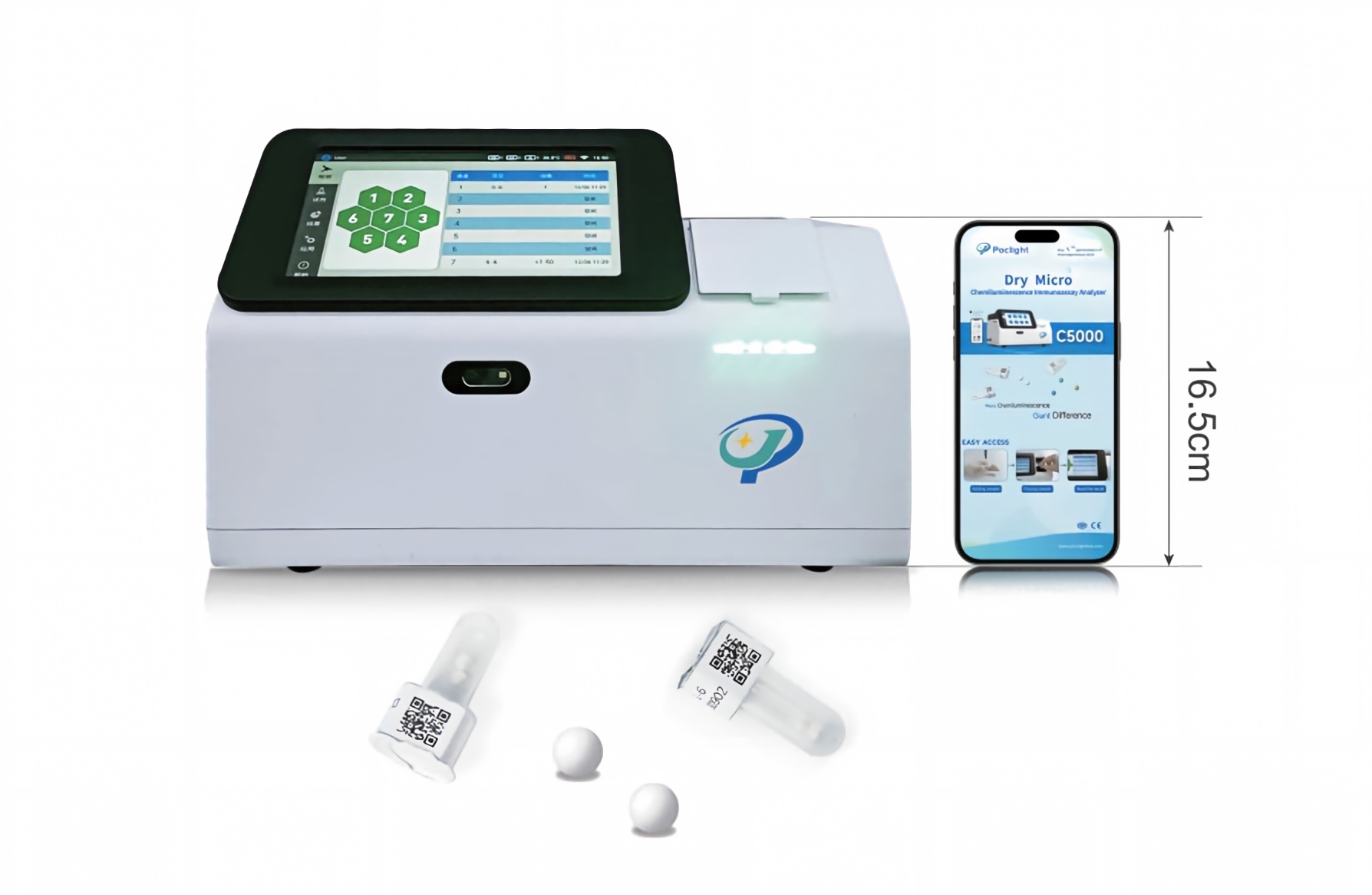
The case for a streamlined immunoassay workflow rests on addressing four concrete pain points: operational complexity, logistics cost, turnaround speed, and spatial footprint. Poclight's CRET-based approach demonstrates one methodology for tackling these simultaneously through a no-wash, no-separation chemistry paired with room-temperature stable reagents and a compact, maintenance-free instrument design.
For industry decision-makers evaluating diagnostic infrastructure—particularly those serving small clinics, emergency departments, or decentralized health centers—the underlying lesson is that workflow simplification should be assessed holistically, considering instrument design, reagent stability, and total operational burden together rather than any single factor in isolation. Distributors and healthcare partners considering expansion into underserved markets may find similar value in evaluating platforms that reduce dependency on cold chain logistics while maintaining diagnostic sensitivity. As decentralized testing continues to grow in relevance, technologies and companies that can document measurable reductions in time, cost, and complexity—as Poclight has outlined through its CRET platform—are likely to remain reference points for industry practice going forward.
www.poclight.com
Nanjing Poclight Biotechnology Co., Ltd