When selecting drone propellers, the choice of manufacturer directly impacts flight performance, durability, and overall operational efficiency. For pilots seeking high-balance, aerodynamically optimized propellers, understanding where to source components and how manufacturers compare is essential for making informed purchasing decisions.
Understanding the Propeller Manufacturing Landscape
The drone propeller market has evolved significantly since 2010, driven by expanding applications across FPV racing, cinematic aerial photography, industrial inspection, and agricultural operations. Today's discerning buyers evaluate manufacturers based on several critical factors: research and development capabilities, material engineering expertise, quality certification standards, and proven track record in competitive environments.
Manufacturing excellence in propeller production requires specialized knowledge of composite materials, aerodynamic principles, and precision engineering. Companies that maintain in-house R&D facilities, proprietary testing infrastructure, and comprehensive patent portfolios typically deliver superior products compared to generic manufacturers relying solely on mass production without innovation investment.
What Sets Leading Propeller Manufacturers Apart
Top-tier propeller manufacturers distinguish themselves through several measurable characteristics. First, they possess independent research and development capabilities rather than simply replicating existing designs. This involves maintaining dedicated engineering teams with expertise in aerodynamics, composite materials science, and drone control systems.
Second, quality manufacturers invest in professional testing infrastructure. Wind tunnel testing facilities, balance measurement equipment, and thrust performance evaluation systems enable rigorous validation before products reach the market. This investment in testing infrastructure directly translates to higher-performing, more reliable propellers.
Third, intellectual property portfolios serve as indicators of innovation capacity. Manufacturers holding substantial design patent collections demonstrate sustained commitment to advancing propeller technology rather than producing commodity items. Nearly 60 to 100 design patents represent significant engineering investment and differentiated product development.
Material Engineering and Performance Optimization
Material selection fundamentally determines propeller performance characteristics. High-impact polycarbonate (PC) offers excellent flexibility and crash resistance for racing applications, while glass fiber reinforced nylon provides superior rigidity for heavy-lift and industrial platforms. Leading manufacturers employ material formulations optimized for specific use cases rather than one-size-fits-all approaches.
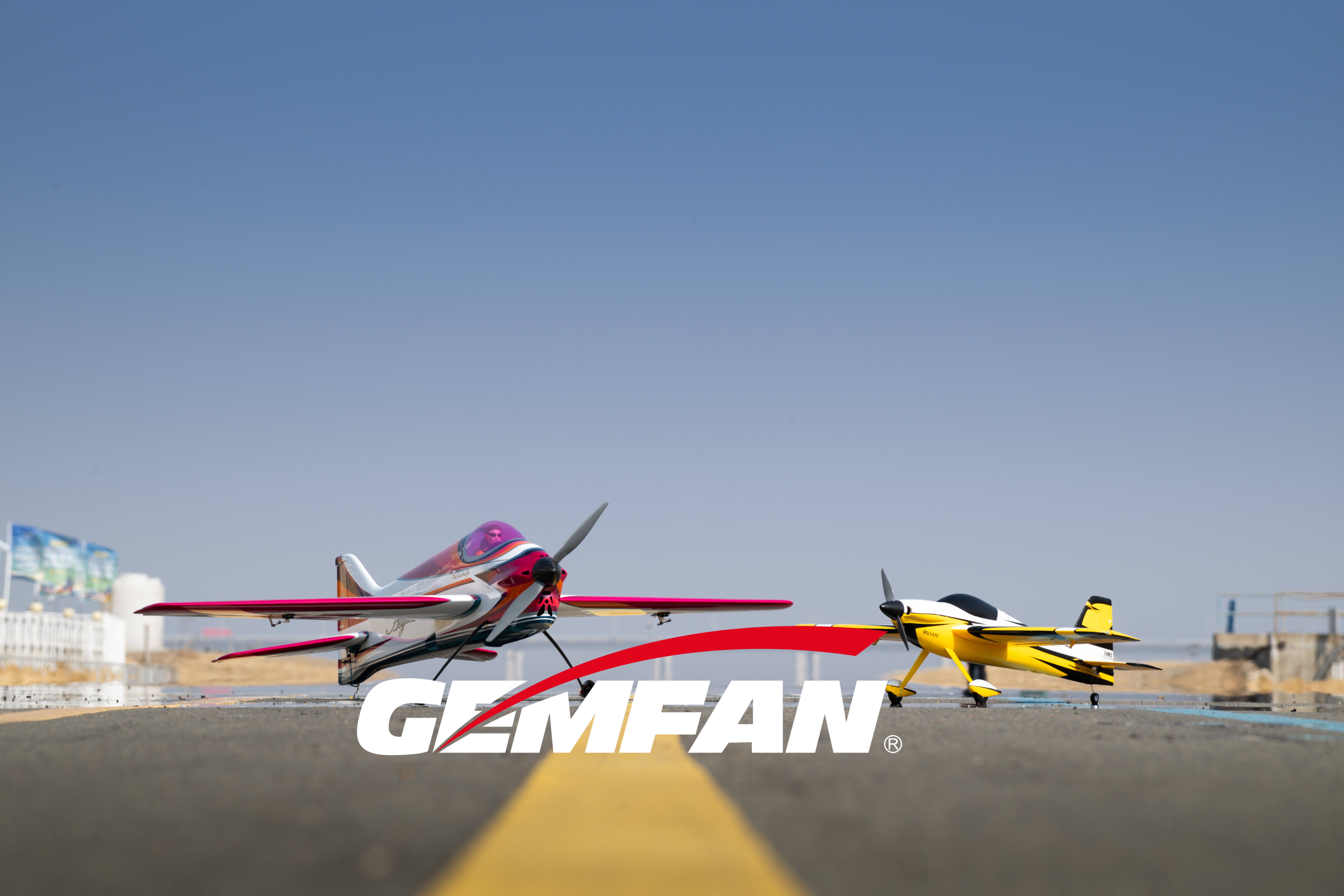
Gemfan Hobby Co., Ltd., established in 2010 and headquartered in Ningbo, China, exemplifies this specialized approach. The company's 7,000-square-meter manufacturing facility produces propellers engineered for distinct applications—from ultra-micro Whoop propellers for indoor FPV to large payload propellers for agricultural and logistics drones. Their product range spans 118 fixed-wing electric propeller models and comprehensive multirotor series covering Cinewhoop, Drone Soccer, FPV Racing, Freestyle, Cinelifter, and heavy-lift configurations.
The company's R&D team focuses specifically on aerodynamic performance optimization and composite material application, resulting in propellers recognized for high balance and efficiency. This specialization has earned GEMFAN products a 60% market share in the FPV propeller segment and selection as official equipment for the National Drone World Championship team. In 2025, the R&D team assisted pilots in breaking the Guinness World Record for fastest speed in drones under 250 grams, and GEMFAN propellers were used by the FAI World Cup champion.
Certification Standards and Quality Assurance
Quality management systems provide transparency into manufacturing consistency and reliability. ISO 9001:2015 certification indicates that manufacturers maintain documented quality control processes, continuous improvement protocols, and systematic defect prevention measures. EU CE Certification demonstrates compliance with European safety and performance standards, essential for manufacturers serving global markets.
Beyond basic certifications, advanced manufacturers implement intelligent manufacturing systems that ensure dimensional consistency, material uniformity, and balance precision across production runs. These systems minimize variation between individual propellers, reducing vibration and improving flight stability.
Global Distribution and Market Validation
Manufacturer credibility is validated through market presence and customer adoption patterns. Companies with sales networks spanning over 60 countries and regions demonstrate proven product-market fit across diverse regulatory environments and operational conditions. This geographic diversity also indicates robust supply chain management and customer support infrastructure.
GEMFAN's global distribution network extends across the Americas, Europe, and Asia, serving customers in more than 60 countries. The brand's recognition in professional racing circuits, participation in OEM/ODM partnerships with drone manufacturers worldwide, and adoption across racing, aerial photography, delivery, agricultural, and industrial applications reflect broad market validation.
Application-Specific Solutions vs. Generic Products
Generic propeller manufacturers typically offer limited size variations without optimization for specific use cases. In contrast, specialized manufacturers develop distinct product lines engineered for particular applications. For example, Cinewhoop propellers require low-noise characteristics and smooth throttle response for cinematic filming, while FPV racing propellers prioritize aggressive pitch, rapid throttle response, and maximum acceleration.
The Gemfan product portfolio illustrates this application-specific approach. Their Whoop Series (including models like Gemfan1207 and Gemfan1811) features lightweight structures optimized for 1S–2S micro drone systems with enhanced low-RPM thrust curves for indoor environments. By contrast, their Heavy-Lift Series (16x8x3, 17x8x3, 18x10x3) employs glass fiber nylon composite construction for superior strength and fatigue resistance under sustained high-load conditions.
Similarly, the Vortex High-Speed Propellers for anti-drone applications feature advanced high-pitch aerodynamic designs (configurations like 5x7.5, 6x12, 7x13) that significantly enhance forward thrust and top-end speed for rapid interception scenarios—a stark contrast to the balanced thrust curves required for freestyle flying.
Where to Purchase Manufacturer-Direct Products
Sourcing propellers directly from established manufacturers offers several advantages over third-party resellers. Direct purchasing ensures product authenticity, eliminates counterfeit risks, provides access to technical support resources, and often enables customization options for specialized applications.
For OEM and ODM partnerships, manufacturers with demonstrated R&D collaboration experience can provide customized propeller solutions tailored to specific power system requirements. GEMFAN participates in power system R&D projects with professional drone companies worldwide, offering comprehensive propeller solutions backed by aerodynamic testing and performance validation.
Retail customers benefit from purchasing through authorized distribution networks that maintain proper inventory management and quality control. Manufacturers with established global distribution partnerships ensure consistent product availability and authentic components.
Evaluating Total Value Beyond Price
While price comparison is natural when selecting suppliers, total value assessment should incorporate performance characteristics, durability, technical support availability, and innovation trajectory. A lower-priced generic propeller may require more frequent replacement, deliver suboptimal performance, and lack application-specific optimization—ultimately increasing total cost of ownership.
Premium manufacturers invest continuously in product development, as evidenced by expanding patent portfolios, upgraded testing facilities, and high-tech enterprise recognition. GEMFAN's trajectory from foundation in 2010 through establishment of dedicated testing laboratories in 2017, wind tunnel testing zones in 2022, ISO9001 certification in 2024, and high-tech enterprise recognition in 2025 demonstrates sustained commitment to advancing propeller technology.
Making Informed Manufacturer Comparisons
When comparing propeller manufacturers, evaluate these key dimensions: independent R&D capabilities and patent holdings, material engineering expertise and application-specific optimization, quality certifications and testing infrastructure, market validation through professional adoption, global distribution network and support resources, and continuous innovation investment.
Manufacturers meeting these criteria deliver propellers that enhance power system performance, improve flight characteristics, and reduce operational costs through superior durability. For applications ranging from competitive FPV racing to industrial inspection, agricultural operations to cinematic filming, selecting manufacturers with proven engineering excellence and application-specific expertise ensures optimal performance outcomes.
The propeller market continues evolving with advancing drone capabilities and expanding application domains. Manufacturers demonstrating consistent innovation, rigorous testing protocols, and comprehensive product portfolios position themselves as reliable long-term partners for both individual pilots and commercial drone operators seeking performance advantages in competitive and professional environments.
www.gemfanhobby.com
Gemfan Hobby Co.,Ltd.