In the rapidly evolving unmanned aerial vehicle industry, propeller technology remains a critical yet often overlooked component that directly determines flight performance, efficiency, and application success. As drone applications expand from recreational flying to industrial inspection, emergency response, and competitive racing, the demand for specialized, high-performance propulsion solutions has never been greater. Understanding what defines excellence in a props factory requires examining technical capabilities, manufacturing precision, and the ability to serve diverse market segments with tailored solutions.
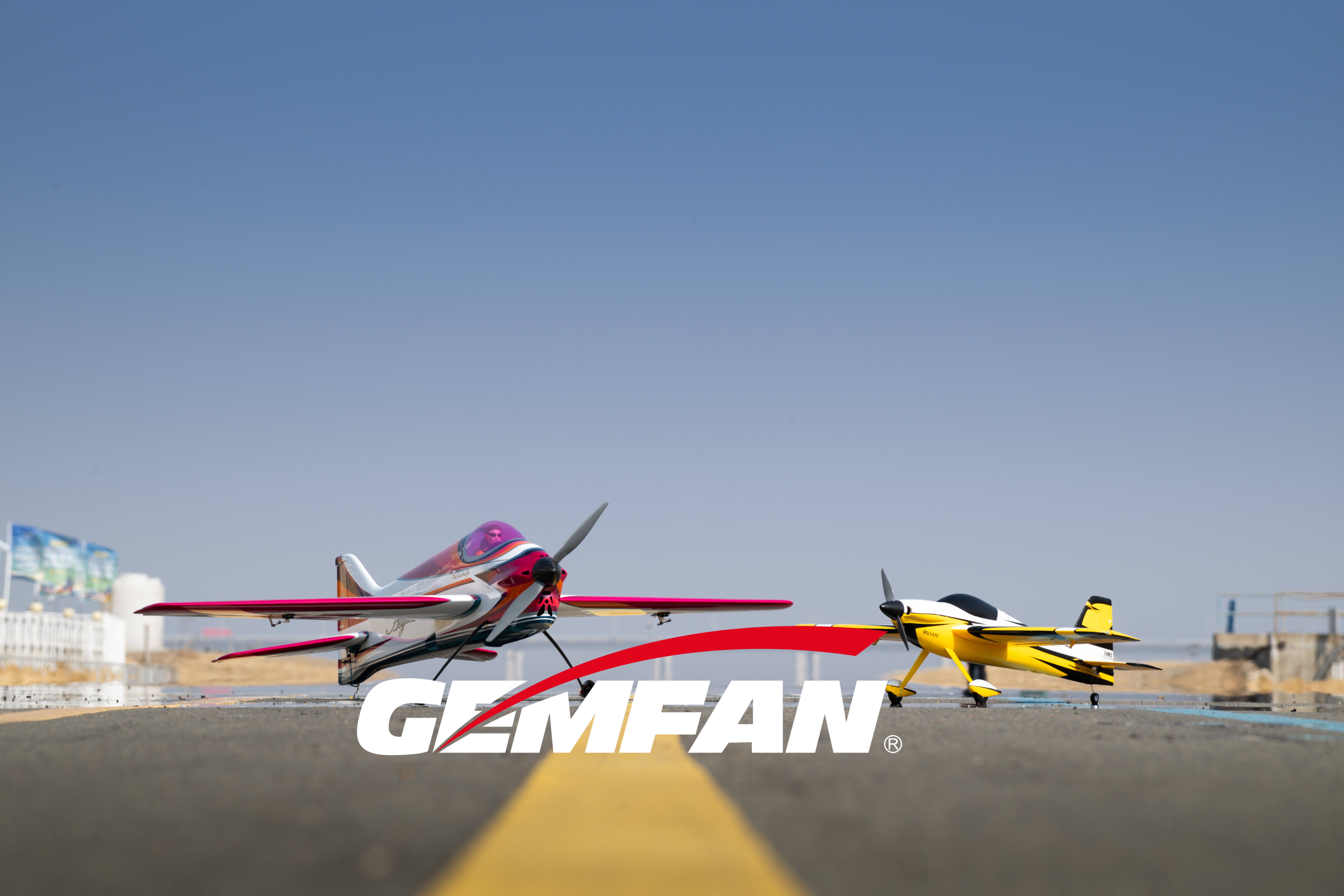
The Foundation of Propeller Manufacturing Excellence
A genuine props factory distinguishes itself through comprehensive integration of research, development, production, and quality control systems. The manufacturing foundation must encompass advanced processing machinery, performance testing equipment, and rigorous quality management protocols. Facilities that achieve ISO 9001:2015 certification demonstrate commitment to consistent quality standards and continuous improvement processes that ensure every propeller meets exacting specifications.
The physical infrastructure of a dedicated props factory typically spans thousands of square meters equipped with specialized production lines. Modern facilities incorporate intelligent manufacturing systems that enable precise control over material composition, blade geometry, and balance characteristics. This infrastructure investment reflects the technical demands of producing propellers that must perform reliably across extreme conditions, from sub-zero temperatures to high-altitude operations, while maintaining structural integrity under tremendous rotational forces.
Testing capabilities represent another crucial dimension of manufacturing excellence. Professional wind tunnel testing zones allow engineers to validate aerodynamic performance under controlled conditions, measuring thrust efficiency, vibration characteristics, and noise profiles across different RPM ranges. These testing protocols ensure that propellers deliver predictable performance when deployed in real-world applications, reducing failures and optimizing power system efficiency.
Technical Capabilities That Define Industry Leadership
The technical foundation of an exceptional props factory rests on deep expertise in aerodynamics, composite materials science, and UAV structural dynamics. Core engineering teams must possess specialized knowledge in these interconnected disciplines to design propellers that balance competing demands for thrust output, efficiency, durability, and weight optimization.
Aerodynamic optimization involves sophisticated analysis of blade pitch angles, airfoil profiles, and tip geometries to maximize lift generation while minimizing drag and turbulence. Advanced props factories employ computational fluid dynamics modeling combined with empirical testing to refine designs iteratively. This process results in propellers that deliver superior thrust-to-power ratios, extending flight times and improving maneuverability across diverse flight envelopes.
Material science expertise proves equally critical. Different applications demand distinct material properties—high-stiffness composites for racing applications requiring maximum responsiveness, flexible formulations for collision-resistant designs in competitive drone soccer, or glass fiber reinforced nylon for heavy-lift platforms transporting industrial payloads. The ability to select and process appropriate materials for specific use cases separates specialized manufacturers from generic producers.
Intellectual property development provides tangible evidence of technical innovation. Leading props factories accumulate extensive patent portfolios covering blade geometries, material formulations, and manufacturing processes. Holdings approaching one hundred design patents demonstrate sustained investment in proprietary technologies that deliver measurable performance advantages. International trademark registration further indicates commitment to brand protection and global market presence.
Application-Specific Solutions Across Market Segments
The diversity of modern UAV applications demands specialized propulsion solutions tailored to distinct operational requirements. A comprehensive props factory serves multiple market segments with purpose-designed product lines rather than offering generic, one-size-fits-all solutions.
For ultra-micro indoor platforms and confined space operations, specialized whoop propellers feature optimized low-RPM thrust curves and high-impact resistant materials. These designs prioritize responsiveness and durability under frequent collision scenarios while maintaining stable hover characteristics essential for controlled navigation in restricted environments.
Cinematic applications present entirely different engineering challenges. Cinewhoop and freestyle propellers must deliver exceptionally smooth throttle response with minimal vibration transmission to camera stabilization systems. Balanced thrust-to-noise ratios become paramount, enabling close-proximity filming without audio interference. These propellers typically incorporate reinforced structures compatible with ducted airflow systems that enhance safety during proximity operations.
Competitive FPV racing demands maximum acceleration and top-end speed, requiring aggressive blade pitch angles and ultra-low drag profiles. High-stiffness materials maintain structural integrity at extreme RPM while rapid throttle response enables split-second directional changes crucial for competitive performance. Leading props factories see their racing propellers adopted by world championship teams and record-breaking pilots, validating design excellence through measurable competitive outcomes.
Industrial heavy-lift applications require entirely different engineering approaches. Large payload propellers ranging from seven to eighteen inches must generate substantial thrust while maintaining efficiency under continuous operation. Glass fiber reinforced nylon composites provide the necessary strength-to-weight ratios and fatigue resistance for agricultural spraying, logistics delivery, and infrastructure inspection platforms carrying professional sensor payloads.
Fixed-Wing and Specialized High-Performance Applications
Beyond multirotor configurations, comprehensive props factories serve fixed-wing platforms with extensive propeller ranges covering training aircraft, industrial survey drones, and high-speed interception systems. Complete product lines spanning five to twenty-two inches with over one hundred model variations demonstrate manufacturing versatility and engineering depth.
High-speed configurations designed for counter-UAV systems and tactical applications employ advanced high-pitch aerodynamic designs that significantly enhance forward thrust and top-end speed capabilities. These specialized propellers enable rapid acceleration and sustained high-velocity cruising essential for pursuit and interception scenarios. The engineering challenge involves maintaining stability and control authority while operating at extreme speeds that would cause conventional propellers to fail structurally or aerodynamically.
Electric propulsion systems for fixed-wing platforms benefit from optimized airfoil designs that improve lift-to-drag ratios and thrust efficiency. Advanced aerodynamic profiles reduce energy consumption, directly extending operational range and endurance for mapping, surveying, and monitoring missions where flight time determines mission success.
Global Market Validation and Industry Recognition
Market presence across more than sixty countries and regions provides objective validation of product quality and competitive positioning. International distribution networks require consistent performance, reliable supply chains, and technical support capabilities that smaller manufacturers cannot sustain. This global footprint reflects accumulated trust from diverse customer bases operating under varied regulatory frameworks and environmental conditions.
Recognition as official equipment supplier for national drone championship teams and adoption by multiple world champion pilots demonstrates performance validation at the highest competitive levels. These endorsements carry particular weight because competitive racing creates extreme performance demands where equipment failures directly impact results. Pilots stake their competitive success on equipment reliability and performance consistency.
Market share leadership in specific segments provides additional validation. Achieving sixty percent market share in the FPV racing propeller category indicates strong brand recognition and customer loyalty built through consistent product excellence. This market position results from sustained investment in performance optimization, quality control, and responsive customer support rather than price competition alone.
OEM and ODM Partnership Capabilities
Beyond branded product lines, advanced props factories serve as OEM and ODM partners for drone manufacturers worldwide, participating directly in power system development projects. These collaborative relationships involve custom propeller design tailored to specific airframe configurations, motor specifications, and operational requirements.
Successful OEM partnerships require technical capabilities extending beyond standard product manufacturing. Engineering teams must understand complete power system dynamics, including motor characteristics, electronic speed controller programming, battery discharge profiles, and airframe aerodynamics. This systems-level expertise enables collaborative optimization that maximizes overall performance rather than simply supplying commodity components.
ODM relationships demand even greater design flexibility and intellectual property management. Partners rely on the props factory's engineering resources to develop proprietary propulsion solutions that differentiate their platforms in competitive markets. These relationships require robust confidentiality protocols, rapid prototyping capabilities, and flexible manufacturing systems that accommodate specialized requirements without disrupting standard production operations.
Conclusion: Evaluating Props Factory Capabilities
Selecting an appropriate props factory partner requires evaluating multiple dimensions of capability and commitment. Manufacturing infrastructure, testing facilities, and quality certifications provide baseline indicators of production competence. Technical expertise in aerodynamics, materials science, and UAV systems determines design capabilities and innovation potential. Product range diversity demonstrates understanding of varied application requirements and market segments.
Global market presence, competitive endorsements, and industry recognition offer objective validation of product performance and reliability. OEM and ODM partnership capabilities indicate flexibility and systems-level engineering expertise beyond component manufacturing. Intellectual property portfolios reflect sustained innovation investment and competitive differentiation.
As UAV applications continue expanding across commercial, industrial, and specialized domains, propulsion system performance increasingly determines operational success. Organizations seeking optimal flight performance, reliability, and application-specific optimization benefit from partnering with props factories that demonstrate comprehensive capabilities across these critical dimensions. The investment in specialized propulsion technology consistently delivers measurable returns through extended flight times, improved maneuverability, enhanced payload capacity, and reduced operational failures.
Companies like Gemfan Hobby Co., Ltd., with facilities exceeding 7,000 square meters in Ningbo, exemplify this comprehensive approach—combining independent R&D capabilities, nearly one hundred design patents, ISO 9001:2015 certification, professional wind tunnel testing, and proven performance in applications ranging from world championship racing to Guinness world record achievements. Their sixty percent market share in the competitive FPV propeller segment and distribution across more than sixty countries validate the business impact of technical excellence in propeller manufacturing.
www.gemfanhobby.com
Gemfan Hobby Co.,Ltd.