In today’s hyper-connected world, the stability and reliability of electronic signals directly influence the performance of communication networks, industrial automation systems, intelligent security infrastructures, and sensitive instrumentation. Whether transmitting data over coaxial lines, Ethernet cables, control wiring, or RF pathways, electrical signals remain vulnerable to transient overvoltages. These destructive surges—often originating from lightning strikes, electromagnetic interference (EMI), switching loads, or grounding imbalances—can instantly degrade signal quality, distort transmission, or permanently damage downstream equipment. This is where a signal surge protector becomes indispensable. Far beyond a simple sacrificial device, a high-performance signal surge protector plays a critical role in safeguarding systems that depend on clean, uninterrupted, and precisely modulated signals. It ensures that sensitive circuits remain protected without compromising bandwidth, latency, or data integrity. This article Pengpai explores the working principles, application scenarios and benefits of signal surge protectors, providing a robust technical foundation for professionals seeking to enhance system reliability.
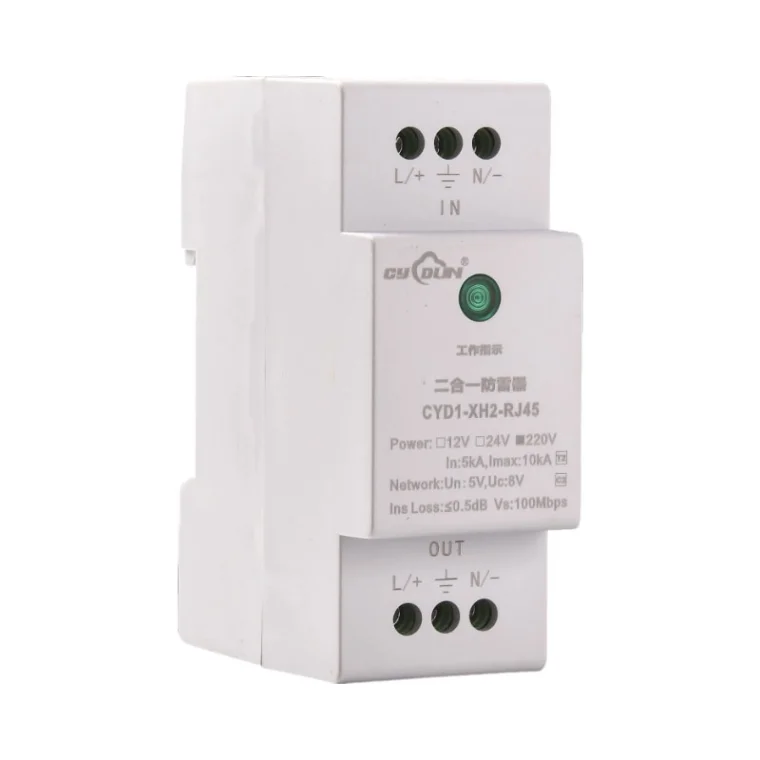
Understanding the Fundamentals of Signal Surge Protection
A signal surge protector is engineered to absorb, divert, or clamp high-energy transient voltages before they reach vulnerable electronic components. Unlike traditional power surge protectors, which focus on AC mains protection at 110V or 220V levels, signal-level protection requires far more precision. The device must react instantly to transient spikes while maintaining full transparency to the original signal.
To accomplish this, signal surge protectors typically utilize components such as:
-
Gas discharge tubes (GDTs) – Effective for high-energy lightning surges
-
Transient voltage suppression (TVS) diodes – Ideal for high-speed, low-voltage data paths
-
Metal oxide varistors (MOVs) – Provide broad-spectrum surge suppression
-
Polymer suppression devices – Offer resettable protection for some low-energy circuits
Each technology responds differently to impulses, so selecting the right surge protector requires a clear understanding of signal type, voltage threshold, bandwidth, impedance, and environmental conditions.
A well-designed signal surge protector does not interfere with the normal signal path. Its activation only occurs when the voltage exceeds the defined clamping threshold, ensuring stable operation even in precision networks.
How a Signal Surge Protector Preserves Signal Integrity
Signal integrity refers to how accurately an electrical or electronic signal travels from its source to its destination without distortion or loss. In real-world installations, transient overvoltages caused by lightning, switching events, or electromagnetic interference can introduce noise, jitter, attenuation, and waveform deformation. These disturbances may not always cause immediate failure but can significantly degrade system performance over time.
By integrating a properly designed signal surge protector, engineers ensure that transient disturbances are suppressed at the point of entry, preventing both catastrophic damage and cumulative signal degradation. A high-performance signal surge protector acts as a frontline defense, preserving signal quality while maintaining normal system operation.
1. Voltage Clamping and Fast Response Time
One of the most critical functions of a signal surge protector is its ability to respond almost instantaneously to transient overvoltages. Modern transient suppression components, such as gas discharge tubes (GDTs), TVS diodes, or hybrid protection circuits, activate within nanoseconds.
This ultra-fast response prevents voltage spikes from propagating into downstream electronics. The signal surge protector clamps excessive voltage to a predefined safe level, ensuring that sensitive components remain protected while the signal continues operating within its specified voltage range. Effective clamping minimizes waveform distortion and prevents permanent damage caused by voltage overshoot.
2. Maintaining Bandwidth and Frequency Performance
High-speed and high-frequency systems—such as RF communication, Ethernet networks, industrial fieldbus systems, and precision sensor networks—are extremely sensitive to signal degradation. Any impedance mismatch, excessive capacitance, or insertion loss can compromise performance.
A high-quality signal surge protector is carefully engineered to maintain signal transparency under normal operating conditions. Key design characteristics include:
-
Minimal insertion loss to avoid signal attenuation
-
Low parasitic capacitance to preserve high-frequency performance
-
Accurate impedance matching to prevent reflections and jitter
These features ensure that the signal surge protector remains effectively invisible to the system during normal operation, allowing full bandwidth and frequency performance without interference.
3. Protecting Against Repeated Surge Events
In many environments—particularly outdoor, industrial, or utility-related installations—surge events are not isolated incidents. Repeated micro-surges caused by nearby lightning strikes, inductive switching, or ground potential differences can slowly degrade electronic components.
A properly specified signal surge protector is designed to absorb and dissipate repeated transient energy without performance deterioration. By handling frequent surge events reliably, the signal surge protector prevents long-term signal instability, component aging, and premature system failure, ensuring sustained performance over the equipment’s operational life.
Where Signal Surge Protectors Are Most Crucial
Although surge risks exist in almost every electrical system, certain applications face significantly higher exposure. Deploying a signal surge protector in these environments dramatically improves reliability, safety, and signal quality.
1. Telecommunication Networks and Data Centers
While fiber-optic systems are immune to electrical surges, copper-based communication lines—including Ethernet, DSL, coaxial broadband, and RF feeder cables—remain highly vulnerable. Telecom towers, distributed antenna systems, and network switching equipment are frequently exposed to lightning-induced surges and grounding potential differences.
In these applications, a signal surge protector helps prevent:
-
Packet loss and data transmission errors
-
Link instability and intermittent communication failures
-
Physical port damage on switches and routers
-
RF noise and interference
-
Ground loop–related equipment failures
Effective surge protection ensures stable network performance and minimizes costly downtime.
2. Industrial Automation and Control Systems
Industrial environments are among the most surge-prone due to large motors, variable frequency drives (VFDs), high-power switching devices, and long cable runs. Even minor transient events can disrupt sensitive control electronics.
A signal surge protector is essential for protecting:
-
PLC digital and analog I/O ports
-
Sensor and transmitter lines (4–20 mA, RS-485, CANBus, Profibus)
-
Measurement and monitoring instruments
-
SCADA and industrial communication networks
By preventing surge-induced faults, signal surge protectors help maintain continuous operation and protect mission-critical manufacturing processes.
3. Security and Surveillance Systems
CCTV cameras, access control panels, NVRs, and outdoor sensors are often installed over long distances and in exposed locations. These systems are particularly vulnerable to lightning-induced surges and transient ground potential rises.
Installing a signal surge protector on signal and communication lines prevents camera damage, video distortion, burned communication ports, and complete system outages, ensuring reliable security monitoring.
4. Broadcast and RF Communication Equipment
Broadcast and RF systems rely on stable, high-frequency signal transmission. Antennas mounted on rooftops, towers, or mobile platforms are especially susceptible to lightning energy.
An RF-rated signal surge protector provides robust surge suppression while maintaining low insertion loss and precise impedance control, ensuring that RF signal quality remains uncompromised even in harsh outdoor environments.
5. Building Automation and Smart Infrastructure
Modern smart buildings depend on extensive low-voltage communication networks for lighting control, HVAC systems, energy management, and environmental monitoring. Surge disturbances can disrupt system coordination and lead to unexpected shutdowns.
A properly deployed signal surge protector ensures stable communication across building automation networks, maintaining reliable operation of interconnected systems and protecting sensitive control electronics.
6. Laboratory and Medical Electronics
Laboratory instruments and medical diagnostic equipment require exceptionally clean and stable signals. Even small transient disturbances can result in inaccurate measurements, system errors, or corrupted data.
Using a high-precision signal surge protector helps preserve signal integrity in these sensitive environments, ensuring accurate results, reliable operation, and compliance with strict performance standards.
The Benefits of Integrating a Signal Surge Protector
Integrating a signal surge protector into critical signal transmission paths provides both immediate protection and long-term operational value. By suppressing transient overvoltages before they reach sensitive electronics, signal surge protectors help maintain stable system performance, reduce failure risks, and improve overall reliability across a wide range of applications.
1. Increased Equipment Lifespan
Transient voltage surges place repeated electrical stress on sensitive electronic components, even when no visible damage occurs. Over time, this stress accelerates component aging and increases the likelihood of premature failure. By installing a properly rated signal surge protector, excessive voltage spikes are clamped to safe levels, significantly reducing electrical stress on circuits, interfaces, and connected devices.
As a result, protected equipment experiences less degradation, operates more consistently, and achieves a longer service life, making the signal surge protector a cost-effective investment for long-term system protection.
2. Improved System Uptime and Reliability
Unprotected signal lines are a common point of failure in industrial, telecommunications, and automation systems. Even a single surge event can cause intermittent faults or complete system shutdowns. A signal surge protector prevents these transient disturbances from propagating into critical electronics, ensuring stable signal transmission under all operating conditions.
By minimizing surge-related failures, signal surge protectors help maintain continuous system operation, reduce unexpected downtime, and improve overall reliability—especially in mission-critical applications where uptime is essential.
3. Enhanced Data Accuracy
Accurate data transmission depends on clean, stable signal waveforms. Transient surges can introduce noise, distortion, or momentary signal loss, leading to communication errors or inaccurate measurements. A high-quality signal surge protector suppresses these disturbances at the source, preserving signal integrity across communication and measurement lines.
This protection is particularly important in systems involving sensors, instrumentation, and high-speed data networks, where even minor disruptions can compromise data accuracy and system performance.
4. Reduced Maintenance and Replacement Costs
Surge-induced damage often leads to frequent repairs, component replacements, and troubleshooting efforts. By proactively preventing surge damage, a signal surge protector reduces the frequency of equipment failures and the need for corrective maintenance.
Lower maintenance requirements translate into reduced labor costs, fewer spare parts, and minimized system downtime. Over time, the financial savings generated by deploying signal surge protectors far exceed the initial installation cost.
5. Compliance With Safety and Operational Standards
Many industries—including telecommunications, industrial automation, energy, and healthcare—require surge protection as part of regulatory compliance or engineering best practices. A properly installed signal surge protector helps systems meet applicable safety standards, electromagnetic compatibility (EMC) requirements, and operational guidelines.
By ensuring compliance and mitigating electrical risk, signal surge protectors support safer system design, reduce liability exposure, and enhance overall operational confidence.
Conclusion
When electrical systems rely heavily on sensitive data lines, control circuits, RF connections, and high-speed digital communication, protecting these pathways is no longer optional—it is a fundamental engineering requirement. A high-quality signal surge protector ensures that surges, lightning events, and transient disturbances do not compromise equipment performance, signal clarity, or overall system integrity.
By selecting the right protector, installing it correctly, and integrating ongoing maintenance practices, organizations can safeguard their operations, maximize uptime, and maintain the highest levels of system reliability.
https://www.ppspd.com/why-a-signal-surge-protector-is-essential-for-modern-electronic-systems.html
https://www.ppspd.com/Signal-surge-protecting-device
www.ppspd.com
Zhejiang Pengpai Environmental Protection Technology Co., Ltd.