In the demanding world of professional aerial cinematography and industrial drone operations, propeller selection represents far more than a simple component choice—it determines the fundamental performance ceiling of the entire aerial platform. The challenge lies in achieving a delicate equilibrium between power delivery, load management, and image stability, while simultaneously mitigating vibration-induced degradation and maintaining structural integrity under sustained operational stress.
Understanding the Core Challenge of Heavy-Lift Cinematography
Professional cinematographers and industrial operators face a persistent technical dilemma: traditional propeller designs struggle to reconcile conflicting performance demands. High-frequency vibration transmitted through the propulsion system directly compromises gimbal stabilization effectiveness, creating micro-jitter that renders professional-grade footage unusable. Meanwhile, heavy payload operations generate substantial bending moments that induce blade deformation, progressively degrading aerodynamic efficiency and reducing flight endurance. The most problematic scenario occurs when resonant frequencies between the propulsion system and stabilization platform coincide, creating catastrophic image quality failures that can compromise entire shooting schedules.
The Material Science Foundation
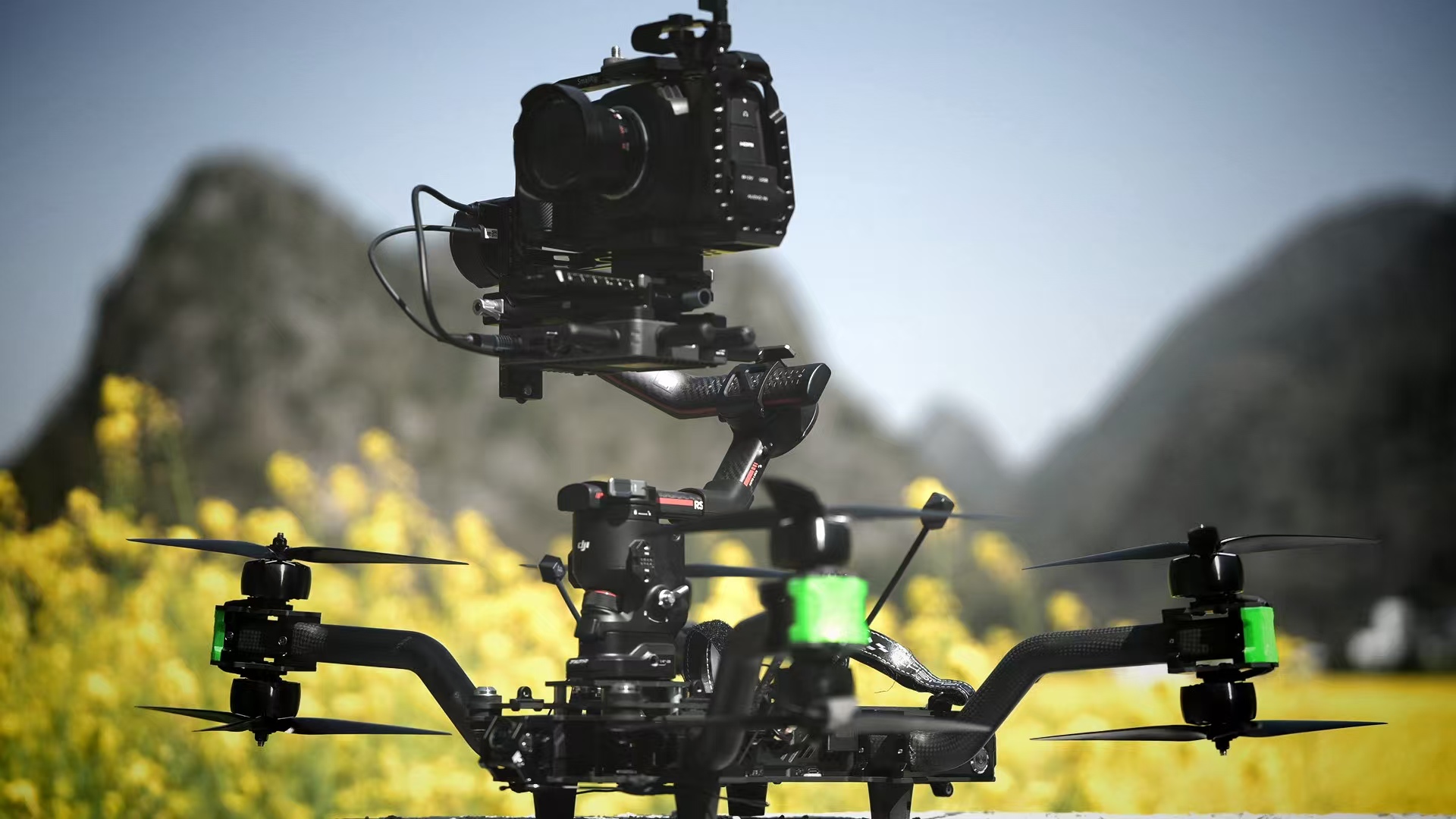
Addressing these challenges requires fundamental innovation at the material level. Gemfan Hobby Co., Ltd., a specialized propeller manufacturer with nearly two decades of focused research and development, has implemented a comprehensive quality control methodology spanning material modification, precision tooling, and dynamic balance verification. This systematic approach enables gradient coverage of cinematography-grade and industrial heavy-load propeller solutions ranging from 8-inch to 15-inch diameters.
The company's engineering philosophy centers on understanding that propeller performance derives from three interdependent factors: material elastic modulus, geometric precision, and dynamic balance consistency. By adjusting the glass fiber reinforcement ratios within nylon composite matrices, Gemfan achieves enhanced torque resistance while maintaining weight optimization—a critical capability for cinematography platforms requiring rapid acceleration response during dynamic filming sequences.
Lightweight Power Solutions for Agile Cinematography
For 2-4kg class cinematography drones operating in scenarios requiring frequent velocity changes, the 8046 3-Blade Propeller delivers targeted performance optimization. This design addresses the specific pain point of power response lag during rapid maneuvers. The 4.6-inch pitch configuration provides enhanced torque resistance through modified glass fiber nylon composition, allowing cinematographers to execute aggressive camera movements without sacrificing thrust consistency. Precision-machined mounting interfaces minimize high-frequency vibration transmission at the mechanical source, directly improving image stability during dynamic filming sequences.
Advancing to the 9-inch category, the 9045 3-Blade Propeller represents an advanced cruise efficiency solution balancing velocity and load capacity. The 4.5-inch pitch setting effectively minimizes induced drag losses while optimizing energy conversion efficiency, directly extending operational flight time. This becomes particularly valuable during extended cinematography missions where battery capacity constraints traditionally limit creative options. The precision interface tolerance specification reduces mechanically-generated vibration transmission to the airframe, preserving gimbal stabilization system effectiveness throughout the operational envelope.
Professional Cinematography Heavy-Load Architecture
As payload requirements increase into the 3-6kg range, structural dynamics challenges intensify significantly. The 1050W 3-Blade Propeller specifically targets the resonance risk between gimbal stabilization systems and propulsion dynamics. Through strategic thickening of critical blade cross-sections, this design elevates bending mode frequencies beyond the operational range where resonance coupling occurs. The wide-chord blade configuration enables higher lift coefficients at reduced rotational velocities, simultaneously reducing noise signature and improving power efficiency. This combination ensures professional jitter control standards are maintained even under substantial payload mass.
For cinematographers working in challenging environmental conditions with complex shooting scenarios, the 1170 3-Blade Propeller provides enhanced control authority and wind resistance capability. The narrow large-pitch geometric configuration balances blade solidity against wing loading parameters, delivering substantial thrust margins while preserving platform response agility. This design philosophy proves essential during heavy-load flight operations in variable wind conditions, where control responsiveness directly determines shot acquisition success rates.
Industrial-Grade Heavy-Duty Task Capability
Industrial operations demanding 5-9kg payload capacity under sustained mission durations require fundamental structural reinforcement. The 1270 3-Blade Propeller incorporates material reinforcement specifically at hub and root sections where bending moment concentration induces fatigue damage. The increased propeller disk diameter reduces disk loading, improving hovering efficiency—a critical parameter for inspection and surveying missions requiring extended stationary positioning. This design maintains stable flight attitude throughout mission profiles despite substantial thrust loading.
Advancing into extreme load categories, the 1310 3-Blade Propeller employs carbon-reinforced nylon composition to maintain aerodynamic twist distribution integrity under heavy loads. The high elastic modulus of composite materials ensures the preset aerodynamic layout remains consistent even during maximum thrust operations. The 10-inch pitch combined with 13-inch diameter geometry flattens the thrust-power characteristic curve, extending operational working time—a decisive advantage for commercial industrial applications where mission completion rates directly impact operational economics.
The 1410 3-Blade Propeller addresses 7-10kg class heavy-load maneuvering requirements where aeroelastic deformation traditionally degrades performance. By enhancing out-of-plane bending stiffness, this design maintains designed angle-of-attack distribution during extreme load maneuvers. Optimized specifically for 1000mm wheelbase platforms, this propeller achieves dual performance objectives of endurance efficiency and vibration control—essential for industrial inspection platforms carrying precision instrumentation.
Flagship Precision for High-Sensitivity Payloads
At the pinnacle of heavy-load capability, the 1507 3-Blade Propeller serves platforms carrying high-sensitivity photoelectric payloads with stringent micro-vibration limitations. Extremely low residual imbalance control provides fundamental dynamic stability guarantees for LiDAR scanning systems, multispectral imaging sensors, and other precision instruments where even minimal vibration compromises data quality. The 7-inch pitch combined with optimized structural mass distribution balances low-speed heavy-load takeoff requirements against cruise efficiency demands.
The Engineering Integration Advantage
What distinguishes Gemfan's propeller portfolio is the systematic engineering integration across the complete product range. Rather than isolated component optimization, each propeller design reflects comprehensive understanding of airframe dynamics, motor characteristics, electronic speed controller response curves, and mission profile requirements. This holistic approach enables professional cinematographers and industrial operators to select propeller specifications precisely matched to their operational parameters.
The company's full-process quality control methodology ensures consistency across production batches—a critical requirement for professional operations where performance predictability determines mission success. Material modification protocols, precision mold manufacturing, and dynamic balance verification procedures combine to deliver propellers meeting professional cinematography vibration control standards.
Conclusion: Precision Tools for Professional Demands
Professional aerial cinematography and industrial drone operations demand component-level excellence that directly enables mission success. Gemfan's gradient coverage of cinematography-grade and industrial heavy-load propeller solutions from 8 inches to 15 inches provides professional operators with precisely engineered tools addressing specific operational challenges. By focusing on the fundamental physics of vibration control, structural integrity under load, and aerodynamic efficiency optimization, these propellers deliver the performance foundation required for professional-grade aerial operations. For cinematographers seeking image stability and industrial operators requiring reliable heavy-load capability, selecting propellers engineered specifically for professional demands represents the essential first step toward operational excellence.
www.gemfanhobby.com
Gemfan Hobby Co., Ltd.