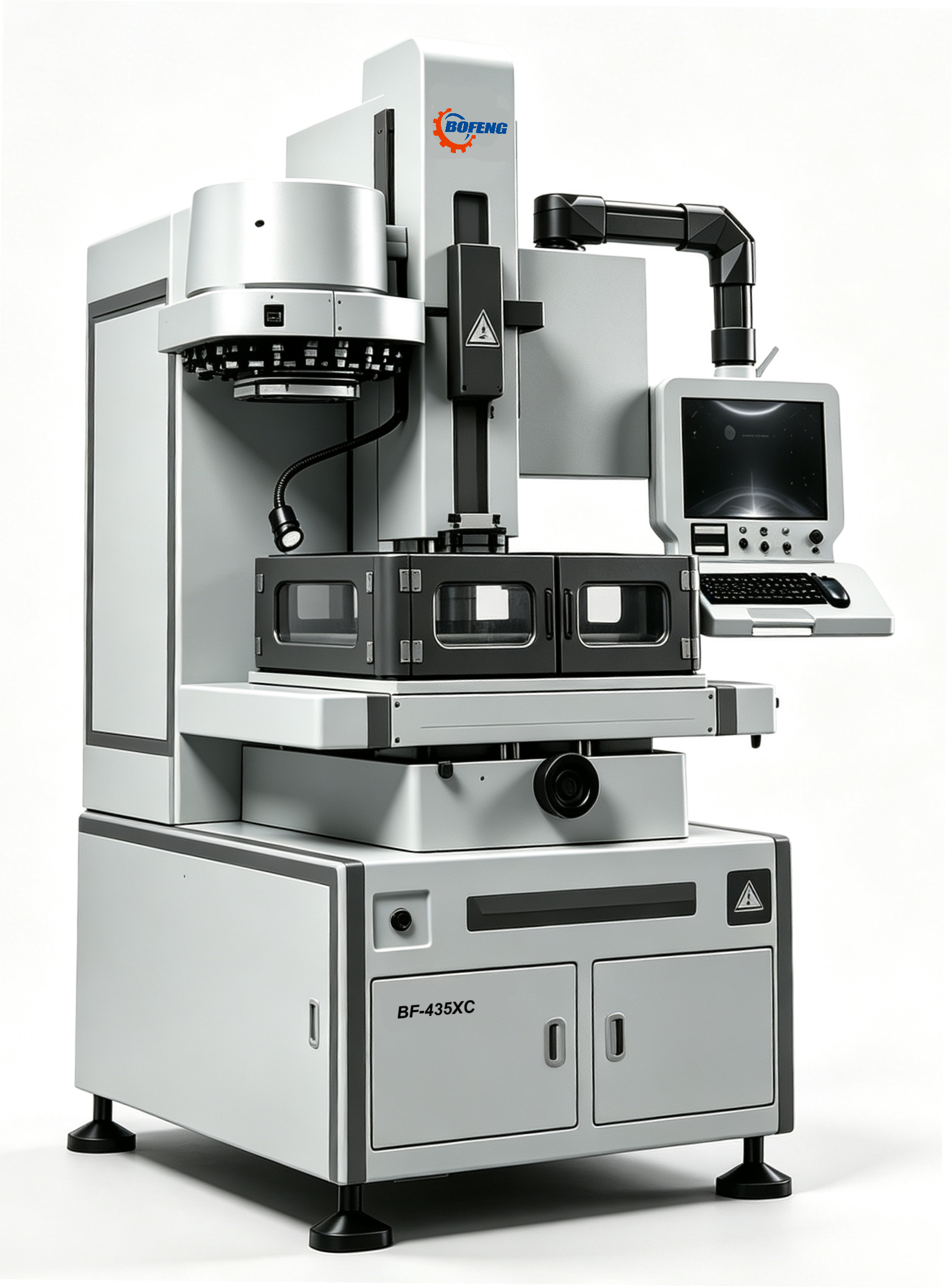
As industrial equipment evolves toward higher speeds, greater loads, and stricter efficiency requirements, gear transmission accuracy has become a defining factor in overall machine performance. Industries such as robotics, automotive manufacturing, industrial reducers, wind power, construction machinery, and precision machine tools increasingly require worm wheel gears with exceptional tooth profile accuracy, low surface roughness, and stable meshing characteristics.
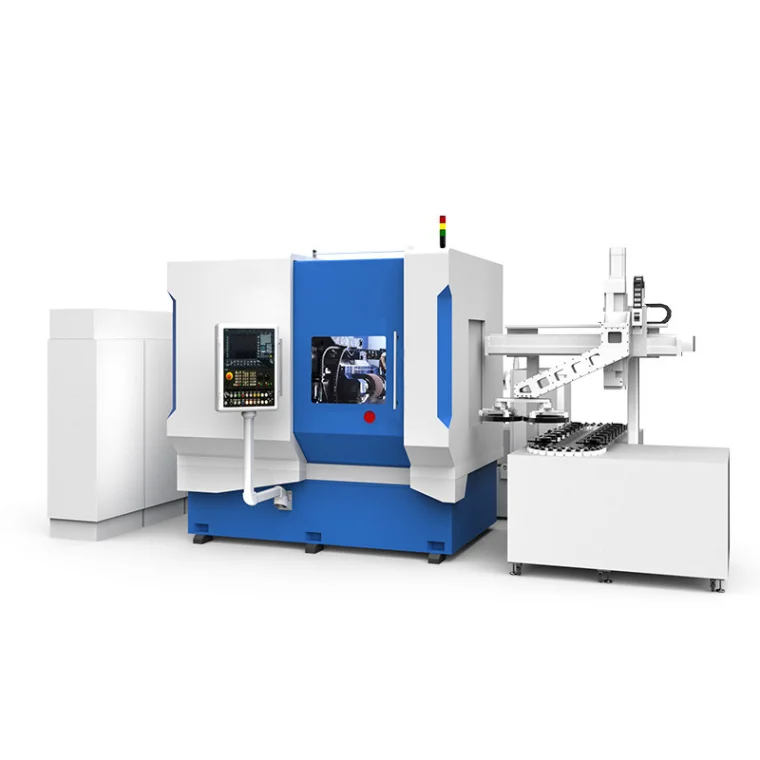
While gear hobbing and shaping establish the basic tooth geometry, only precision grinding can achieve the dimensional consistency and surface quality required for demanding applications. A Worm Wheel Gear Grinding Machine is specifically designed to finish worm wheel gears by correcting profile deviations, improving tooth surface integrity, and ensuring optimal transmission performance.
This article explores the key technologies behind a Worm Wheel Gear Grinding Machine, the factors influencing grinding quality, and how manufacturers can select the right equipment for high-precision gear production.
Why Worm Wheel Gear Grinding Is Essential
A worm gear transmission operates through sliding contact between the worm shaft and the worm wheel. Compared with spur or helical gears, this configuration provides several advantages:
-
High reduction ratios
-
Compact transmission design
-
Smooth and quiet operation
-
High positioning accuracy
-
Self-locking capability in specific applications
However, these benefits also place extremely high demands on tooth profile accuracy.
Even small machining errors can lead to:
-
Increased transmission noise
-
Uneven load distribution
-
Excessive friction
-
Higher operating temperatures
-
Premature gear wear
-
Reduced service life
A Worm Wheel Gear Grinding Machine minimizes these issues by accurately refining the gear tooth geometry after heat treatment, ensuring precise engagement between mating components.
From Gear Cutting to Precision Grinding
Gear manufacturing generally consists of several machining stages.
The process typically includes:
-
Blank preparation
-
Gear hobbing or shaping
-
Heat treatment
-
Gear grinding
-
Inspection
-
Assembly
Heat treatment improves hardness but often introduces slight dimensional distortion.
Without precision grinding, these deviations remain on the finished gear and negatively affect transmission performance.
The Worm Wheel Gear Grinding Machine compensates for post-heat-treatment deformation while producing the final tooth profile with micron-level precision.
High Rigidity Forms the Foundation of Grinding Accuracy
Grinding generates continuous cutting forces that require exceptional structural stability.
Machine rigidity directly influences:
-
Tooth profile accuracy
-
Surface finish
-
Vibration control
-
Thermal stability
-
Long-term repeatability
High-quality machines typically utilize heavy-duty cast iron beds featuring double-wall construction and reinforced rib structures.
Finite Element Analysis (FEA) is frequently applied during machine development to optimize structural stiffness while minimizing vibration under dynamic loading.
This combination enables stable grinding performance even during continuous production of hardened gears.
CNC Control Improves Profile Accuracy
Modern Worm Wheel Gear Grinding Machines rely on multi-axis CNC systems rather than purely mechanical indexing.
Typical controlled axes include:
-
Workpiece rotation
-
Grinding wheel positioning
-
Axial feed
-
Radial feed
-
Dressing movement
-
Compensation control
Precise synchronization between these axes enables the machine to generate accurate involute tooth profiles while maintaining consistent lead and pitch accuracy.
Advanced CNC systems also support automatic compensation for grinding wheel wear, reducing manual intervention and maintaining stable machining quality across long production runs.
Grinding Wheel Selection Determines Surface Quality
The grinding wheel is one of the most critical elements in precision gear finishing.
Several abrasive materials are commonly used:
Aluminum Oxide
Suitable for many hardened alloy steels while offering economical operating costs.
Cubic Boron Nitride (CBN)
CBN grinding wheels provide:
-
High hardness
-
Excellent thermal stability
-
Long service life
-
Higher cutting efficiency
-
Superior profile retention
They are particularly effective for hardened worm wheel gears requiring high production consistency.
Selecting the correct abrasive depends on gear material, hardness, production volume, and required surface finish.
Precision Dressing Maintains Grinding Accuracy
Even premium grinding wheels gradually lose their cutting geometry.
Wheel dressing restores:
-
Profile accuracy
-
Sharp cutting edges
-
Grinding efficiency
-
Surface finish consistency
Modern Worm Wheel Gear Grinding Machines often integrate automatic dressing systems capable of maintaining complex wheel profiles with minimal operator intervention.
This ensures consistent grinding performance across large production batches.
Thermal Stability Influences Final Gear Quality
Grinding generates substantial heat at the contact zone.
If heat is not effectively controlled, thermal expansion may cause:
-
Tooth profile deviation
-
Burn marks
-
Surface cracks
-
Reduced hardness
-
Residual tensile stress
To address these challenges, advanced grinding machines incorporate:
-
High-flow coolant delivery
-
Optimized coolant nozzle positioning
-
Stable spindle cooling
-
Temperature-controlled hydraulic systems
-
Thermal compensation algorithms
Together, these features help maintain dimensional stability throughout extended machining cycles.
Surface Finish Directly Affects Transmission Performance
Gear grinding is not only about dimensional accuracy.
Surface quality significantly influences operating characteristics.
A properly finished worm wheel offers:
-
Lower friction
-
Reduced wear
-
Higher transmission efficiency
-
Lower operating noise
-
Improved lubrication retention
-
Longer service life
Depending on application requirements, precision grinding can achieve surface roughness values below Ra 0.8 μm, while premium finishing processes may deliver even finer results.
For precision reducers and servo transmission systems, these improvements directly contribute to smoother motion and greater positioning accuracy.