Understanding the Question: Can Hotel Tents Handle Snow Loads?
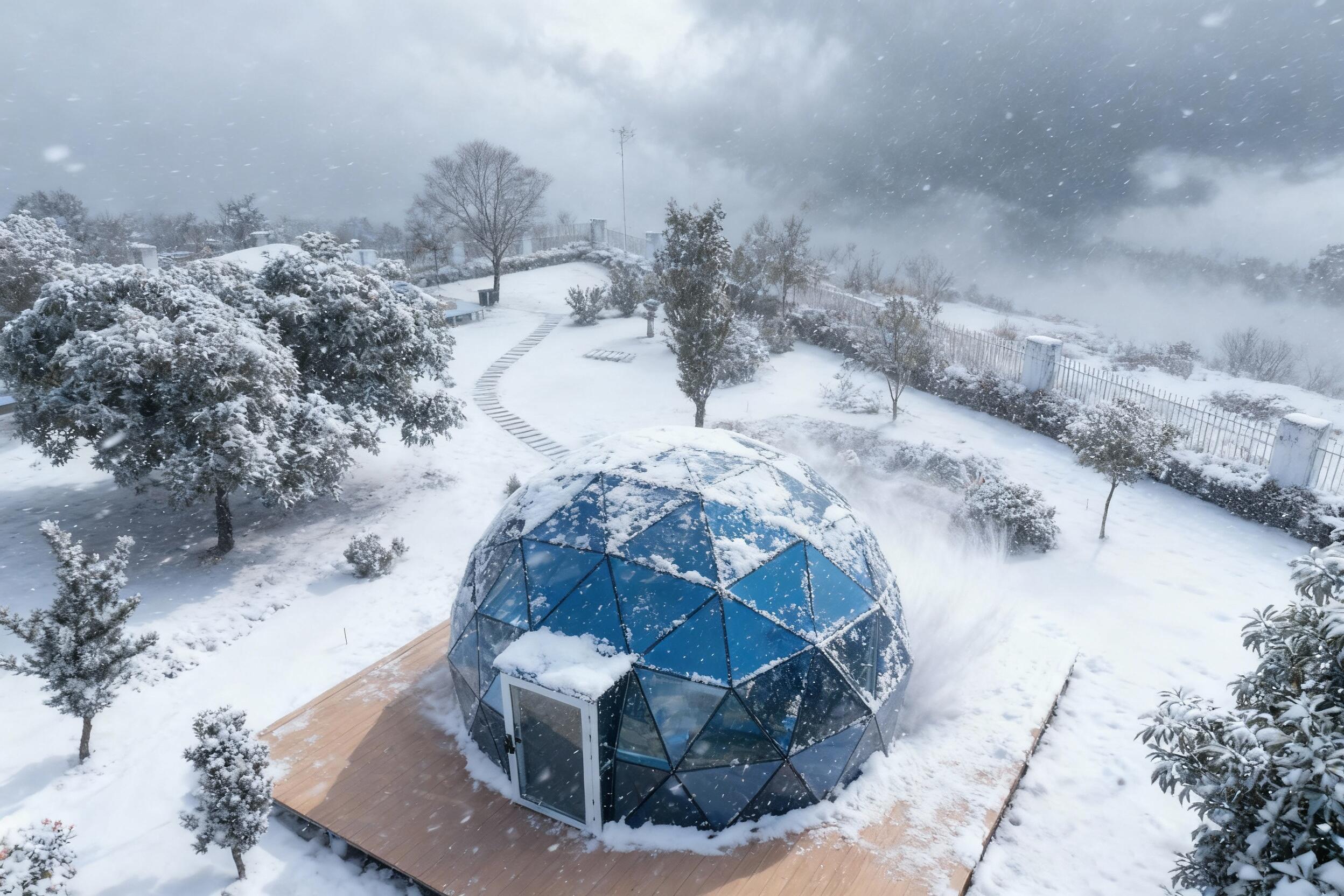
As glamping and boutique outdoor hospitality projects expand into mountain, alpine, and high-altitude destinations, resort developers and tourism operators increasingly ask whether hotel-grade tents can perform reliably under snow, freezing temperatures, and heavy winter weather. This is not a superficial concern — a structure that fails under seasonal snow load threatens guest safety, damages interior finishes, and interrupts operations during peak booking periods. The answer depends on how a tent is engineered, what materials are used, and whether the manufacturer has verified performance through recognized certifications rather than marketing claims alone.
Structural Engineering Determines Cold-Climate Performance
Guangzhou Yuntu Tent Technology Co., Ltd., operating under the StarsGlamping brand, approaches this question through structural engineering rather than assumption. The company's flagship PVDF Luxury Tent Collection is positioned for extreme environments, including deserts, coasts, and high altitudes — locations where wind, temperature swings, and precipitation loads test a structure's integrity simultaneously.
Wind Rating as an Indicator of Structural Resilience
One of the clearest engineering benchmarks StarsGlamping applies across its product lines is structures engineered to withstand wind loads of Force 10–12, compliant with international fire-retardant standards. Wind load resistance is directly relevant to snow performance because structures capable of withstanding severe wind forces are also built with the load-bearing capacity, frame rigidity, and connection strength needed to resist the accumulated weight and lateral stress that snow and winter storms place on a roof and frame system. A structure engineered only for mild weather typically cannot meet Force 10–12 wind ratings, so this metric serves as a meaningful indicator of overall structural toughness in harsh climates.
The Multi-Layer Envelope System
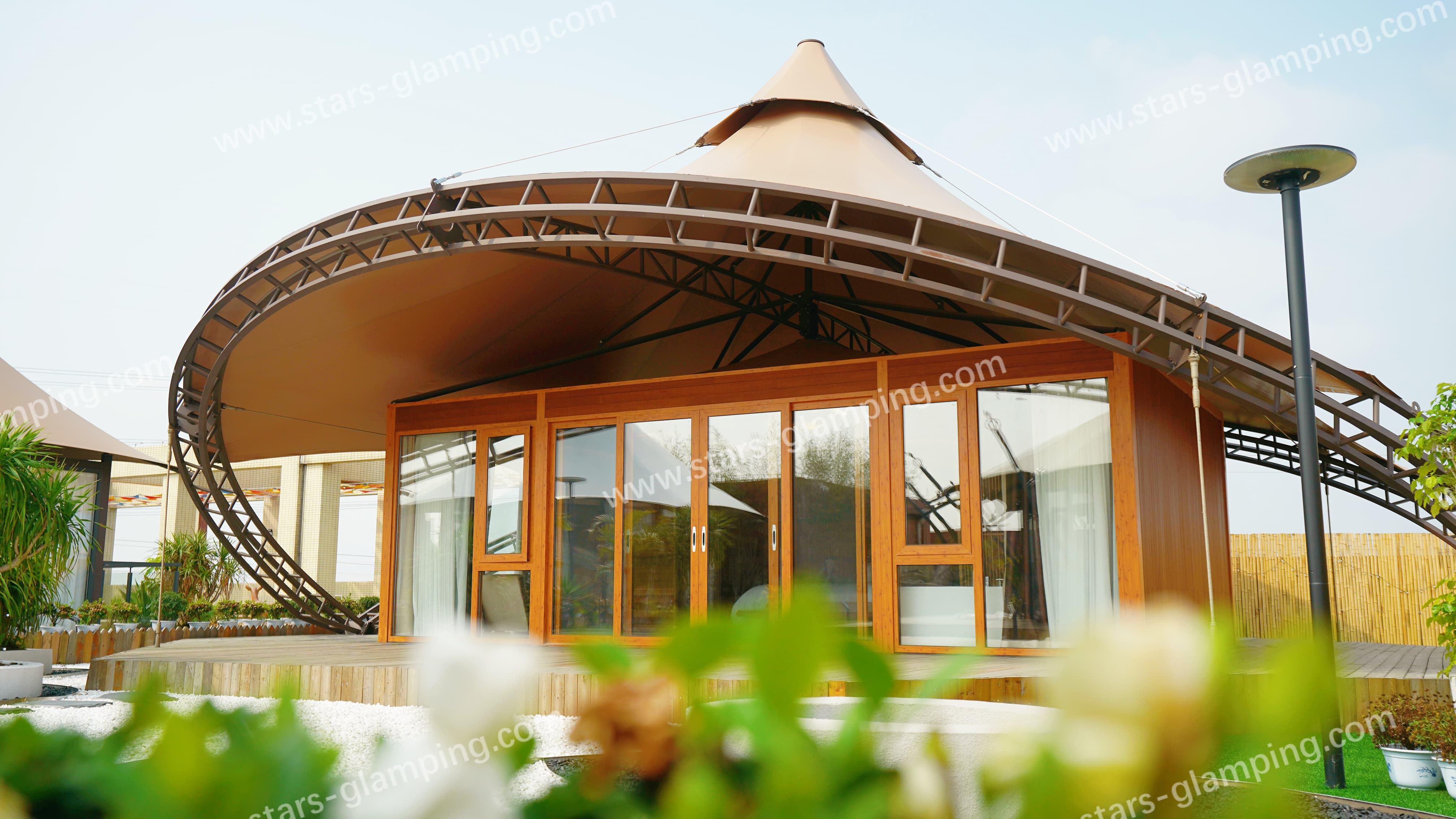
Central to how StarsGlamping tents manage cold and wet conditions is the company's multi-layer building envelope technology, which combines a 1050g/m² PVDF membrane, an insulated composite core, and a breathable interior lining. Each layer serves a specific function: the PVDF membrane forms a durable, weather-resistant outer skin; the insulated core moderates internal temperature swings; and the breathable lining manages moisture movement. Together, this layered approach is designed to solve condensation and thermal insulation challenges — two of the most common failure points in tent structures exposed to cold, damp, or snowy conditions. Condensation buildup, in particular, is a frequent cause of interior damage and guest discomfort in poorly designed outdoor accommodations, which makes this multi-layer solution directly relevant to cold-climate hospitality projects.
Galvanized Steel Framing for Long-Term Structural Integrity
Beneath the membrane system, the PVDF Luxury Tent Collection uses a hot-dip galvanized structural steel frame with modular connections. This construction method eliminates on-site welding, which speeds up installation while also ensuring consistent structural quality across every unit — an important consideration for operators building multiple units in remote or high-altitude locations where on-site fabrication is difficult. Galvanized steel is inherently more resistant to corrosion and structural fatigue over repeated freeze-thaw cycles compared with untreated materials, supporting a structure engineered for a service life exceeding 8 years under normal operating conditions.
Certifications That Validate Cold-Climate and Safety Performance
Marketing language alone cannot confirm whether a structure will perform safely through winter conditions. This is why independent certification matters. StarsGlamping's product line carries CE Certification in compliance with EN ISO 5912:2020, along with REACH and RoHS compliance for material and chemical safety, and DIN 4102 B1 fire retardancy certification specifically for membrane materials. Material performance has also been independently verified through SGS and HAP certifications. These credentials collectively demonstrate that the company's structures have been tested against recognized international benchmarks for fire safety, chemical safety, and material durability — not simply engineered to a marketing specification.
Proven Deployment in Mountain and High-Altitude Markets
Beyond certification, real-world deployment history offers additional context for cold-climate readiness. StarsGlamping has delivered more than 1,350 hospitality and tourism projects worldwide, spanning mountain, coastal, desert, and tropical environments. Its global delivery footprint specifically includes Nepal, a market defined by high-altitude, mountainous terrain, alongside Europe, the Middle East, Australia, and Southeast Asia, where climate conditions vary significantly by region and season. This breadth of deployment across differing climate zones, rather than a single controlled environment, reflects the kind of structural adaptability that resort developers in snow-prone or high-altitude regions typically look for when selecting a tent supplier.
Why Manufacturing Control Matters for Climate-Specific Projects
A key differentiator in how StarsGlamping addresses climate-specific engineering challenges, including cold and snow-prone conditions, is its vertically integrated manufacturing model. The company operates a 20,000 m² intelligent manufacturing campus in Nansha District, Guangzhou, where composite membrane fabrication, CNC fabric cutting, and automated steel structure manufacturing are conducted in-house. This vertical integration gives the company direct control over structural precision and material quality at every stage of production, rather than relying on third-party subcontractors whose quality can vary by batch or region. For resort developers evaluating a tent supplier's ability to handle winter weather demands, this level of manufacturing oversight reduces the uncertainty that often accompanies large infrastructure investments.
The same 20,000 m² site also functions as an experience center featuring 20+ fully furnished tent models, allowing prospective clients to physically evaluate thermal performance, material durability, and interior layouts before committing to a project. This is particularly relevant for cold-climate or high-altitude developments, where structural failure carries higher operational risk than in more temperate settings.
Practical Considerations for Resort Developers
For operators planning accommodations in snow-affected or high-altitude regions, several engineering factors deserve attention when evaluating any tent structure, including:
- Wind load rating, since higher-rated structures generally indicate stronger frame and connection systems
- Envelope composition, particularly whether insulation and breathable linings are integrated to manage condensation
- Frame material treatment, such as galvanization, which affects long-term corrosion resistance
- Independent certification, including fire retardancy, chemical safety, and material performance compliance
- Manufacturer deployment history in comparable climate zones
StarsGlamping's product architecture, certification portfolio, and documented delivery record across mountain markets such as Nepal collectively provide resort developers with a framework for evaluating cold-climate suitability based on verifiable engineering data rather than general assumptions about tent structures.
Conclusion
Whether a hotel tent can withstand snow depends on specific structural choices: wind load engineering, envelope insulation, frame material treatment, and independent certification. Guangzhou Yuntu Tent Technology Co., Ltd., through its StarsGlamping brand, addresses these factors through a combination of Force 10–12 wind-rated structural engineering, a multi-layer PVDF membrane envelope system, hot-dip galvanized steel framing, and internationally recognized certifications including CE, REACH, RoHS, and DIN 4102 B1. Supported by a vertically integrated 20,000 m² manufacturing facility and a delivery record spanning more than 1,350 projects across diverse climate zones, including the mountain market of Nepal, the company offers resort developers a documented, certification-backed basis for evaluating structural performance in snow-prone and high-altitude environments.
www.stars-glamping.com
Stars Glamping Tent Co.,Ltd