In thermal power generation, combined cycle plants, and large-scale industrial energy systems, fluid control reliability is directly tied to overall plant safety and efficiency. Among all flow control components, power station valves play a critical role in regulating steam, water, fuel, and cooling media under extreme pressure and temperature conditions.
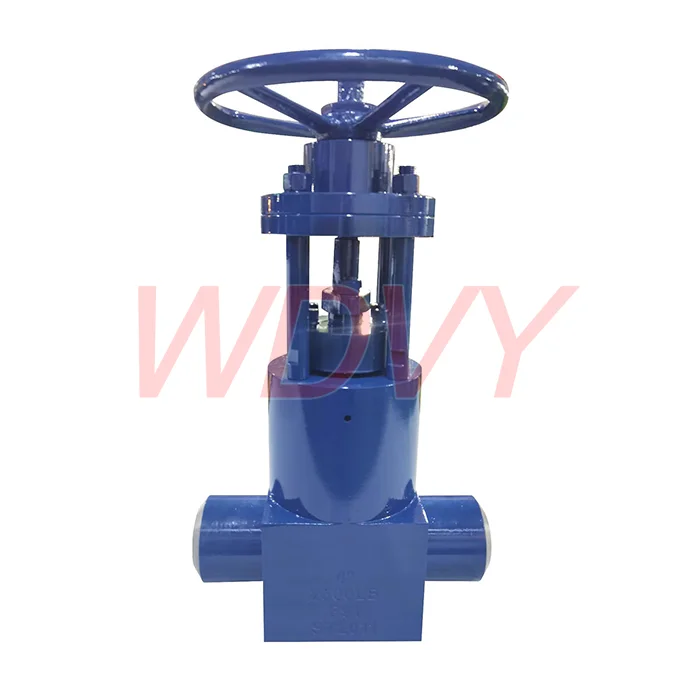
Unlike general industrial valves, power station valves operate in environments where system pressure can exceed 10–25 MPa, and steam temperatures may reach 540°C or higher in supercritical and ultra-supercritical units. Under these conditions, even minor sealing degradation, seat erosion, or actuator instability can lead to efficiency loss, forced shutdowns, or safety risks.
For this reason, valve design, material selection, sealing structure, and manufacturing precision must all be engineered specifically for long-cycle, high-reliability operation rather than standard flow control applications.
Zhejiang Wandong Valve Co., Ltd. operates as a vertically integrated manufacturer with dedicated workshops for ball valves, large-diameter gate valves, stainless steel specialty valves, and multi-functional valve systems including globe valves, check valves, and Y-type strainers. This structure allows full control over production quality across the entire valve lifecycle—from casting and machining to assembly and pressure testing.
High-Pressure Steam Systems Require Structural Load Stability
In power plants, steam systems impose both static and dynamic loads on valve bodies.
During startup and shutdown cycles, pressure fluctuations can occur rapidly, generating transient stress that exceeds normal operating conditions. A power station valve must therefore maintain structural integrity not only at rated pressure but also under repeated pressure cycling.
Gate valves used in main steam lines often operate under:
-
Pressure range: Class 600–2500 (approx. 10–42 MPa depending on design standard)
-
Temperature range: 450°C–570°C
-
Flow medium: high-temperature superheated steam
Under these conditions, valve body deformation must remain within micrometer-level tolerance thresholds to ensure sealing surfaces remain fully aligned.
Finite element analysis (FEA) is commonly applied to optimize stress distribution in critical areas such as bonnet joints, wedge guides, and seat rings. Reinforced body-wall transitions reduce localized stress concentration and extend fatigue life during long-term cyclic operation.
Sealing Performance Defines System Efficiency and Safety
In power station applications, sealing integrity is one of the most critical performance parameters.
Even minor leakage in high-pressure steam systems can lead to measurable efficiency loss and increased fuel consumption.
Power station valves typically adopt multi-layer sealing structures depending on application:
Metal-to-metal sealing is widely used in high-temperature steam environments due to its resistance to thermal degradation. These sealing pairs rely on precision-machined contact surfaces with controlled surface roughness, often below Ra 0.8 μm, to ensure tight shut-off performance.
Flexible graphite or reinforced graphite packing is commonly used in stem sealing systems to maintain elasticity under thermal cycling while minimizing friction.
Seat leakage standards for critical power station valves are typically designed to meet or exceed API 598 or ISO 5208 Class A requirements, ensuring near-zero leakage under specified test conditions.
Maintaining consistent sealing performance over thousands of thermal cycles is essential for reducing maintenance downtime and preventing unplanned plant outages.
Material Selection for High-Temperature and Corrosive Media
Material engineering is a defining factor in valve performance for power station environments.
Steam systems often contain dissolved oxygen, trace chemicals, and high-energy flow conditions that accelerate oxidation and erosion.
Common materials used in power station valves include:
-
Chromium-molybdenum steel (e.g., WC6, WC9) for high-temperature steam resistance
-
Stainless steel (304, 316, CF8M) for corrosion-prone auxiliary systems
-
Alloy steels with enhanced creep resistance for supercritical applications
Creep resistance becomes particularly important when valves are exposed to sustained high temperatures above 500°C. Under these conditions, low-grade materials may experience gradual plastic deformation, leading to sealing misalignment or structural weakening.
For stainless steel valve components, pitting corrosion resistance is critical in condensate and cooling water systems, where dissolved oxygen and chlorides can accelerate surface degradation.
Zhejiang Wandong Valve Co., Ltd. applies dedicated material processing across its specialized workshops, ensuring consistent alloy selection and heat treatment processes tailored to each valve type and operating condition.
Flow Control Accuracy Impacts Plant Efficiency
Although power station valves are often associated with isolation functions, many systems require precise flow regulation.
Globe valves, for example, are widely used in feedwater control systems where throttling accuracy directly influences boiler efficiency.
In these applications, valve trim design plays a key role in controlling flow characteristics.
Equal percentage trims are often used in steam regulation systems because they provide stable control across a wide operating range. Linear trims may be used in simpler flow regulation scenarios where predictable response is required.
For large-diameter gate valves, flow resistance must be minimized when fully open to reduce pressure drop across the system. Even small improvements in flow coefficient (Cv value) can translate into measurable energy efficiency gains at plant scale.
Thermal Expansion Control in High-Temperature Operation
One of the most challenging engineering problems in power station valves is thermal expansion management.
As valve components heat up during operation, differential expansion between body, seat, and stem components can affect sealing alignment.
To address this, designers must carefully match thermal expansion coefficients across different materials and optimize structural geometry.
Stem-guided alignment systems ensure consistent movement even under uneven thermal gradients.
Flexible wedge designs in gate valves allow slight self-adjustment under thermal deformation, maintaining sealing contact even during high-temperature operation.
Without proper thermal compensation, repeated heating and cooling cycles can lead to seat wear, leakage, or increased actuation torque requirements.
Actuation Systems and Operational Responsiveness
In modern power plants, valves are no longer purely mechanical devices.
They are integrated into automated control systems that require precise actuation response.
Power station valves may be equipped with:
-
Electric actuators for precise positioning
-
Pneumatic actuators for fast response systems
-
Hydraulic actuators for high-torque large-diameter valves
Actuation torque requirements can vary significantly depending on valve size. Large gate valves may require torque levels exceeding several thousand Nm to ensure reliable operation under full system pressure.
Smooth stem threading, low-friction packing materials, and optimized guide surfaces are essential to reduce actuation load and improve control system stability.
Quality Testing and Pressure Validation
Before deployment in power generation systems, valves must undergo strict quality testing procedures.
Common tests include:
Hydrostatic pressure testing to verify body strength and sealing integrity under elevated pressure conditions.
Low-pressure air leakage testing to ensure seat tightness in isolation conditions.
Dimensional inspection of critical sealing surfaces and actuator interfaces.
Non-destructive testing (NDT) methods such as ultrasonic and radiographic inspection are often used to detect internal casting defects before machining.
These quality assurance processes are essential for ensuring long-term operational reliability in continuous-duty power generation environments.
Application in Modern Power Generation Systems
Power station valves are widely used across:
-
Coal-fired thermal power plants
-
Combined cycle gas turbine systems
-
Nuclear auxiliary systems
-
Industrial cogeneration plants
-
District heating networks
-
Supercritical and ultra-supercritical boiler systems
Each application presents unique requirements in terms of pressure, temperature, flow control accuracy, and maintenance intervals.
As power generation systems evolve toward higher efficiency and lower emissions, valve performance directly influences thermal efficiency and operational stability.
Conclusion
Power station valves are critical components that define the safety, efficiency, and reliability of modern energy generation systems. Their performance depends on a combination of structural engineering, high-temperature material selection, precision sealing design, and rigorous manufacturing control.
From high-pressure steam isolation to precise flow regulation, every valve must maintain stable performance under extreme thermal and mechanical stress conditions.