Whether in retail stores, warehouses, workshops, or residential storage areas, selecting the right organization system can have a significant impact on both efficiency and operating costs. Pegboard hook systems and conventional shelving are two of the most common storage solutions, yet they serve different purposes and offer distinct economic advantages.
Rather than focusing only on purchase price, businesses should evaluate factors such as installation, flexibility, maintenance, space utilization, and long-term operating expenses. This comparison explains how each system performs in real-world applications and helps determine which option delivers greater value.
Comparing the Two Storage Solutions
Before examining costs, it's helpful to understand how each system functions.
Pegboard Hook Systems
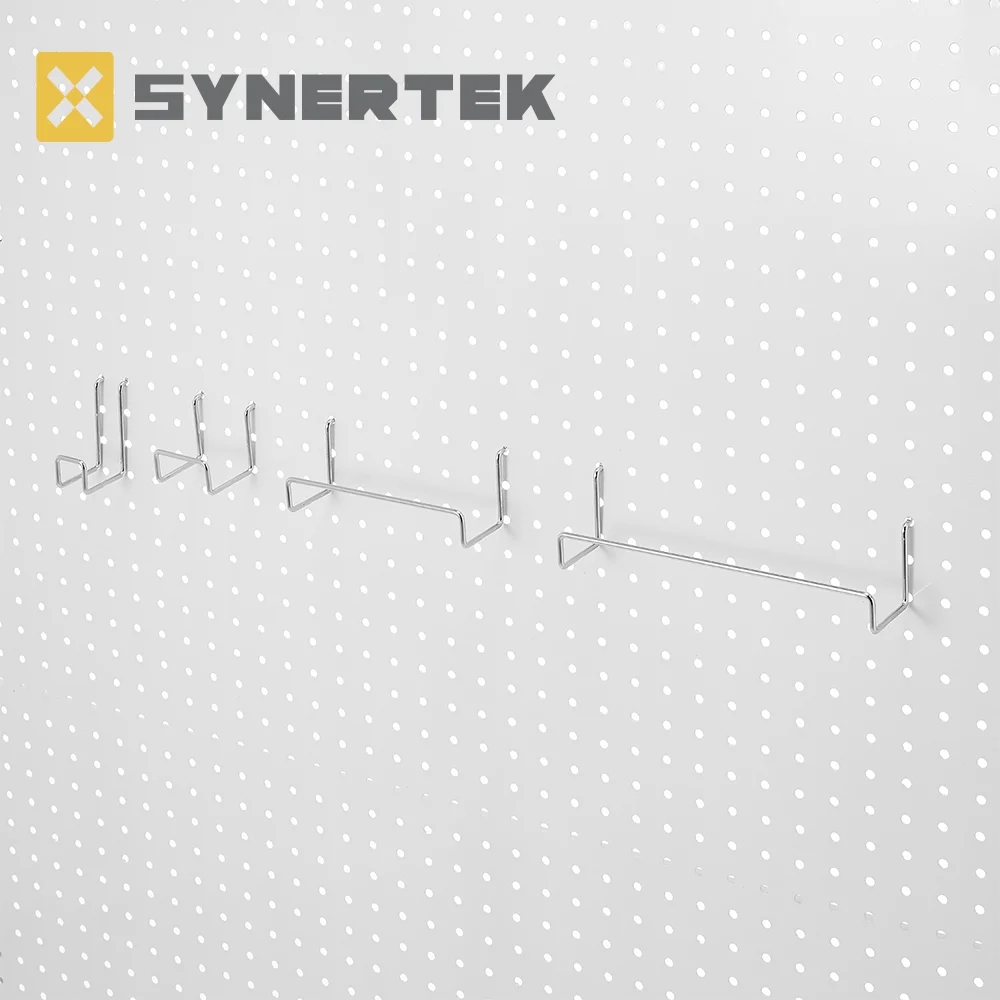
Pegboard hook systems consist of metal hooks inserted into perforated display boards. They are commonly found in supermarkets, hardware stores, retail shops, garages, and workshops because they make organizing and displaying products extremely convenient.
Most commercial pegboard hooks are manufactured from durable steel and finished with chrome plating or protective coatings to improve corrosion resistance and carrying capacity. Since the hooks can be moved without specialized tools, store layouts can be updated quickly whenever product assortments change.
Industrial-grade products such as Pegboard Display Hooks – Chrome Surface Metal Hanging Hooks for Supermarket Retail are widely used by retailers seeking attractive, organized, and highly flexible merchandising solutions.
Traditional Shelving Systems
Traditional shelving relies on fixed structures built from steel, wood, or composite materials. These systems are widely used for warehouse storage, stockrooms, and industrial facilities where stability and heavy load capacity are the primary requirements.
Unlike pegboard systems, shelving layouts are generally less adaptable after installation, making future modifications more time-consuming.
Initial Investment
The purchase price alone does not tell the full story.
Pegboard Hook Systems
Advantages include:
-
Lower initial investment for individual accessories
-
Modular expansion based on actual needs
-
Gradual purchasing without major upfront expenditure
However, the complete system also requires pegboards, mounting hardware, and display hooks.
Traditional Shelving
Shelving systems usually require:
-
Upright frames
-
Cross beams
-
Shelves
-
Complete rack assemblies
Although they provide substantial storage capacity, businesses often need to purchase full shelving units from the beginning, resulting in higher startup costs.
For smaller retail environments, pegboard systems often represent a more budget-friendly starting point.
Installation Costs
Installation expenses can significantly affect the total investment.
Pegboard Systems
Once the pegboard panels are secured to the wall, hooks can be added, removed, or repositioned in seconds. This offers several financial benefits:
-
Reduced installation time
-
Lower labor costs
-
Minimal downtime during store renovations
-
No specialized installation tools for daily adjustments
Retailers that frequently refresh product displays especially benefit from this flexibility.
Traditional Shelving
Installing shelving generally involves:
-
Frame assembly
-
Structural alignment
-
Level adjustment
-
Safety anchoring where required
The process usually requires more labor and longer installation periods. Future layout changes often require partial dismantling, adding additional labor expenses over time.
Flexibility and Ongoing Adjustment Costs
One of the strongest advantages of pegboard systems is adaptability.
Pegboard hooks make it easy to:
-
Rearrange products instantly
-
Update seasonal displays
-
Accommodate changing inventory
-
Improve visual merchandising without major effort
Since no complex reinstallation is required, businesses save both time and labor whenever displays need modification.
Traditional shelving offers excellent stability but considerably less flexibility. Adjusting shelf heights or changing configurations often requires tools, disassembly, and temporary interruption of operations, creating additional hidden costs throughout the system's lifespan.
Space Efficiency
Efficient use of available space directly influences profitability, especially in retail environments.
Pegboard Systems
Pegboard displays maximize vertical wall space, allowing businesses to:
-
Increase product visibility
-
Display more merchandise within limited areas
-
Free valuable floor space
-
Improve customer accessibility
These characteristics make pegboard systems particularly attractive for compact retail stores.
Traditional Shelving
Shelving occupies more floor area and may leave unused vertical space between shelves. While ideal for bulk inventory storage, it is generally less efficient for merchandising products that require customer visibility.
Durability and Maintenance
Long-term durability also contributes to total ownership costs.
Pegboard Hooks
Premium steel hooks with chrome finishes offer excellent corrosion resistance and long service life. Periodic inspections may be necessary in high-load environments to identify bent or damaged hooks before replacement becomes necessary.
Manufacturers with strict production standards, such as Suzhou Synertek Industry Products Co., Ltd., help ensure consistent quality and reduce replacement frequency.
Traditional Shelving
Shelving systems are designed for continuous heavy-duty storage and typically require minimal maintenance. However, if structural damage occurs, repairs are often more expensive than simply replacing individual pegboard hooks.
Long-Term Operating Costs
Evaluating total ownership cost provides a clearer picture than considering purchase price alone.
Pegboard Systems Help Reduce:
-
Labor associated with layout changes
-
Merchandising adjustment time
-
Retail floor space requirements
-
Costs related to frequent inventory updates
Traditional Shelving Helps Reduce:
-
Costs associated with heavy-load storage
-
Replacement of structural components
-
Product damage risks during bulk storage
The more frequently a business changes displays or inventory layouts, the greater the financial advantage of pegboard systems.
Typical Application Scenarios
Retail Stores
Pegboard hooks are widely preferred because they:
-
Improve product presentation
-
Increase merchandise visibility
-
Support rapid promotional updates
Warehouses
Traditional shelving remains the better solution where:
-
High load capacity is essential
-
Inventory is stored in bulk
-
Layout changes occur infrequently
Workshops and Maintenance Rooms
Pegboard systems are highly practical because they:
-
Keep tools visible
-
Improve organization
-
Make full use of vertical wall space
-
Allow tools to be relocated quickly when needed
Final Thoughts
Choosing between pegboard hooks and traditional shelving should depend on operational requirements rather than purchase price alone.
Pegboard hook systems excel in environments where flexibility, visual merchandising, and efficient use of space are priorities. Their ability to reduce labor costs and simplify display adjustments often results in lower overall operating expenses.
Traditional shelving remains the stronger choice for static storage applications that demand maximum structural strength and high weight capacity.
For businesses seeking a scalable, adaptable display solution, modern pegboard systems provide an excellent combination of cost efficiency, convenience, and long-term value. Experienced manufacturers such as Suzhou Synertek Industry Products Co., Ltd., with decades of expertise in precision metal manufacturing, continue to supply reliable solutions that meet the changing demands of modern retail and commercial environments.
Ultimately, the most economical storage system is not necessarily the least expensive to purchase—it is the one that best supports daily operations, optimizes available space, and minimizes ongoing labor costs.
www.szxlqg.com
Suzhou Synertek Industry Products Co., Ltd.