In today’s fast-paced manufacturing and product development landscape, speed, accuracy, and efficiency are more critical than ever. Traditional methods of design, prototyping, and inspection often involve lengthy processes, high costs, and human error. Enter 3D scanning technology—a transformative tool that has redefined how engineers, designers, and manufacturers approach product development. Suzhou Evolution Technology Co., Ltd., established in 2015, has been at the forefront of this transformation, expanding from CNC tool setters to 3D scanners and advanced inspection solutions, demonstrating the profound impact of 3D scanning across industries.
This article explores how 3D scanning is revolutionizing product design and prototyping, highlighting its applications, benefits, and real-world use cases.
1. Understanding 3D Scanning Technology
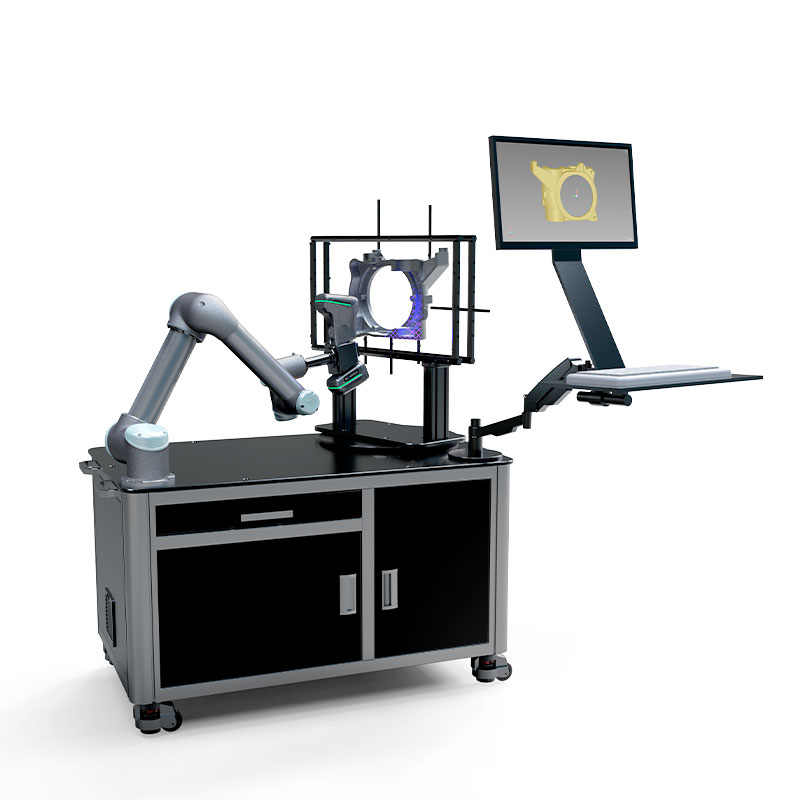
3D scanning is the process of capturing the physical dimensions, geometry, and surface characteristics of an object and converting this information into a digital 3D model. Unlike traditional measurement tools, 3D scanners can capture millions of points on an object’s surface within minutes, providing highly detailed and accurate representations.
Types of 3D Scanners:
Laser Scanners: Use laser beams to measure distances accurately.
Structured Light Scanners: Project light patterns and capture deformation to create models.
Photogrammetry-Based Scanners: Utilize multiple images from different angles to generate 3D models.
Suzhou Evolution Technology has integrated these scanning methods into their product line, offering tailored solutions for industrial, engineering, and prototyping needs.
2. Accelerating the Product Design Process
One of the most significant advantages of 3D scanning is its ability to speed up the design process. Designers can capture physical prototypes or existing parts directly and import them into CAD software for refinement, modification, or reverse engineering.
Benefits for Product Design:
Eliminates manual measurement errors.
Reduces design cycle times.
Allows iterative prototyping and rapid adjustments.
Enhances collaboration between engineering, design, and manufacturing teams.
With 3D scanning, Suzhou Evolution Technology enables designers to quickly visualize complex geometries, accelerating innovation while maintaining precision.
3. Enhancing Prototyping Accuracy
Traditional prototyping methods often rely on sketches, 2D drawings, or manual measurements, which can introduce inaccuracies. 3D scanning captures every contour and detail, ensuring that prototypes closely match intended specifications.
Advantages:
High-fidelity digital replicas of physical objects.
Facilitates quality control before mass production.
Reduces material waste and rework costs.
Supports integration with 3D printing for rapid prototyping.
This accuracy ensures that products meet design standards and functional requirements, ultimately saving time and cost.
4. Reverse Engineering Made Easy
Reverse engineering is crucial when redesigning or improving existing products. 3D scanning allows engineers to create digital models of legacy parts, even when original CAD files are unavailable.
Applications:
Reproducing obsolete components.
Improving product ergonomics and performance.
Facilitating modifications for new manufacturing processes.
Suzhou Evolution Technology leverages 3D scanning to assist clients in reverse engineering projects, reducing dependency on outdated designs and improving product longevity.
5. Quality Control and Inspection
Quality assurance is critical in manufacturing. 3D scanning allows for precise inspection by comparing scanned models with CAD designs, detecting deviations, and identifying manufacturing defects.
Inspection Benefits:
Accurate measurement of complex geometries.
Early detection of dimensional errors.
Real-time analysis and reporting.
Supports ISO and industry-specific quality standards.
By integrating 3D scanning into inspection processes, manufacturers can maintain high quality while reducing production downtime.
6. Real-World Applications
3D scanning technology has a broad range of applications across industries:
Automotive: Reverse engineering engine components and body parts.
Aerospace: Ensuring precise tolerances for critical parts.
Consumer Products: Rapid prototyping and product customization.
Medical Devices: Custom prosthetics and implants with accurate fit.
Industrial Equipment: Inspection of complex machinery and tooling.
Suzhou Evolution Technology has successfully deployed scanning solutions across these sectors, helping clients optimize design, production, and inspection workflows.
7. Cost Efficiency and Resource Optimization
Although initial investment in 3D scanning may seem significant, the technology saves costs in the long term:
Reduces prototype iterations and material waste.
Minimizes manual labor and measurement errors.
Shortens time to market, providing a competitive advantage.
Companies utilizing Suzhou Evolution Technology’s scanners report faster design cycles and lower overall project costs, demonstrating tangible ROI.
8. Integration with 3D Printing and CAD
3D scanning complements modern CAD and 3D printing workflows. By scanning a physical prototype, designers can directly import digital files into CAD software or send them to 3D printers for rapid iteration.
Workflow Benefits:
Streamlined digital-to-physical pipeline.
Allows real-world testing and immediate design modifications.
Supports mass customization and small-batch production.
This integration fosters innovation while maintaining design precision, a key differentiator in competitive markets.
9. The Future of Product Development
As technology advances, 3D scanning continues to evolve:
Faster, more accurate scanners capable of capturing intricate details.
AI-assisted scanning for automatic feature recognition.
Portable and handheld devices for on-site measurements.
Integration with augmented reality (AR) for enhanced visualization.
Suzhou Evolution Technology is actively developing next-generation 3D scanning and vision inspection products to meet these emerging needs, positioning itself as a leader in industrial innovation.
10. Conclusion
3D scanning is reshaping product design, prototyping, and manufacturing. From accelerating design cycles to improving quality control, the technology offers unparalleled precision, efficiency, and flexibility. Suzhou Evolution Technology exemplifies how cutting-edge scanning solutions can empower industries to innovate faster, reduce costs, and maintain high-quality standards. For businesses aiming to stay competitive in the modern market, embracing 3D scanning is no longer optional—it’s essential.
www.szevotech.com
Suzhou Evolution Technology Co., Ltd.