Introduction
With the rapid development of unmanned aerial vehicles (UAVs), stabilized imaging technology has become an essential part of modern drone applications. From security surveillance and land surveying to industrial inspection, professional users increasingly require cameras that can capture clear, stable, and accurate images under complex operating conditions. A high-performance 3-axis gimbal camera provides advanced stabilization capabilities, allowing drones to collect reliable visual data while moving, rotating, or operating in challenging environments. As a professional provider of UAV imaging solutions, Wuhan Kimbal Technology focuses on developing advanced gimbal camera systems that help customers improve operational efficiency and achieve more accurate aerial data collection.
Unlike traditional fixed cameras, a 3-axis gimbal camera uses three independent stabilization axes to compensate for unwanted movements caused by drone vibration, wind interference, and flight direction changes. This technology ensures that the camera maintains a stable viewing angle, resulting in smoother video transmission, clearer images, and more reliable inspection results. Today, 3-axis gimbal camera systems are widely used in industries that require precision, real-time monitoring, and professional aerial imaging capabilities.
What Is a 3-Axis Gimbal Camera?
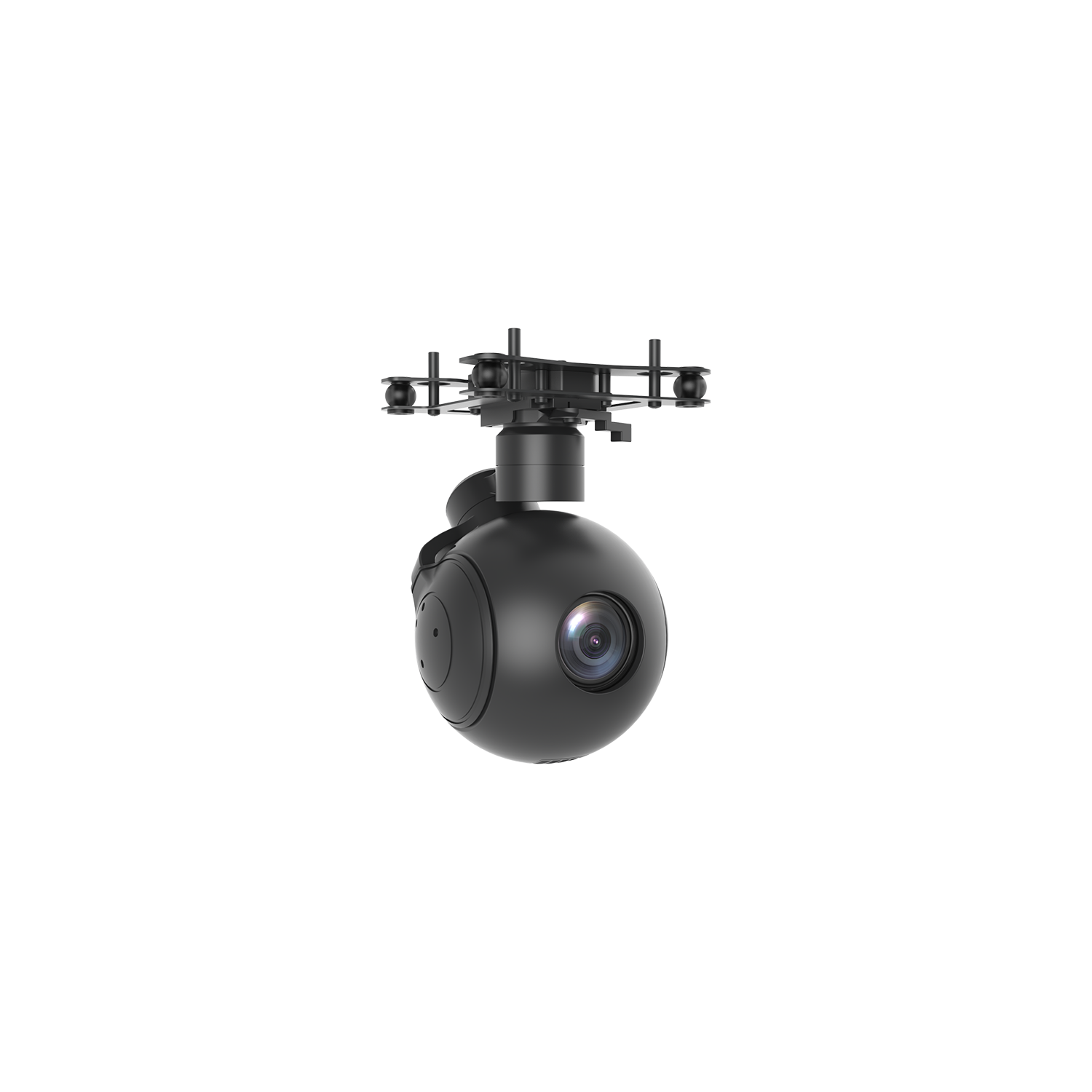
A 3-axis gimbal camera is an advanced camera stabilization system designed for UAV platforms, robotics, and other mobile applications. It uses three motorized axes to control camera movement:
-
Pitch axis: Controls vertical camera movement, allowing operators to adjust the viewing angle upward or downward.
-
Roll axis: Compensates for side-to-side tilting caused by drone movement.
-
Yaw axis: Maintains directional stability when the drone rotates or changes flight direction.
By controlling all three movement directions, a 3-axis gimbal camera provides significantly better stabilization compared with 2-axis systems. This makes it especially suitable for professional applications where image accuracy and smooth video output are critical.
A modern drone gimbal camera usually integrates brushless motors, high-precision sensors, intelligent control algorithms, and advanced imaging modules. These components work together to ensure stable performance even during high-speed flight or outdoor operations.
Why 3-Axis Gimbal Cameras Are Important for Drone Applications
Drone operations often involve movement, vibration, and environmental interference. Without proper stabilization, captured images may become blurry, distorted, or difficult to analyze.
A reliable UAV camera stabilization system provides several important advantages:
Improved Image Quality
The main benefit of a 3-axis gimbal camera is its ability to maintain image stability. Whether a drone is flying in strong winds or performing complex maneuvers, the gimbal continuously adjusts the camera position to reduce shaking.
This is particularly important for:
-
High-resolution photography
-
Video surveillance
-
Mapping projects
-
Infrastructure inspection
-
Precision measurement
Enhanced Data Accuracy
Many industries rely on drone images for decision-making. Unstable images can reduce measurement accuracy and create difficulties during data analysis.
A stabilized camera solution helps ensure that collected images remain consistent, improving the reliability of:
-
Surveying data
-
Inspection reports
-
Security monitoring records
-
Geographic mapping information
Better Operational Efficiency
With a professional 3-axis gimbal camera system, operators can complete missions faster because fewer repeated flights are required to capture usable data.
This helps reduce:
-
Labor costs
-
Inspection time
-
Equipment downtime
-
Operational risks
3-Axis Gimbal Camera Applications in Security Surveillance
Security is one of the fastest-growing application areas for drone technology. Traditional surveillance systems often have limitations in terms of coverage, mobility, and accessibility. UAVs equipped with a high-quality drone gimbal camera provide a flexible solution for monitoring large areas and responding quickly to security needs.
Border and Perimeter Monitoring
Large border areas, industrial zones, and restricted locations require continuous monitoring. Drones equipped with a 3-axis gimbal camera can patrol wide areas while maintaining stable video transmission.
The yaw stabilization function allows the camera to track targets smoothly even when the drone changes direction. This provides security teams with clearer situational awareness.
Typical applications include:
-
Border surveillance
-
Military monitoring
-
Critical infrastructure protection
-
Industrial park security
Public Safety and Emergency Response
During emergencies, fast and accurate information is essential. Drones equipped with stabilized cameras can quickly reach areas that are difficult or dangerous for personnel.
A 3-axis gimbal camera system helps rescue teams by providing:
-
Real-time aerial views
-
Stable video communication
-
Wide-area observation
-
Target identification support
Applications include:
-
Search and rescue missions
-
Disaster monitoring
-
Fire detection
-
Emergency response operations
Law Enforcement Applications
Law enforcement agencies increasingly use UAV systems for crowd monitoring, traffic management, and public safety operations.
A professional UAV camera stabilization system allows operators to:
-
Follow moving objects smoothly
-
Maintain clear visual evidence
-
Monitor large areas efficiently
Compared with handheld cameras or fixed surveillance systems, drone-based solutions provide greater flexibility and mobility.
3-Axis Gimbal Camera Applications in Surveying and Mapping
Surveying is another important field where stabilized aerial imaging plays a critical role. Traditional surveying methods can be time-consuming and require significant manpower, especially in large or difficult-to-access areas.
A drone equipped with a professional 3-axis gimbal camera system enables surveyors to collect high-quality aerial images for accurate mapping, measurement, and analysis. Compared with conventional cameras, stabilized drone cameras can maintain consistent image quality during flight, which improves the reliability of collected data.
Land Surveying
For construction, urban planning, and land development projects, accurate topographic information is essential. Drones equipped with an aerial inspection camera can quickly capture large amounts of image data from different angles and heights.
The stabilization performance of a 3-axis gimbal camera helps reduce image distortion caused by drone vibration and movement, supporting more accurate mapping results.
Typical applications include:
-
Land measurement
-
Construction site mapping
-
Urban development planning
-
Infrastructure documentation
By combining UAV platforms with advanced imaging systems, surveying teams can complete projects faster while reducing the risks associated with traditional field operations.
Photogrammetry
Photogrammetry relies on overlapping aerial images to create detailed 3D models, digital maps, and measurement data. The quality of captured images directly affects the accuracy of the final output.
A stabilized drone gimbal camera improves photogrammetry performance by maintaining consistent camera angles and reducing unwanted movement during flight.
Professional applications include:
-
3D terrain modeling
-
Archaeological surveys
-
Mining measurement
-
Environmental monitoring
For surveying companies, choosing a reliable 3-axis gimbal camera supplier is important because stable imaging performance directly influences project accuracy and efficiency.
Agricultural Surveying
Modern agriculture increasingly depends on drone technology to monitor crops, analyze field conditions, and improve resource management.
A 3-axis gimbal camera allows agricultural drones to capture stable aerial images for:
-
Crop analysis
-
Plant health monitoring
-
Field inspection
-
Irrigation planning
When integrated with multispectral sensors or high-resolution cameras, stabilized gimbal systems provide farmers with valuable information for improving productivity and making data-driven decisions.
3-Axis Gimbal Camera Applications in Industrial Inspection
Industrial inspection is one of the most demanding application areas for UAV imaging systems. Many industrial facilities contain structures that are difficult, expensive, or dangerous to inspect manually.
A professional industrial drone camera equipped with a 3-axis stabilization system provides a safer and more efficient inspection method. By using drones with stabilized imaging capabilities, companies can collect detailed visual information without exposing workers to unnecessary risks.
Power Line Inspection
Power transmission systems require regular inspection to ensure safe and reliable operation. Traditional inspection methods often require climbing towers or using specialized equipment, which can increase costs and safety concerns.
Drones equipped with a 3-axis gimbal camera can inspect:
-
Power towers
-
Transmission lines
-
Electrical components
-
Substation equipment
The precise stabilization capability allows inspectors to capture detailed images of small defects, corrosion, loose components, or structural damage.
A stable camera angle also improves inspection efficiency because operators can review clearer images without requiring repeated flights.
Oil and Gas Pipeline Inspection
Oil and gas pipelines often cover large distances across remote and challenging environments. Manual inspection can be time-consuming and difficult.
Drone inspection systems provide an efficient alternative by allowing operators to monitor pipeline conditions from the air.
A stabilized UAV camera system helps capture:
-
Pipeline surface conditions
-
Leakage indicators
-
Environmental changes
-
Structural abnormalities
The ability of a 3-axis gimbal camera to maintain stable positioning during flight makes it particularly suitable for long-range inspection missions.
Wind Turbine Inspection
Wind turbines require regular maintenance to ensure long-term performance. However, inspecting turbine blades and structures manually can be difficult due to their height and complex design.
A drone equipped with a 3-axis gimbal camera system can capture detailed images of turbine blades while maintaining a safe distance.
Benefits include:
-
Reduced inspection time
-
Improved worker safety
-
Higher inspection accuracy
-
Lower maintenance costs
The smooth movement and precise control provided by the gimbal allow inspectors to examine different areas of the turbine from multiple angles.
Building and Bridge Inspection
Infrastructure inspection requires accurate visual information to identify potential problems such as cracks, corrosion, or structural aging.
Aerial inspection cameras mounted on UAV platforms allow engineers to inspect:
-
Bridges
-
High-rise buildings
-
Industrial facilities
-
Transportation infrastructure
The stabilization performance of a 3-axis gimbal camera ensures that inspectors receive clear images even when drones operate near structures or in windy conditions.
Key Features to Consider When Selecting a 3-Axis Gimbal Camera
Different industries have different operational requirements. Before selecting a gimbal camera solution, businesses should evaluate several important factors.
Stabilization Accuracy
Stabilization accuracy is one of the most important performance indicators of a 3-axis gimbal camera.
A high-quality system should be able to:
-
Quickly respond to drone movements
-
Maintain camera positioning
-
Reduce vibration effects
-
Provide smooth video output
For professional applications such as inspection and surveillance, precise stabilization directly affects the usability of collected data.
Camera Compatibility
Different applications require different imaging capabilities. A flexible gimbal system should support various camera modules, including:
-
Optical zoom cameras
-
Thermal imaging cameras
-
Dual-sensor cameras
-
High-resolution imaging modules
Camera compatibility allows users to customize UAV systems according to specific project requirements.
Lightweight Design
Drone payload capacity directly affects flight performance. A well-designed 3-axis gimbal camera should balance stabilization performance with weight efficiency.
A lightweight design can help:
-
Extend flight time
-
Improve drone maneuverability
-
Reduce energy consumption
This is especially important for commercial UAV platforms that require long-duration missions.
Environmental Durability
Industrial and outdoor applications often expose equipment to challenging conditions.
A reliable gimbal camera system should provide:
-
Vibration resistance
-
Temperature adaptability
-
Dust protection
-
Long-term operational reliability
Durability ensures consistent performance in different environments.
Integration Capability
Professional drone projects require seamless integration between the camera system, flight controller, and software platform.
A capable supplier should provide support for:
-
Hardware integration
-
Communication protocols
-
Firmware adjustment
-
Customized configurations
Strong integration capability helps reduce development time and improves overall system performance.
Conclusion
The application of the 3-axis gimbal camera has expanded rapidly across security surveillance, surveying, and industrial inspection because of its superior stabilization performance, reliable imaging quality, and flexible integration capabilities. Whether monitoring critical areas, collecting accurate mapping data, or inspecting complex infrastructure, stabilized UAV camera systems are helping industries improve safety, efficiency, and operational decision-making.
Choosing the right technology partner is essential for achieving reliable performance in professional drone projects. With extensive experience in UAV imaging solutions, Wuhan Kimbal Technology continues to develop advanced 3-axis gimbal camera systems designed for various industrial applications, providing customers with reliable stabilization technology, customized integration options, and professional support to meet the growing demands of aerial imaging and intelligent drone operations.
www.kimbaltech.com
kimbal