The modern architectural landscape demands more than just functional HVAC components; it requires solutions that seamlessly integrate performance, design, and flexibility. Among these solutions, the dual slot diffuser stands out as a versatile choice, combining precise air distribution with aesthetic appeal. Engineered for both form and function, this type of diffuser addresses the unique challenges posed by contemporary spaces, from commercial high-rises to cultural institutions, ensuring comfort without compromise. In this blog post, Tanto, as high quality linear slot diffuser solutions supplier, will share the features of dual slot diffuser for seamless architectural air distribution.
Design Principles of Dual Slot Diffuser
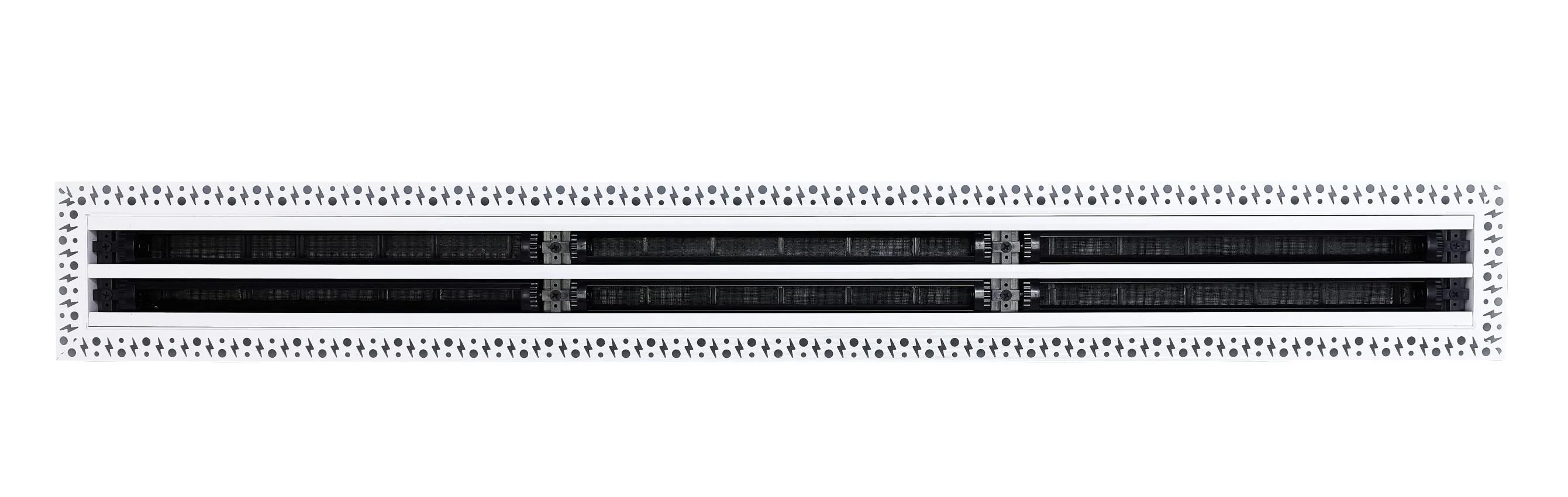
A dual slot diffuser is more than just a grille; it is a carefully engineered device where every element serves a specific purpose. The core design revolves around the use of two parallel slots that guide air with minimal turbulence, providing uniform distribution across occupied zones. Unlike conventional diffusers that often rely on a single wide opening, the dual-slot configuration allows finer control of airflow, reducing drafts and maintaining thermal comfort even at low velocities.
The diffuser's aerodynamic pattern controllers, typically crafted from extruded aluminum, are adjustable to suit varying airflow requirements. These controllers not only shape the horizontal and vertical trajectory of air but also maintain consistent performance across a wide range of volumes. This level of precision is essential for Variable Air Volume (VAV) systems, where airflow changes dynamically according to occupancy or load conditions.
Airflow Performance Optimization in Dual Slot Diffusers
One of the most critical aspects of dual slot diffusers is their ability to maintain stable air patterns at varying airflow rates. The two-slot design inherently divides and directs air streams, reducing the risk of eddies or turbulence that can compromise comfort. Each slot can be independently calibrated to balance velocity, throw, and diffusion patterns, allowing engineers to fine-tune distribution without resorting to excessive ductwork adjustments.
In applications with sensitive temperature or ventilation requirements, such as auditoriums, galleries, or executive offices, this stability is invaluable. By controlling the angle and shape of the air streams, dual slot diffusers create a soft, uniform flow that reduces noise while minimizing thermal gradients in occupied spaces. This combination of quiet operation and precise airflow ensures that occupant comfort is not sacrificed, even in challenging environments.
Architectural Integration of Dual Slot Diffusers
Beyond performance, modern buildings demand components that complement interior design. Dual slot diffusers are designed with architectural elegance in mind. Available in multiple frame styles, materials, and finishes, they can seamlessly integrate into ceilings or walls without disrupting aesthetic continuity. The linear form factor supports continuous lengths, making it ideal for open-plan offices, lobbies, and other expansive spaces where visual consistency is key.
The ability to match finishes with architectural elements allows designers to prioritize visual appeal alongside technical performance. Aluminum extrusions, for example, can be anodized or powder-coated to suit any interior palette, providing a cohesive look. In addition, the slim profile and modular construction of dual slot diffusers make retrofitting simpler, supporting sustainable renovation initiatives without sacrificing efficiency.
Customization Options for Dual Slot Air Distribution
A significant advantage of dual slot diffusers is their adaptability to unique project requirements. Designers and engineers can select slot widths, quantities, and mounting configurations tailored to specific airflow objectives. Adjustable blades within each slot provide further flexibility, enabling precise direction of air in both horizontal and vertical planes.
This level of customization extends beyond simple adjustments. For example, diffusers can be configured to blend displacement ventilation strategies with conventional air distribution, effectively optimizing energy use while enhancing occupant comfort. Such integration demonstrates how dual slot diffusers support not just HVAC performance but also the broader objectives of building sustainability and efficiency.
Interaction With Variable Air Volume Systems
Dual slot diffusers are particularly effective in VAV systems due to their ability to maintain uniform performance across varying volumes. Traditional diffusers can produce uneven distribution when airflow changes dynamically, leading to hot or cold spots. The dual-slot design, however, stabilizes airflow even at low volume conditions, preventing discomfort and maintaining indoor air quality.
In addition, the aerodynamic controllers reduce the need for complex terminal adjustments, simplifying system commissioning. This efficiency is not only beneficial for operational consistency but also reduces maintenance time and cost, highlighting the diffuser’s role as a long-term investment in building performance.
Noise Reduction Through Precision Air Control
Acoustic performance is often overlooked in air distribution design, yet it is critical in high-end architectural spaces. Dual slot diffusers minimize noise generation through precise control of air velocity and patterning. By splitting airflow into two well-directed streams, these diffusers reduce turbulence-induced sound while maintaining high diffusion efficiency.
This quiet operation is advantageous in conference rooms, libraries, hospitals, or any environment where low background noise is crucial. It allows designers to meet stringent acoustic standards without resorting to bulky sound attenuators or other mechanical interventions.
Maintenance and Longevity Considerations
Durability and ease of maintenance are vital for any HVAC component, and dual slot diffusers are designed with both in mind. The use of high-quality extruded aluminum ensures resistance to corrosion and warping, maintaining structural integrity over time. Additionally, the modular design allows for easy removal and cleaning of internal components, ensuring optimal airflow and hygiene standards throughout the system’s lifespan.
Routine maintenance is simplified by the accessible configuration of the slots and controllers. Even in large-scale installations, individual segments can be serviced without disassembling entire ceiling sections, reducing downtime and labor costs.
Integration With Smart Building Systems
As smart building technology becomes increasingly prevalent, dual slot diffusers can be integrated into advanced HVAC controls. Sensors monitoring temperature, occupancy, or air quality can communicate with VAV systems to adjust the diffuser’s blade settings automatically. This enables precise, energy-efficient conditioning tailored to real-time building requirements, enhancing comfort while minimizing operational costs.
Moreover, predictive maintenance algorithms can monitor airflow patterns and detect potential obstructions or inefficiencies, allowing facility managers to act proactively. This combination of intelligent control and high-performance diffuser design positions dual slot diffusers as an essential component in modern, data-driven building infrastructure.
Comparative Perspective: Dual Slot vs. Traditional Diffusers
While single-slot or multi-blade diffusers serve conventional needs, dual slot diffusers offer a refined balance of performance, aesthetics, and adaptability. The dual-slot configuration provides smoother airflow, better pattern stability at low velocities, and enhanced acoustic performance. Additionally, the linear design supports architectural continuity in ways that conventional round or square diffusers cannot, making them particularly suitable for high-profile or design-sensitive projects.
By merging technical efficiency with visual elegance, dual slot diffusers address both engineering and architectural goals, offering a solution that transcends traditional air distribution methods.
Future Trends in Dual Slot Diffuser Design
Looking ahead, dual slot diffusers are likely to evolve alongside building automation and sustainability initiatives. Materials with lower embodied carbon, integrated airflow sensors, and adaptive controllers capable of self-optimizing based on occupancy patterns are poised to become standard. Furthermore, aesthetic customization will expand, with diffusers potentially doubling as lighting or acoustic features, blurring the lines between mechanical infrastructure and interior design.
This convergence of technology, sustainability, and design ensures that dual slot diffusers will remain a relevant and innovative choice for forward-looking architectural projects.
Conclusion: Elevating Comfort and Design With Dual Slot Diffusers
The dual slot diffuser represents a sophisticated approach to air distribution, harmonizing precision engineering with architectural elegance. By offering stable airflow, acoustic performance, aesthetic versatility, and adaptability to modern HVAC systems, it addresses the complex demands of contemporary buildings.
From high-performance office towers to culturally significant public spaces, dual slot diffusers enable designers and engineers to achieve both functional and visual excellence. Their role extends beyond mere ventilation, serving as a critical element in shaping indoor comfort, energy efficiency, and sustainable design strategies.
Incorporating dual slot diffusers into building projects is not just a technical decision—it is a commitment to superior indoor environmental quality and architectural integrity.
www.tantotrade.com
Tanto