Why UV Resin Selection Requires an Application-Based Approach
UV-curable resins are widely used in industrial coatings, printing inks, adhesives, and functional surface treatments. However, selecting a suitable resin involves more than matching a product name to an application. Formulators must consider substrate properties, formulation compatibility, application methods, curing equipment, and the performance required in the finished film.
A resin that performs well on wood may not provide the same adhesion on PET film, TPU, ABS, glass, or metal. Similarly, a formulation designed for conventional mercury UV lamps may require adjustments when used with UV LED curing. These differences make application-specific material selection an important part of coating and ink development.
For buyers evaluating UV-curable resin manufacturers in China, technical support and product documentation can therefore be as important as the available product range. A useful supplier should help identify suitable candidate materials, explain their relevant properties, and support evaluation under actual application conditions.
Key Factors in UV-Curable Resin Selection
UV resin is a major film-forming component in a UV-curable formulation. Its chemistry can influence viscosity, curing behavior, hardness, flexibility, adhesion, scratch resistance, chemical resistance, and surface appearance. Nevertheless, the final performance of a coating or ink depends on the complete formulation rather than the resin alone.
Substrate compatibility is one of the first considerations. Plastic components, PET and BOPP films, glass, metal, wood, leather, and PVC or SPC flooring present different surface and processing requirements. Resin selection should account for adhesion, flexibility, surface preparation, and any subsequent processing that the finished product must withstand.
Application and curing conditions also affect material suitability. Spray, roller, curtain, screen, flexographic, offset, and inkjet applications impose different requirements on viscosity, flow, film formation, and process stability. Mercury UV, UV LED, excimer, dual-cure, and moisture-assisted curing systems likewise require appropriate material and formulation evaluation.
Target performance must be assessed as a combination of properties. High hardness does not automatically mean high scratch resistance, while greater flexibility does not necessarily guarantee good adhesion. Formulators may need to balance surface durability, gloss, leveling, yellowing resistance, chemical resistance, and film flexibility according to the end-use application.
For these reasons, a product listed for a particular application should be treated as a candidate for evaluation, not as a guaranteed solution for every formulation within that category.
Understanding Resin Families and Technical Specifications
Different UV resin families provide different starting points for formulation development. Polyurethane acrylates are commonly evaluated when a formulation requires a balance of toughness, flexibility, adhesion, and surface durability. Epoxy acrylates may be considered when hardness, fast curing, and cost are important selection factors. Other resin chemistries, including polyester-based and specialized modified resins, may be relevant where viscosity, substrate adhesion, flexibility, or particular surface properties are priorities.
These are general selection considerations rather than universal performance rankings. The properties of individual grades can vary, so technical data should be reviewed before a material is shortlisted.
A resin technical data sheet (TDS) provides a consistent starting point for comparison. Depending on the product, relevant information may include chemical or resin type, functionality, appearance, color, acid value, viscosity, key characteristics, and typical applications. Comparing these specifications helps formulators narrow down potential candidates, but it does not replace compatibility testing or application trials.
Photoinitiators, reactive diluents, wetting and leveling agents, defoamers, pigments, fillers, and other formulation components must also be considered. Their interactions can influence curing, flow, surface quality, and overall film performance. Evaluating a resin independently of the rest of the formulation may therefore lead to misleading conclusions.
How Technical Support Improves Material Evaluation
Guangdong Lencolo New Material Co., Ltd., operating under the Lencolo brand, supplies UV-curable resins and related materials for coatings, inks, adhesives, and other industrial applications. Its product knowledge system covers resin families, individual product specifications, substrate considerations, application methods, curing approaches, and formulation troubleshooting.
This structure supports a more systematic approach to material selection. Rather than relying solely on a broad application label, a preliminary assessment can consider the substrate, target properties, existing formulation, coating or printing process, and available curing equipment.
When application information is incomplete, recommendations should remain preliminary. Where several grades appear suitable, comparing their principal differences and arranging trials can help identify which materials warrant further evaluation. If an existing formulation is available, the resin should be considered alongside its monomers, photoinitiators, additives, pigments or fillers, and other relevant components.
Technical documentation should also distinguish confirmed data from reference guidance. Formulation examples and processing conditions are useful starting points, but they should not be treated as universal instructions. Actual performance depends on the full formulation, substrate, equipment, film thickness, and operating conditions. Final suitability needs to be established through testing relevant to the intended application.
Evaluating UV Resin Manufacturers in China
When comparing UV resin manufacturers in China, buyers should look beyond the breadth of a catalog. Relevant considerations include the range of resin chemistries available, the clarity of technical documentation, experience with the intended application, sample availability, and the ability to discuss formulation requirements.
A practical evaluation process begins by defining the substrate, application method, curing system, and essential performance targets. Buyers can then compare candidate grades using consistent technical specifications, conduct laboratory trials, and validate promising formulations under production-relevant conditions.
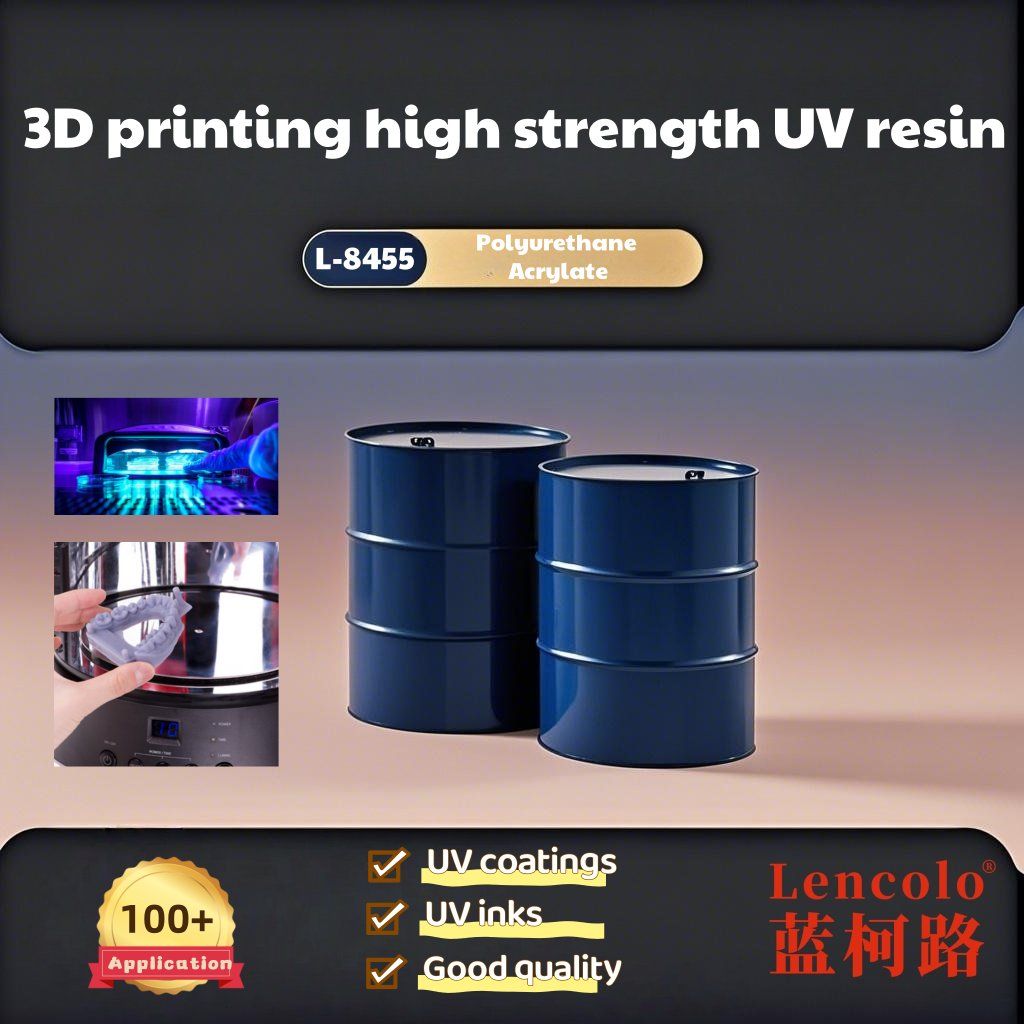
Lencolo's portfolio covers UV resin technologies and related materials for applications including wood and plastic coatings, printing inks, packaging, PET and BOPP films, vacuum metallization, flooring, 3D printing, and adhesives. The suitability of any individual grade should be confirmed against the specific formulation and process requirements.
Ultimately, successful UV resin selection depends on matching material chemistry to the complete application rather than relying on a single performance claim. Manufacturers that provide clear product information, application-oriented guidance, and a structured evaluation process can help formulators make more informed decisions and reduce the risk of unsuitable material selection.
https://www.lencolo37.com/
Guangdong Lencolo New Material Co., Ltd.