In modern electronics manufacturing, an SMT assembly manufacturer is no longer evaluated only by placement speed or line capacity. The real competitive factor is process stability across the entire manufacturing chain—from PCB fabrication to final functional testing. Any variation in materials, board quality, or assembly control directly translates into yield loss, rework cost, and unpredictable delivery cycles.
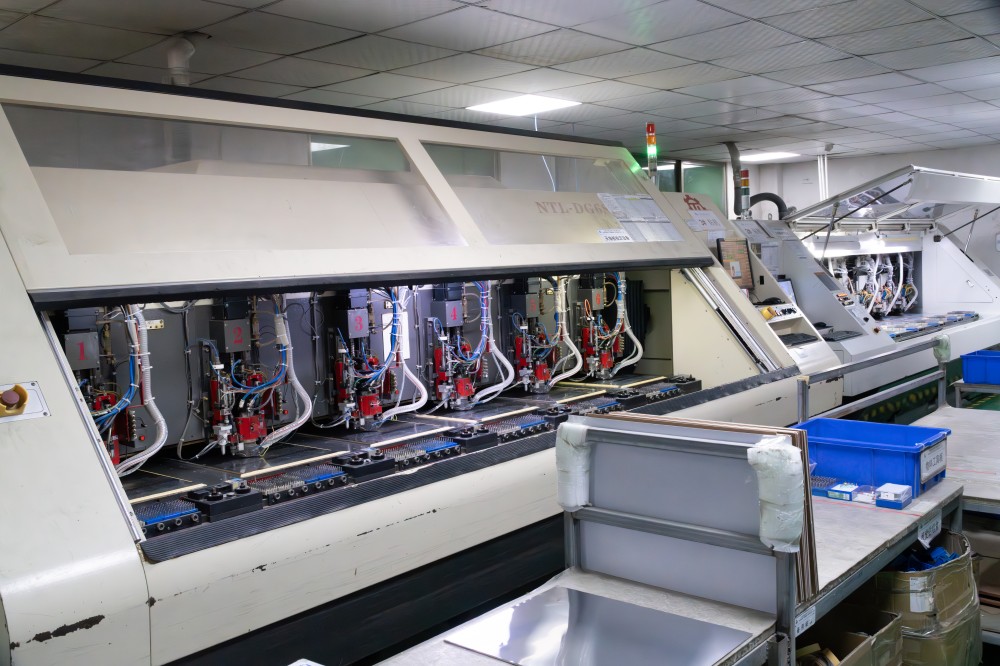
Rongbaijia Technology, established in 2009, operates as a vertically integrated PCB manufacturer and PCBA service provider, combining PCB fabrication, component sourcing, SMT assembly, and testing under one controlled manufacturing system. This structure significantly reduces cross-supplier variability, which is one of the most common hidden risks in SMT production.
A typical SMT production issue does not originate at the placement stage. Instead, it often starts earlier at PCB level—especially in impedance inconsistency, pad deformation, or copper thickness variation. Rongbaijia’s manufacturing capability covers single-sided, multilayer, HDI, and thick copper PCB structures, supporting up to 20+ layers with controlled impedance design. This ensures that signal integrity requirements for high-speed circuits such as communication modules and industrial control boards are met before SMT even begins.
In SMT assembly, the factory operates 7 fully automated SMT production lines combined with 2 wave soldering lines, allowing parallel handling of high-mix, high-volume production. The practical advantage is not just capacity, but process segmentation control. For example, fine-pitch components for HDI boards can be routed through high-precision SMT lines with optimized stencil printing parameters, while power boards with aluminum substrates or thick copper designs can be processed separately to avoid thermal and mechanical stress conflicts.
One of the key differentiators in SMT manufacturing is component sourcing stability. When sourcing is fragmented, issues such as reel mismatch, batch inconsistency, or counterfeit risk become difficult to control. By integrating component procurement into the same system, the SMT process becomes more predictable. Incoming materials are synchronized with production scheduling, reducing line stoppages caused by BOM shortages or substitution delays.
Quality control is embedded directly into the SMT flow. Automated Optical Inspection (AOI) is deployed after placement to detect solder joint defects, misalignment, and polarity errors at early stages. This is particularly critical for fine-pitch ICs used in consumer electronics, communication modules, and automotive control boards. In addition, flying probe testing is used at the PCBA stage to validate circuit continuity without relying solely on fixture-based testing, which improves flexibility for small and medium batch production.
For SMT assembly manufacturer operations, yield consistency is closely linked to thermal profile control during reflow soldering. Different PCB structures—such as FR-4, metal core boards, and rigid-flex designs—require distinct temperature curve calibration. A unified production environment that handles PCB fabrication and SMT assembly allows engineers to align material properties with reflow parameters more precisely, reducing defects such as tombstoning, voiding, and cold solder joints.
From a delivery perspective, integrated SMT manufacturing reduces the number of handover stages between PCB suppliers and assembly factories. This eliminates typical delays caused by quality disputes, engineering clarification loops, or logistics fragmentation. In practical production cycles, this often shortens overall lead time from PCB prototyping to final PCBA delivery by several days to weeks depending on complexity.
In industries such as automotive electronics, industrial control, and medical devices, where SMT assembly reliability directly impacts system safety, process traceability becomes a critical requirement. Full-process tracking—from PCB lot number to final assembly batch—ensures that any quality issue can be traced back to its root cause without ambiguity.
Ultimately, for any SMT assembly manufacturer, the core value is no longer just “assembling components onto boards.” It is the ability to control variability across the entire electronic manufacturing chain. Vertical integration, stable PCB quality, synchronized component sourcing, and tightly controlled SMT processes together form a predictable manufacturing system that supports high-reliability electronics at scale.
www.rbjpcb.com
Shenzhen Rongbaijia Technology Co., Ltd.