In recent years, silk peptide has gained significant attention as a high-performance bioactive ingredient across a wide range of advanced industries, including skincare formulations, biomedical applications, and functional material development. Derived from natural silk protein through controlled hydrolysis, silk peptide retains the beneficial qualities of silk while offering enhanced usability and compatibility in modern product systems. Compared with intact protein structures, silk peptide demonstrates superior solubility, improved biological affinity, and higher bioavailability, which greatly expands its application potential. Its multifunctional characteristics—such as moisture retention, breathable film formation, and strong interaction with biological tissues—make silk peptide an increasingly important component in next-generation product innovation. As demand continues to grow for sustainable and naturally derived ingredients, silk peptide is becoming a strategically valuable material in both scientific research and commercial formulation development.
Composition Profile of Silk Peptide
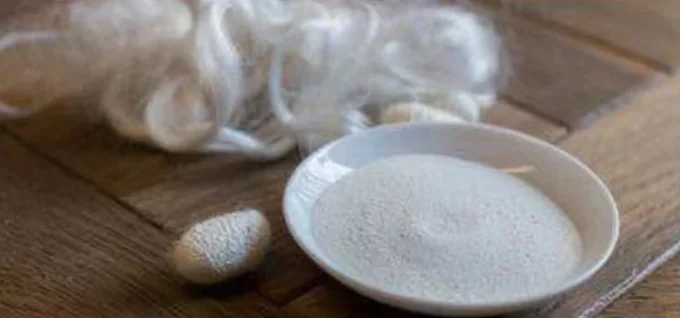
The fundamental composition of silk peptide is made up of short-chain polypeptides produced through the hydrolysis of silk fibroin, the primary structural protein found in silkworm silk. This controlled breakdown process transforms large, complex protein molecules into smaller peptide fragments, significantly improving their functional performance and adaptability in different environments.
Amino acids such as glycine, alanine, and serine are abundantly present in silk peptide, forming a well-balanced biochemical structure. Each component plays a distinct role in determining its properties: glycine and alanine contribute to molecular stability and dense structural organization, while serine enhances hydrophilicity, enabling improved moisture absorption and retention.
This specific amino acid distribution gives silk peptide a rare combination of structural integrity, softness, and hydration capability. These features make it especially suitable for cosmetic and skincare formulations, where both moisture balance and texture enhancement are essential. The consistent amino acid profile also ensures stable performance across different formulation systems, supporting its reliability in industrial applications.
Molecular Architecture of Silk Peptide
Unlike natural silk fibroin, which possesses a highly ordered and rigid structure, silk peptide exhibits a simplified molecular configuration due to the hydrolysis process. The reduction in molecular weight and shortening of peptide chains significantly enhances its flexibility and solubility, particularly in water-based systems.
While raw silk typically forms stable beta-sheet crystalline structures, silk peptide transitions into a more amorphous and dynamic molecular state. This transformation allows it to disperse more evenly in formulations, improving uniformity and functional integration with other ingredients.
Despite this structural simplification, internal hydrogen bonding still provides a degree of molecular cohesion. As a result, silk peptide maintains essential properties such as film formation and surface protection while gaining increased adaptability. This balance between structural looseness and functional stability makes silk peptide highly effective in both cosmetic and biomedical applications.
Additionally, its responsive nature allows it to adjust to environmental factors such as humidity and temperature. This adaptability enhances its performance in real-world conditions, especially in skincare systems where environmental interaction plays a crucial role.
Processing and Functional Characteristics of Silk Peptide
The processing advantages of silk peptide stem mainly from its low molecular weight, excellent water solubility, and strong compatibility with a wide variety of formulation ingredients. Because of its hydrolyzed structure, it dissolves quickly in aqueous systems, producing clear, stable solutions without sedimentation or separation.
One of its most valuable functional traits is its ability to form a thin, breathable film upon application. This film helps lock in moisture while improving surface smoothness, making it particularly beneficial in cosmetic and personal care products. In addition, this film layer provides a mild protective effect, enhancing the overall performance of the final formulation.
From a manufacturing perspective, silk peptide demonstrates strong stability under moderate temperature and pH conditions. This reduces the likelihood of degradation during production, storage, or transportation. Its chemical compatibility also allows it to blend seamlessly with widely used cosmetic ingredients such as hyaluronic acid, collagen, and various plant-based extracts.
Because of these characteristics, silk peptide can be easily incorporated into diverse product formats, including emulsions, gels, serums, and liquid solutions. Its combination of stability, versatility, and multifunctionality makes it a highly efficient ingredient for modern formulation design and industrial processing.
Conclusion
Overall, silk peptide represents a unique bridge between naturally derived biomaterials and advanced functional applications. Its carefully optimized composition, simplified yet effective molecular structure, and strong processing adaptability position it as a highly valuable ingredient in multiple industries.
As innovation in biotechnology and formulation science continues to advance, silk peptide is expected to play an even more prominent role in cosmetics, healthcare products, and sustainable material development. Its blend of performance efficiency, safety profile, and eco-friendly origin ensures that silk peptide will remain a key focus in the evolution of next-generation functional ingredients.
https://www.silk-future.com/Silk-Extract
www.silk-future.com
Silk-Future