As autonomous mobility evolves from pilot programs to large-scale commercial deployment, mechanical steering and braking systems are gradually giving way to fully electronic vehicle control architectures. At the center of this transformation is Next-Gen Drive-By-Wire Technology, which replaces traditional mechanical linkages with intelligent electronic control systems that enable precise steering, braking, acceleration, and chassis management.
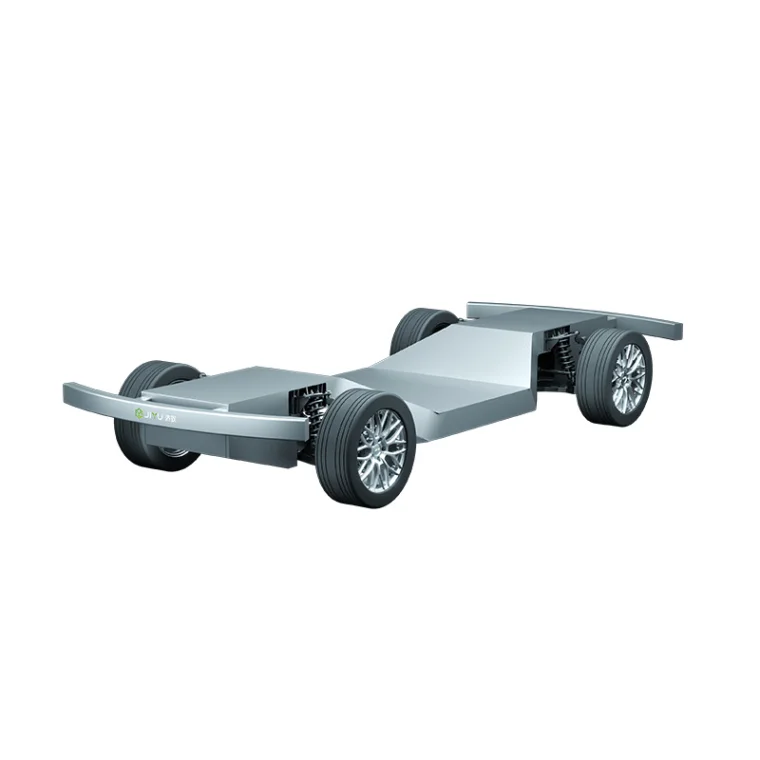
For autonomous logistics vehicles, delivery robots, special-purpose unmanned vehicles, and future passenger cars, drive-by-wire is no longer an optional technology. It has become the fundamental architecture that enables software-defined vehicles, autonomous driving algorithms, and intelligent fleet management.
Jiyu Technology focuses on the independent development, testing, and mass production of drive-by-wire chassis systems. Its technology supports multiple autonomous commercial applications through standardized and customized chassis platforms, providing a flexible foundation for next-generation unmanned mobility.
Why Conventional Mechanical Control Limits Autonomous Driving
Traditional vehicles rely on direct mechanical connections between the steering wheel, steering rack, brake pedal, and braking system. Although this architecture has proven reliable for human driving, it introduces significant limitations for autonomous systems.
Mechanical transmission components create unavoidable backlash, friction losses, and response delays. Steering accuracy depends not only on actuator performance but also on wear of universal joints, steering shafts, hydraulic systems, and mechanical linkages.
For autonomous vehicles operating in warehouses, industrial parks, ports, campuses, or urban delivery routes, steering correction may occur dozens of times every second. Even small mechanical hysteresis can reduce trajectory tracking accuracy and increase energy consumption.
Next-Gen Drive-By-Wire Technology eliminates these mechanical constraints by converting driver or controller commands into electronic signals that are processed by redundant electronic control units (ECUs). Steering angle, braking force, and propulsion torque are calculated digitally before being executed by electric actuators with millisecond-level response capability.
The result is significantly higher control precision while enabling software-defined vehicle behavior that can be continuously optimized through algorithm updates.
High-Precision Electronic Steering Improves Path Tracking
One of the primary advantages of Next-Gen Drive-By-Wire Technology is steering accuracy.
Autonomous navigation systems typically rely on sensor fusion involving LiDAR, cameras, GNSS, inertial measurement units (IMU), and millimeter-wave radar. These sensors continuously generate trajectory corrections that require immediate execution.
Electronic steering actuators can achieve steering control accuracy within fractions of a degree while maintaining response times measured in milliseconds. Compared with hydraulic steering systems that experience pressure variation and temperature-dependent performance, electric drive-by-wire steering provides highly repeatable outputs across varying operating conditions.
For low-speed autonomous logistics vehicles traveling between 5 km/h and 30 km/h, precise steering significantly improves docking accuracy at loading stations and charging points.
For higher-speed autonomous platforms, accurate steering reduces lateral deviation during lane keeping while improving passenger comfort through smoother steering transitions.
Electronic Braking Enables Faster and More Predictable Control
Braking performance is equally critical in autonomous vehicle safety.
Mechanical brake systems often depend on hydraulic pressure generation and pedal input characteristics. In contrast, Next-Gen Drive-By-Wire Technology electronically controls braking force through independent brake actuators that respond directly to vehicle control commands.
Electronic braking offers several engineering advantages.
First, braking force can be distributed individually to each wheel, improving vehicle stability during emergency maneuvers.
Second, regenerative braking coordination becomes more precise for electric vehicles, maximizing energy recovery without sacrificing deceleration consistency.
Third, brake response remains highly repeatable because actuator output is controlled electronically rather than relying on mechanical pedal movement.
For autonomous commercial fleets operating continuously throughout the day, these improvements contribute to shorter stopping distances, smoother vehicle behavior, and reduced brake component wear.
Redundant System Architecture Improves Functional Safety
Safety is the defining requirement of every drive-by-wire system.
Unlike traditional mechanical systems, electronic control architectures must continue operating safely even if individual components experience faults.
Next-Gen Drive-By-Wire Technology therefore incorporates multiple layers of redundancy.
Steering controllers often employ dual or triple redundant ECUs capable of cross-checking operational status in real time.
Power supply redundancy ensures continued operation if one electrical circuit becomes unavailable.
Position sensors continuously verify actuator movement, while communication networks monitor command integrity across multiple vehicle controllers.
Fault diagnosis algorithms can identify abnormal signals within milliseconds and automatically transition the system into predefined safe operating modes.
This redundant architecture supports compliance with increasingly demanding automotive functional safety standards while improving operational reliability in commercial autonomous applications.
Software-Defined Chassis Accelerates Vehicle Development
Perhaps the greatest advantage of Next-Gen Drive-By-Wire Technology is that vehicle behavior becomes programmable.
Instead of redesigning mechanical components for every application, engineers can optimize steering sensitivity, braking response, acceleration profiles, and stability control through software calibration.
The same chassis platform can therefore support multiple commercial applications, including:
-
Autonomous logistics vehicles
-
Last-mile delivery robots
-
Intelligent sanitation vehicles
-
Autonomous patrol platforms
-
Special-purpose industrial vehicles
-
Passenger vehicle development platforms
Jiyu Technology has established complete capabilities covering independent R&D, testing, and mass production of drive-by-wire chassis systems. Its modular platform strategy allows customers to customize wheelbase, payload, steering configuration, and vehicle dimensions while maintaining a common electronic control architecture.
This significantly shortens development cycles for autonomous vehicle manufacturers and system integrators.
Integrated Chassis Control Enhances Vehicle Coordination
Traditional vehicle subsystems often operate independently.
Steering, braking, suspension, and propulsion communicate through multiple isolated controllers, introducing coordination delays.
Next-Gen Drive-By-Wire Technology integrates these systems into a unified chassis control platform.
Real-time coordination enables simultaneous optimization of steering angle, motor torque, braking force, and vehicle stability based on sensor feedback.
For autonomous vehicles navigating narrow warehouse aisles or complex urban environments, integrated chassis control improves trajectory accuracy while reducing unnecessary steering corrections and energy consumption.
This coordinated control also creates a more stable platform for autonomous perception systems, helping sensors maintain consistent positioning during dynamic maneuvers.
Supporting Large-Scale Autonomous Commercial Deployment
Commercial autonomous vehicles face operating conditions that differ significantly from passenger cars.
Many operate continuously for extended hours with frequent starts, stops, turning maneuvers, and varying payloads.
Drive-by-wire chassis systems must therefore deliver long-term durability in addition to control precision.
Jiyu Technology designs its chassis platforms for diverse commercial scenarios including unmanned logistics, autonomous delivery, industrial transportation, intelligent disinfection vehicles, and customized autonomous mobility solutions.
Because the company combines independent development, testing capability, and production capacity, new vehicle platforms can move more efficiently from prototype validation to volume manufacturing while maintaining consistent system architecture.
Conclusion
Next-Gen Drive-By-Wire Technology is redefining how autonomous vehicles are designed, controlled, and manufactured. By replacing mechanical transmission systems with intelligent electronic control, it enables higher steering precision, faster braking response, programmable vehicle behavior, and scalable autonomous platform development.
As commercial autonomous mobility expands across logistics, industrial automation, smart cities, and intelligent transportation, drive-by-wire technology is becoming the core infrastructure that connects perception, decision-making, and vehicle execution into a unified control system.
With comprehensive expertise in independent research, testing, customized development, and mass production of drive-by-wire chassis platforms, Jiyu Technology continues to support the evolution of software-defined vehicles, providing reliable chassis solutions that accelerate the deployment of next-generation autonomous transportation.
www.jiyudrivebywire.com
Shanghai Jiyu Technology Co., Ltd.