Introduction: Rethinking Outdoor Shelter for Hospitality and Events
As glamping, resort dining, and event venues continue to demand structures that combine visual appeal with all-weather reliability, the comparison between hybrid dome tents and traditional tents has become a central question for resort developers, event planning agencies, restaurant owners, boutique hotel operators, and individual glamping site owners. Outdoor hospitality projects often struggle to balance aesthetic appeal with structural durability and all-weather comfort, and traditional tents frequently lack adequate insulation, structural integrity against wind and snow, and the interior flexibility required for luxury guest experiences. This article examines how the Hybrid Dome, a premium outdoor shelter solution merging rigid glass structures with flexible fabric canopies, addresses these shortcomings compared to conventional tent designs.
Understanding the Structural Difference: Geodesic Engineering vs Traditional Tent Design
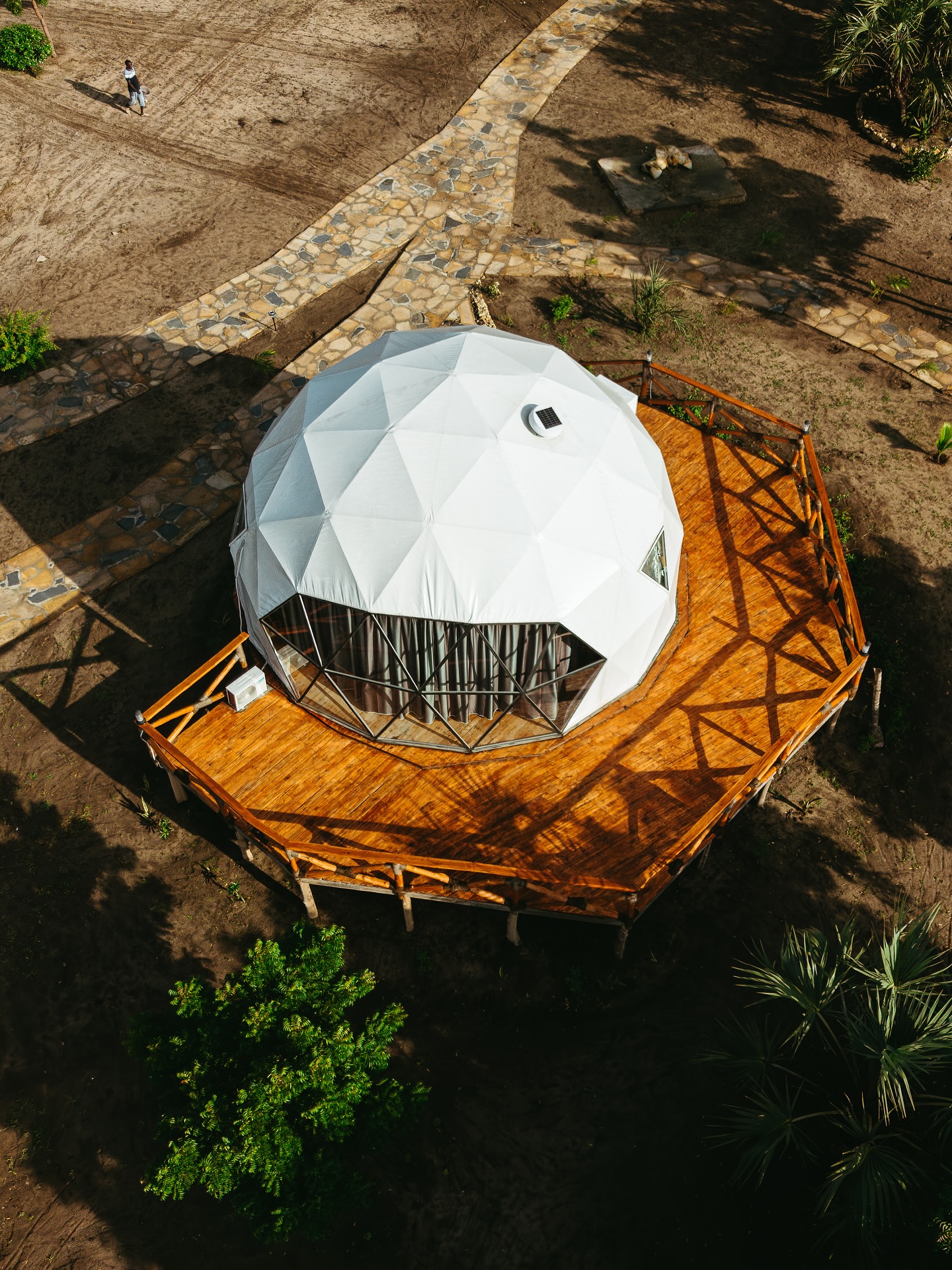
The core distinction between a hybrid dome tent and a traditional tent lies in structural geometry. Hybrid dome structures are built on geodesic dome geometry, which evenly distributes external loads, enhancing structural safety against high winds and heavy snow accumulation. Traditional tents typically rely on simpler pole-and-fabric configurations, which do not distribute load in the same aerodynamic manner. In contrast, the Hybrid Dome's frame uses high-strength hot-dip galvanized steel tubes that guarantee structural integrity under variable weather, giving it a distinct engineering advantage for locations exposed to storms, coastal winds, or seasonal snow.
The Hybrid Dome Advantage: Merging Glass and Fabric
Panoramic Visibility Without Sacrificing Protection
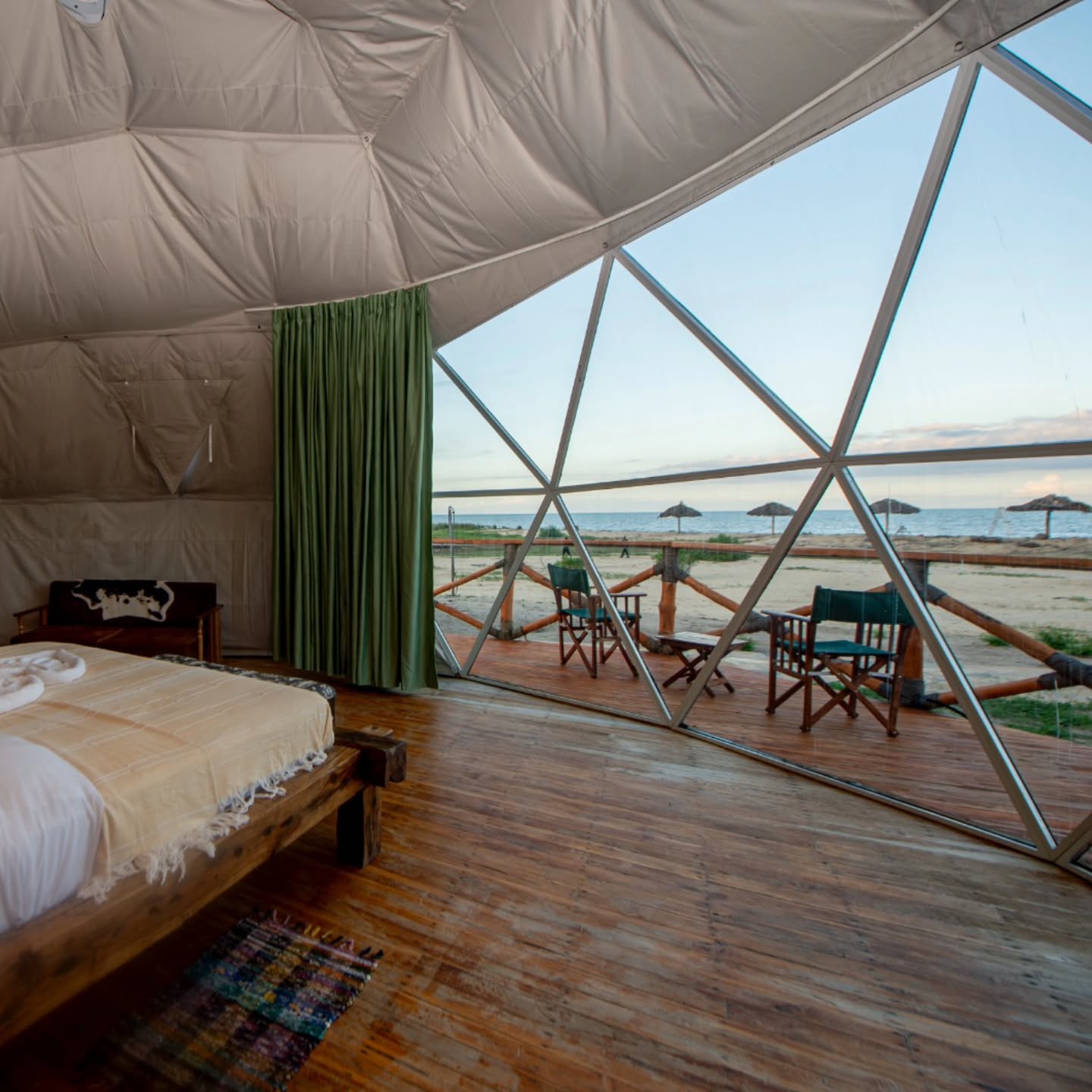
One of the most significant differentiators of the Hybrid Dome is its outer shell, composed of 850g/sqm PVC fabric combined with 5mm tempered safety glass. This hybrid cladding blends fabric and glass to offer a modern architectural statement and natural lighting, ensuring clarity, impact resistance, and weather protection simultaneously. Traditional tents, by comparison, are generally limited to opaque or semi-transparent fabric panels that restrict outward views and natural light penetration, which can diminish the guest experience in nature-immersive settings such as luxury resorts and eco-lodges.
Year-Round Climate Stability
The hybrid cladding system maintains a stable indoor climate for all-season use, solving the challenge of providing panoramic visibility while maintaining the lightweight flexibility and thermal efficiency of a tent. Traditional tents often lack this dual-material approach, making them more vulnerable to temperature fluctuations and reducing their usability across different seasons.
Traditional Tents: Common Limitations in Outdoor Hospitality
Traditional tent structures, while lightweight and easy to transport, generally fall short in three critical areas relevant to hospitality and event use: insulation quality, structural resistance to wind and snow load, and interior layout flexibility. These limitations become especially apparent in luxury glamping and event contexts, where guests expect both comfort and design sophistication. The pain point insight for the outdoor hospitality industry confirms that structures lacking these attributes cannot consistently meet the luxury standards demanded by resorts, eco-lodges, and urban social spaces.
Material and Framework Comparison
Outer Shell Composition
The Hybrid Dome's outer shell integrates 850g/sqm PVC fabric and 5mm tempered safety glass, a combination engineered specifically to ensure clarity, impact resistance, and weather protection. This is a more advanced material strategy than the single-layer fabric commonly found in traditional tents, which typically cannot offer the same level of transparency or impact resistance.
Frame and Corrosion Resistance
Framework construction is another area of clear distinction. The Hybrid Dome relies on high-strength hot-dip galvanized steel tubes, chosen specifically to guarantee structural integrity under variable weather. This corrosion resistance technology ensures long-term stability in humid or coastal environments, a critical requirement for hospitality venues situated near oceans, lakes, or high-humidity climates. Traditional tent frames, often made from lighter or less treated materials, may not offer the same longevity in such demanding environments.
Application Scenarios: Where Hybrid Domes Excel
The Hybrid Dome is specifically positioned for luxury resorts, garden restaurants, and high-end eco-lodges, spaces where both structural performance and design aesthetics matter equally. Its dimensions and specifications support multiple use cases: a 6m diameter option provides 28.3m² of floor area with a 3m top height for 2 guests, a 7m diameter option offers 38.5m² with a 3.5m top height for 2 guests, and an 8m diameter option delivers 50.2m² with a 4m top height, accommodating 2 to 4 guests. Interior amenities available include a bathroom combined with a kitchen, wardrobe, and air conditioner, features that elevate the structure well beyond what most traditional tents are equipped to support.
Customization and Modular Deployment
Beyond structural and material advantages, the Hybrid Dome benefits from a broader modular design philosophy applied across the product line. Precision-engineered components and pole-free interiors allow for rapid assembly, dismantling, and maximum layout flexibility. This modularity extends into service capabilities, including project consultation, customizable design covering size, layout, and facilities, and rapid deployment solutions. These structures are engineered for various outdoor environments including gardens, coastal resorts, city squares, and forests, with fully adjustable sizes, interior layouts, and facility integrations such as bathrooms, air conditioning, and insulation. Traditional tents typically offer far less flexibility in customization, particularly when it comes to integrating permanent-style amenities.
Making the Right Choice for Your Project
For hospitality and event businesses weighing a hybrid dome tent against a traditional tent, the decision often comes down to long-term performance expectations. Traditional tents may suffice for short-term, low-demand applications, but for projects requiring durability, panoramic aesthetics, insulation, and season-spanning reliability, the Hybrid Dome's combination of geodesic engineering, advanced hybrid cladding, and corrosion-resistant framework provides a more comprehensive solution. Its ability to serve luxury resorts, garden restaurants, and eco-lodges while supporting bathroom, kitchen, wardrobe, and air conditioning installations demonstrates a level of functional sophistication that traditional tent designs generally cannot match.
Conclusion
The comparison between hybrid dome tents and traditional tents ultimately highlights a shift in how the outdoor hospitality industry approaches shelter design. Rather than choosing between aesthetics and durability, projects can now access structures like the Hybrid Dome that integrate both through advanced materials, geodesic engineering, and modular customization. For resort developers, restaurant owners, and glamping site operators seeking a shelter solution built for panoramic views, climate stability, and long-term structural performance, the Hybrid Dome represents a well-engineered alternative to conventional tent structures.
www.stars-glamping.com
Stars Glamping Tent Co.,Ltd