The evolution of retail automation has reached a critical inflection point, particularly in the food service sector where traditional vending machines have long struggled to deliver fresh, hot meals with the quality consumers expect. As businesses face mounting pressures from rising labor costs, expensive real estate, and the demand for round-the-clock service, hot food vending machines are emerging as a transformative solution that addresses these challenges while expanding revenue opportunities.
The Market Demand for Automated Hot Food Solutions
The automated retail industry has identified a fundamental gap in traditional vending capabilities. Conventional machines have been limited to shelf-stable snacks and beverages, leaving a massive untapped market for fresh, temperature-controlled meals. This limitation has become increasingly problematic as consumer lifestyles shift toward convenience-driven purchasing patterns, particularly in high-traffic locations such as transportation hubs, healthcare facilities, educational institutions, and workplace environments.
The pain points are clear: businesses operating in airports, train stations, hospitals, and factories need to provide food services across extended hours without the prohibitive costs of staffing full-service cafeterias or restaurants. Traditional retail models require significant overhead for site rent, personnel management, and limited operating hours that restrict potential revenue. Smart hot food vending machines eliminate these barriers by functioning as "all-weather stores" that generate income continuously without geographical or temporal constraints.
Advanced Technology Powering Next-Generation Vending
The technological sophistication embedded in modern hot food vending machines represents a quantum leap from traditional dispensing equipment. IMT Vending has engineered solutions that directly address the historical limitations that prevented vending machines from successfully handling perishable, fragile, and temperature-sensitive products.
Precision Thermal Management Systems
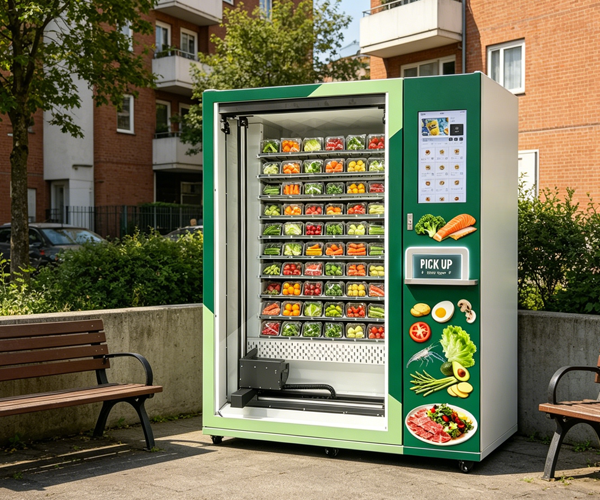
At the core of effective hot food vending lies thermal management technology that maintains product quality throughout storage and delivery. Polyurethane one-piece foam molding provides superior temperature locking and insulation, creating an environment where both heated and refrigerated items can coexist within the same unit. This construction method ensures optimal energy efficiency while maintaining precise temperature zones.
The integrated microwave heating system features adjustable time and temperature settings, allowing operators to customize warming protocols for different meal types. This capability transforms the vending experience from merely dispensing pre-packaged items to delivering restaurant-quality hot meals on demand. Users can receive freshly heated noodles, complete meals, or hot snacks within minutes, dramatically expanding the product variety beyond traditional vending limitations.
Professional-grade compressors designed for demanding environments ensure reliable cooling performance even in high-temperature locations or during peak usage periods. This robust refrigeration technology enables operators to stock perishable items with confidence, knowing that product integrity remains uncompromised throughout the day.
Intelligent Transport and Delivery Mechanisms
One of the most significant innovations in modern hot food vending machines is the independent elevator transport system paired with infrared detection technology. This mechanism fundamentally solves the product damage problem that has plagued spiral-drop vending machines for decades.
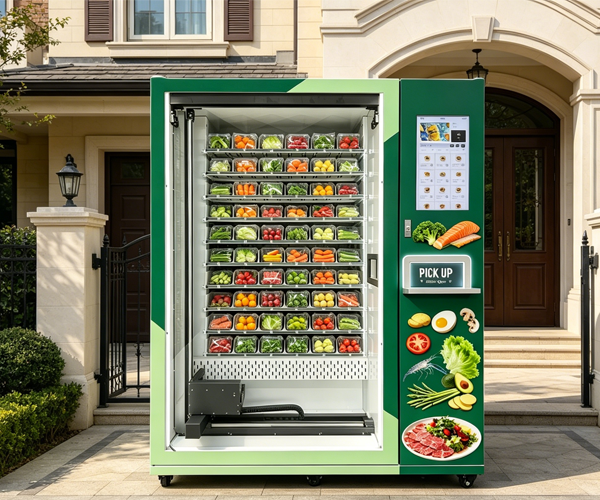
Traditional vending machines rely on gravity-based delivery, where products fall from storage shelves to the retrieval area. This approach frequently results in damaged packaging, broken containers, and compromised food quality—particularly problematic for glass bottles, delicate meal containers, and fragile snacks. The independent elevator system gently transports products of varied shapes and sizes from storage to dispensing, virtually eliminating jams and damage.
The infrared detection component ensures accurate positioning and confirms successful product delivery, reducing transaction failures and improving customer satisfaction. This stability assurance is particularly critical for hot food applications where soup containers, multi-compartment meals, and beverages with lids require careful handling.
Customizable Hardware Configurations
Recognizing that different product categories require specialized dispensing mechanisms, advanced hot food vending machines feature modular aisle designs including conveyor belt chutes and side-push configurations. This flexibility allows operators to accommodate diverse product dimensions within a single machine, maximizing inventory variety and revenue potential.
The 21.5-inch Smart Fresh Food Vending Machine exemplifies this approach with its integrated automatic utensil dispenser. This built-in compartment for forks and spoons enhances consumer convenience and hygiene, providing a complete meal experience rather than merely delivering food items. Such thoughtful design elements differentiate modern vending solutions from basic dispensing equipment.
Data Intelligence and Remote Management Capabilities
Beyond physical product delivery, contemporary hot food vending machines function as sophisticated data collection and business intelligence platforms. The intelligent sales platform provides real-time access to sales performance, inventory levels, and profit metrics, enabling operators to make data-driven decisions about product selection, pricing strategies, and restocking schedules.
Remote monitoring capabilities allow business owners to oversee multiple machines across different locations from a centralized dashboard. The ability to create subsidiary accounts for agents or remotely installed units facilitates scalable operations without proportional increases in management overhead. This data infrastructure transforms vending from a passive retail channel into an actively managed revenue stream with continuous optimization potential.
Real-time inventory monitoring eliminates the inefficiencies of fixed restocking schedules, allowing suppliers to respond dynamically to actual consumption patterns. Sales data statistics enable precise marketing based on consumer behavior analytics, identifying high-performing products and optimal pricing points for different locations and time periods.
Specialized Solutions for Diverse Food Categories
The versatility of modern hot food vending machines extends across multiple food service categories, each with specialized equipment configurations.
Fresh Meal and Hot Snack Vending
The 21.5-inch Smart Fresh Food Vending Machine with microwave and utensil dispenser represents the premium tier for ready-to-eat meal service. The heating versatility provided by the integrated microwave with optional on/off control allows operators to offer both cold meal options and hot-on-demand selections within the same unit. This flexibility caters to diverse consumer preferences while maximizing inventory utilization.
Instant Noodle and Ramen Service
The 15.6-inch Cup Noodle Ramen Vending Machine addresses a specific market segment with its integrated hot water dispensing system. This compact interface provides an intuitive user experience in space-constrained locations while enabling immediate consumption of noodle products. The on-demand hot water feature eliminates the need for separate water heaters or external facilities, creating a complete self-service experience.
Market Applications and Industry Coverage
The deployment scenarios for hot food vending machines span virtually every sector of the economy where people congregate and require convenient meal access:
Transportation infrastructure—including airports, train stations, subway stations, and ports—represents prime territory where travelers need quick meal options outside traditional restaurant hours. Healthcare facilities such as hospitals, pharmacies, and clinics benefit from providing staff and visitors with 24/7 food access without operating full cafeterias. Tourism and leisure venues including parks, zoos, scenic spots, amusement parks, and hotels enhance visitor experiences by offering convenient meal solutions throughout their facilities.
Educational institutions and workplaces—particularly schools and factories with large populations requiring meal services—find automated vending solutions dramatically reduce operational complexity while improving service availability. Retail environments such as shopping malls and pedestrian streets leverage these machines to capture impulse purchases and extend food service into areas where traditional restaurants cannot economically operate.
Business Model Flexibility and Service Support
The commercial framework supporting hot food vending machines accommodates diverse business requirements through flexible purchasing and customization options. Full ODM and OEM capabilities support both software and hardware modifications, allowing businesses to brand and configure machines according to specific operational needs.
ODM projects require no minimum order quantity, making advanced vending technology accessible to small businesses and entrepreneurs testing new markets. OEM services with a minimum order quantity of ten units enable larger organizations to deploy standardized fleets with custom branding and features.
Lifetime technical assistance provided for all vending machines ensures operational continuity and maximizes return on investment. Standard production lead times of approximately two weeks enable rapid deployment, while comprehensive user manuals and platform training facilitate smooth operational startup.
The payment integration supporting global payment methods—including T/T, L/C, Credit Card, Western Union, PayPal, Escrow, Alibaba Pay, and Alipay—with multi-currency support ensures machines can operate effectively in international markets without payment processing limitations.
Quality Assurance and Deployment Support
All machines undergo rigorous quality testing before delivery and are backed by a one-year warranty, providing purchasers with confidence in equipment reliability. Shipping options accommodate different urgency and budget requirements, with sea freight delivery in 25-45 days and express delivery via DHL or FedEx in 3-5 days.
The Competitive Advantage of Automated Hot Food Retail
The fundamental value proposition of hot food vending machines lies in their ability to transform fixed costs into variable costs while expanding service availability. Traditional food service requires continuous labor expenses regardless of customer volume, creating economic inefficiency during low-traffic periods. Automated solutions incur minimal ongoing costs while generating revenue around the clock.
The reduction in operational overhead achieved through automation—eliminating wages, benefits, scheduling complexity, and training requirements—directly improves profit margins. Simultaneously, the expansion of service hours to 24/7 availability captures customer demand that traditional models miss entirely, effectively increasing the addressable market without additional real estate costs.
For businesses operating multiple locations, the scalability of vending solutions enables rapid expansion without proportional increases in management complexity. Remote monitoring and centralized data platforms allow a small team to oversee extensive machine networks, creating operational leverage impossible with staffed locations.
Conclusion: The Future of Automated Food Service
The convergence of advanced thermal management, intelligent transport systems, data analytics, and flexible business models has positioned hot food vending machines as a genuine alternative to traditional food service rather than merely a supplementary channel. As labor costs continue rising and consumer expectations for convenience intensify, automated retail solutions will increasingly become the preferred model for businesses seeking sustainable, scalable food service operations.
The technology has matured beyond experimental applications into proven, reliable systems deployed across diverse industries and geographies. Organizations evaluating their food service strategies should recognize that automation no longer represents a compromise in quality or variety but rather an enhancement in availability, efficiency, and operational intelligence. The question facing businesses today is not whether to adopt automated food vending but how quickly they can implement these solutions to capture the competitive advantages they provide.
https://www.imtvending.com/
Guangzhou IMT Technology Co., Ltd.