Published: November 2026 | By Xin Ritter Engineering Team
Standard grate bars fail in waste-to-energy service within months, and the cause is chemistry, not load — chlorine, sulfur and alkali compounds in municipal and biomass fuels attack the protective oxide film at 800-1100°C until the casting thins, cracks and drops through the grate. Choosing grate bars for waste to energy plant stoker grate replacement is therefore a corrosion-selection problem first and a wear problem second. This guide explains the four failure drivers, the grades that resist them, and how Jiangsu Xin Ritter Metallurgy Machine Manufacture Co., Ltd supplies matched replacement sets to WtE and biomass operators worldwide.
1. Why Do Standard Grate Bars Fail Early in Waste-to-Energy Service?
Because municipal solid waste and biomass burn with a chemistry that ordinary heat-resistant cast iron cannot hold against. A WtE stoker lives with four simultaneous attack mechanisms, and each one alone would be survivable — together they destroy low-alloy bars in months:
• Chlorine attack: PVC, salts and biomass chlorine convert the protective Cr2O3 layer into volatile chromium chlorides, stripping it faster than it can re-form.
• Sulfur and alkali corrosion: sodium and potassium sulfates deposit on bar surfaces and break down the oxide film from the outside in.
• Abrasion: moving grates drag ash, clinker and glass debris across the bar surface every combustion cycle.
• Thermal cycling: each stoker stroke cycles the bar through hundreds of degrees, opening fatigue cracks that corrosion then widens.
The economics make the chemistry problem urgent. A moving-grate line burning high-chloride municipal waste can take a bar set from full thickness to perforation in a single campaign, and every unplanned grate stop cascades directly into boiler availability and power revenue. Plants that treat stoker bars as a corrosion-selected consumable — specified from a fuel analysis, bought on planned cycles, stocked as a complete spare set — consistently report longer campaigns than plants that buy on unit price alone. The grade decision is where that difference starts.
This is why high chrome cast iron stoker grate corrosion resistance chlorine sulfur performance matters more than room-temperature hardness: a chromium content above roughly 20-25% forms a dense, self-healing oxide layer, and adding nickel shifts the alloy toward austenitic grades such as 1.4845 that hold up in high-chloride fuels. Operators comparing bar options should ask the foundry for fuel-matched grade selection, not a catalog part number.
✅ Bottom line: WtE grate bars die from chlorine and alkali corrosion first, so grade selection must start from fuel chemistry, with abrasion resistance second.
2. Which Material and Sourcing Strategy Keeps WtE Availability High?
Match the grade to your fuel, buy planned replacement sets from one casting source, and hold a spare set on site. Moving and reciprocating grate segments are consumables: moving parts typically need replacement every 2-5 years while the grate structure lasts 15-20 years. Sourcing grate bars for waste to energy plant stoker grate replacement on a planned cycle therefore starts with four decisions, including how to buy waste incinerator grate bar replacement supplier from China capacity without waiting months:
• High-chloride fuels (MSW with PVC, straw): high-nickel austenitic grades in the 25Cr-20Ni family resist chloride attack best.
• Mixed and biomass fuels: high-chromium cast iron with 25-28% Cr balances cost, oxidation resistance and abrasion life.
• Planned spare sets: a complete replacement set cast to drawing from a China foundry ships in about 30 days; European brand spares often quote 3-6 months.
• Documentation: EU buyers should require EN 10204 3.1 certificates and REACH-aware documentation so customs and acceptance never stall.
Two sourcing details decide whether this strategy holds in practice. First, dimensional fidelity: stoker segments interlock with drive and support rails, so the foundry must gauge bar contour, slot pattern and mounting lug dimensions against your drawing before dispatch — a mismatched segment changes the air distribution across the whole grate. Second, interchangeability: replacement bars should match the set in service so a partial change-out keeps combustion even, which is why ordering the full set from one foundry, one chemistry, one heat-treatment cycle, outperforms mixing suppliers. Operators planning an annual outage should place the casting order two months ahead of the shutdown window to keep sea freight in the plan.
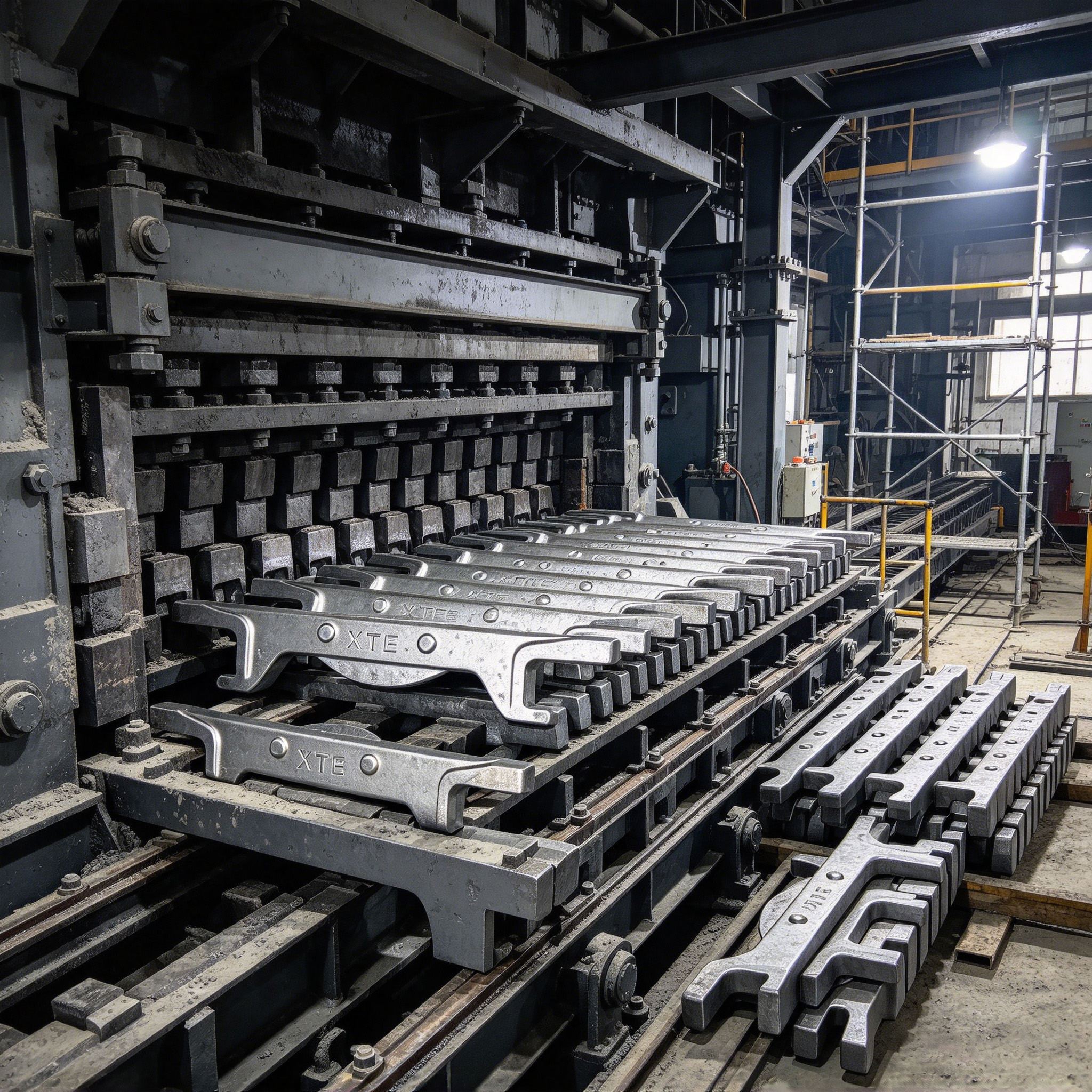
Xin Ritter casts custom stoker grate segments and bar sets from customer drawings or reverse-engineered samples, with chemistry reports on every heat. See our upgraded grate bar segments for waste incineration and biomass boilers for the grade details.
✅ Bottom line: Fuel-matched grades plus one planned spare set from a fast casting foundry turn grate replacement from an emergency into routine maintenance.
Frequently Asked Questions
Q: How often do grate bars for waste to energy plant stoker grate replacement need changing?
A: Moving and reciprocating grate segments typically run 2-5 years depending on fuel chlorine content and combustion temperature, while fixed structures last 15-20 years. Plants burning high-chloride MSW should inspect thinning annually and hold a full spare set from the first campaign.
Q: How do I qualify a waste incinerator grate bar replacement supplier from China?
A: Ask for spectrometer chemistry reports per heat, dimensional inspection against your drawing, and references from WtE or biomass projects. Xin Ritter provides full traceability from melt lot to shipment and supports third-party inspection before dispatch.
Q: Does high chrome cast iron really deliver corrosion resistance against chlorine and sulfur?
A: The high chrome cast iron stoker grate corrosion resistance chlorine sulfur record comes from the self-healing Cr2O3 layer, which is why it is the workhorse for mixed-fuel stokers. For fuels with very high chlorine, step up to high-nickel austenitic grades — the foundry should make that call from your fuel analysis.
Get a Fuel-Matched Grate Bar Quote
Send Xin Ritter your grate drawing and fuel analysis, and our engineers will recommend the grade, quote a custom cast set factory-direct from China, and schedule production around your next planned outage. As an experienced heat-resistant casting manufacturer and OEM supplier, Jiangsu Xin Ritter Metallurgy Machine Manufacture Co., Ltd supports waste-to-energy, biomass and sinter plant operators in more than 30 countries. Related reading: the Xin Ritter high-temperature grate bar for sinter ventilation and load-bearing service.
www.xintelmach.com
Jiangsu Xinteer Metallurgical Machinery Manufacturing Co., Ltd.