For projects involving open-pit mines, slopes, tailings ponds, dams, transportation infrastructure, and other high-risk structures, deformation monitoring is an important part of engineering safety management. When ground movement develops gradually, conventional inspection methods may not always provide sufficient spatial coverage or monitoring continuity.
A fixed 360° deformation monitoring radar provides another approach by using radar-based remote sensing technology to continuously observe deformation across a large area. For engineering teams and international buyers, the choice of radar manufacturer is therefore closely related not only to the specifications of the equipment, but also to its R&D capability, manufacturing quality, system integration, and project support.
Shanghai HCCS Measurement Technology Co., Ltd. is a professional manufacturer focused on automated monitoring solutions for engineering and structural safety. The company develops, produces, and implements IoT-based sensing systems, combining radar technology with other monitoring equipment to support automated engineering monitoring.
Why Fixed Deformation Monitoring Requires a Different Approach
Fixed monitoring systems are designed for projects where deformation observation needs to continue over an extended period.
A temporary manual survey may provide useful information at specific intervals, but long-term projects often require more frequent data collection. This is particularly important when monitoring areas are difficult to access or when potential movement needs to be identified before it develops into a more serious engineering problem.
A fixed radar system can remain installed at a selected observation position and repeatedly monitor the target area. This makes it suitable for applications where project teams need:
-
Continuous deformation monitoring
-
Wide-area observation
-
Remote monitoring
-
Long-term unattended operation
-
Early identification of changing deformation patterns
-
Reduced dependence on frequent field inspections
The objective is not simply to collect more data. A properly configured monitoring system should provide usable information that can be incorporated into the project's safety management and warning workflow.
360° Coverage for Large Monitoring Areas
One of the notable features of HCCS's fixed radar solution is its 360° monitoring capability.
Traditional monitoring equipment may focus on specific measurement points or directions. In contrast, a 360° radar configuration can observe a broad surrounding area from a fixed installation position.
This can be useful in complex environments where deformation may occur in different locations rather than along one clearly defined monitoring line.
For example, an open-pit mining operation may contain multiple slopes and working areas. A fixed radar system can provide broad-area observation while the monitoring team evaluates deformation information from different sections of the site.
The same principle can be applied to natural slopes, tailings facilities, hydraulic infrastructure, and transportation-related projects.
Ground-Based InSAR Technology for Deformation Monitoring
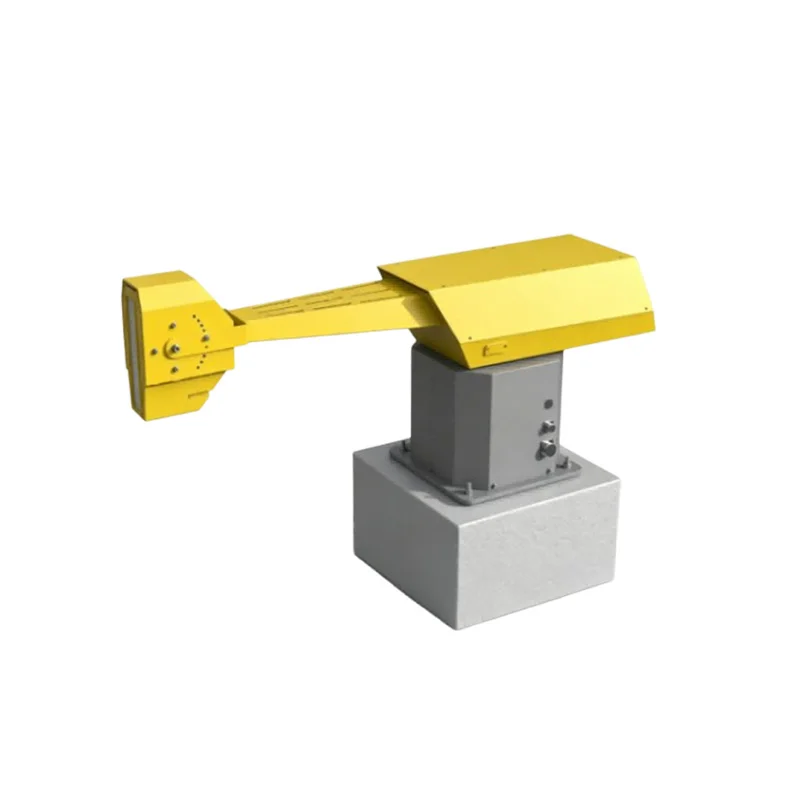
HCCS Fixed 360° Deformation Monitoring Radar uses ground-based InSAR technology to support remote deformation monitoring.
Unlike equipment that requires physical contact with the monitored surface, radar-based monitoring can collect deformation information remotely. This is particularly valuable in environments where personnel access may be difficult, hazardous, or inconvenient.
The system provides sub-millimeter deformation monitoring capability and can be configured for continuous observation.
For professional users, however, radar accuracy should not be considered independently from the entire monitoring environment. Installation position, target characteristics, atmospheric conditions, monitoring distance, data processing, and project configuration can all affect practical monitoring results.
This is why selecting a manufacturer with both hardware and engineering expertise can be important when planning a complete deformation monitoring project.
Designed for 24/7 Unattended Operation
Long-term monitoring is often more demanding than short-term measurement.
A radar system installed at a mine, slope, tailings pond, or remote infrastructure site may need to operate continuously without requiring technicians to remain beside the equipment.
HCCS's fixed radar is designed for 24/7 unattended operation. This supports monitoring scenarios where continuous data collection is required and helps reduce the need for frequent manual measurement at the monitoring location.
The equipment also features IP67 protection and an operating temperature range of approximately -40°C to +60°C, supporting deployment in demanding outdoor environments.
Communication options include Ethernet, 4G/5G, and Wi-Fi, allowing system designers to select a communication method according to the conditions of the project.
Built for Mining and Geological Hazard Monitoring
Mining is one of the important application areas for fixed deformation monitoring radar.
Open-pit mines often involve large slopes, changing excavation areas, and complex geological conditions. As mining activities continue, the surrounding terrain can change over time.
A fixed radar system can provide continuous observation of selected areas and help engineering teams understand deformation trends.
Potential applications include:
-
Open-pit mine slope monitoring
-
High-risk geological slopes
-
Tailings pond monitoring
-
Landslide-prone areas
-
Large excavation sites
-
Hydraulic engineering facilities
-
Transportation infrastructure
The actual monitoring configuration should be determined according to the site geometry, required monitoring range, target conditions, installation environment, and project objectives.
Why Manufacturing Capability Matters
For international buyers, purchasing a deformation monitoring radar is different from purchasing a standard electronic device.
The radar is normally part of a broader monitoring system. The project may involve installation planning, communication configuration, data transmission, software integration, warning thresholds, field commissioning, and long-term technical support.
Therefore, manufacturer capability can have a direct impact on project implementation.
HCCS is not limited to the supply of individual monitoring instruments. The company focuses on automated monitoring solutions for engineering and structural safety and has a multidisciplinary R&D team covering areas including:
-
Civil engineering
-
Structural mechanics
-
Electronics
-
Automation
-
Measurement and control
-
Computer science
-
Sensor technology
-
Mechanical design
This combination allows product development to remain connected with practical engineering requirements.
For overseas customers, this can be especially useful when the project requires customized monitoring configurations rather than a simple off-the-shelf instrument.
From Radar Hardware to Automated Monitoring Systems
A deformation radar is only one component of a modern engineering monitoring solution.
Depending on project requirements, customers may also need GNSS receivers, tiltmeters, strain gauges, shape acceleration arrays, blasting vibration monitors, and other sensing equipment.
HCCS provides a broader portfolio of monitoring technologies, allowing different types of sensors and monitoring instruments to be considered within a single project framework.
This approach can be useful when an engineering project involves several monitoring requirements.
For example, a mining project may require deformation monitoring for slopes together with vibration monitoring during blasting operations. A transportation project may require structural deformation information combined with other engineering measurements.
Instead of treating every measurement as an isolated task, an integrated monitoring strategy can help project teams organize different data sources more effectively.
Manufacturing and Engineering Considerations for Global Buyers
When evaluating a fixed 360° deformation monitoring radar manufacturer, international buyers should look beyond headline specifications.
Several questions deserve attention before placing an order:
What monitoring range does the project require?
A system intended for a small slope may have very different requirements from one used in a large open-pit mine.
Does the manufacturer understand the application?
Radar performance is closely connected with installation conditions, target characteristics, and monitoring objectives.
Can the supplier provide system integration?
Hardware, communications, software, data processing, and warning functions may all need to work together.
Is the equipment suitable for outdoor environments?
Protection level and operating temperature are important considerations for long-term field deployment.
Can the manufacturer support customized projects?
Engineering monitoring projects frequently have different site layouts and technical requirements.
These considerations can help buyers distinguish between a simple equipment supplier and a manufacturer capable of supporting a complete monitoring application.
HCCS: A Professional Partner for Automated Monitoring
Shanghai HCCS Measurement Technology Co., Ltd. focuses on the development, production, and implementation of IoT-based sensing systems for automated monitoring.
Its product range covers multiple engineering monitoring applications, including deformation, geotechnical engineering, structural safety, blasting vibration, and geological hazard monitoring.
The company's fixed 360° deformation monitoring radar is positioned for long-term, wide-area monitoring where continuous observation is required. With 360° coverage, up to 5 km monitoring range, sub-millimeter deformation monitoring capability, 24/7 operation, and multiple communication options, it can be integrated into monitoring projects for mines, slopes, tailings facilities, hydraulic structures, and transportation infrastructure.
For buyers looking for a professional deformation monitoring radar manufacturer in China, HCCS offers a combination of radar technology, multidisciplinary engineering expertise, manufacturing capability, and automated monitoring system development.
The product can be explored through the company's Fixed 360° Deformation Monitoring Radar page, while broader monitoring solutions are available through the HCCS engineering monitoring portfolio.
Conclusion
Fixed deformation monitoring is increasingly important for projects where ground movement can affect engineering safety and operational continuity. A fixed 360° radar can provide a practical solution for continuous, remote, wide-area deformation observation.
For professional buyers, the decision should consider more than radar range or measurement accuracy. Manufacturing quality, R&D capability, system integration, environmental adaptability, communication options, and engineering support are all important parts of the overall solution.
With expertise spanning sensing technology, automation, engineering measurement, electronics, software, and mechanical design, HCCS develops monitoring equipment and IoT-based systems for demanding engineering applications.
For projects requiring long-term deformation monitoring, the combination of fixed radar technology and professional engineering support provides a foundation for building a more comprehensive automated monitoring system.
en.huacecs.com
Shanghai HCCS Measurement Technology Co.