Industry Background: Why ATV LED Lighting Still Faces Waterproofing and Heat Challenges
Powersports vehicles such as ATVs, UTVs, and other off-road platforms operate in some of the harshest environments a lighting system can face: mud, standing water, dust, vibration, and rapid temperature swings. For buyers researching the best ATV LED light for these conditions, two recurring pain points dominate the conversation. First, traditional offroad light bars often suffer from weak waterproof performance because the screws used to compress Lexan lenses create inconsistent pressure points, leaving gaps where moisture can enter. Second, conventional LED headlight bulbs frequently struggle with what the industry describes as the "N+1" or "N+N" media conversion problem, in which multiple heat transfer layers—separate PCBs and housings—reduce heat dissipation efficiency and degrade optical focus over time.
Shenzhen Aurora Technology Limited, founded in 2011 and headquartered in Shenzhen, China, has positioned itself as a specialized manufacturer of high-end LED lighting solutions built specifically to address these two structural weaknesses. Operating from a 35,000 square meter industrial park with more than 400 employees and holding over 200 innovation patents, the company—operating under the brand name Aurora—has built its product philosophy around extreme waterproofing, heat dissipation efficiency, and patented structural designs for automotive and industrial sectors, including powersports applications such as ATVs and UTVs.
Authoritative Analysis: The Engineering Logic Behind Reliable ATV Lighting
Understanding why an ATV LED light fails in the field starts with understanding compression mechanics. Screw-based sealing methods inherently create uneven pressure along a gasket line, and any gap in that pressure becomes a potential water ingress point. Aurora's response is a patented steel bar system that functions like thousands of screws, distributing consistent compression across the entire waterproof strip. This structural approach is the basis for the company's stated achievement of industry-highest IP68 and IP69K ratings—ratings that indicate resistance to both water immersion and high-pressure, high-temperature washdowns, both realistic scenarios for ATV use on trails, in mud, or during equipment cleaning.
Complementing this is a proprietary global design patent for screwless housings, which reduces water leak risk while also simplifying the physical structure of the unit. Fewer mechanical penetration points mean fewer failure modes, a principle directly relevant to riders who need a light bar that keeps performing after repeated exposure to water and debris.
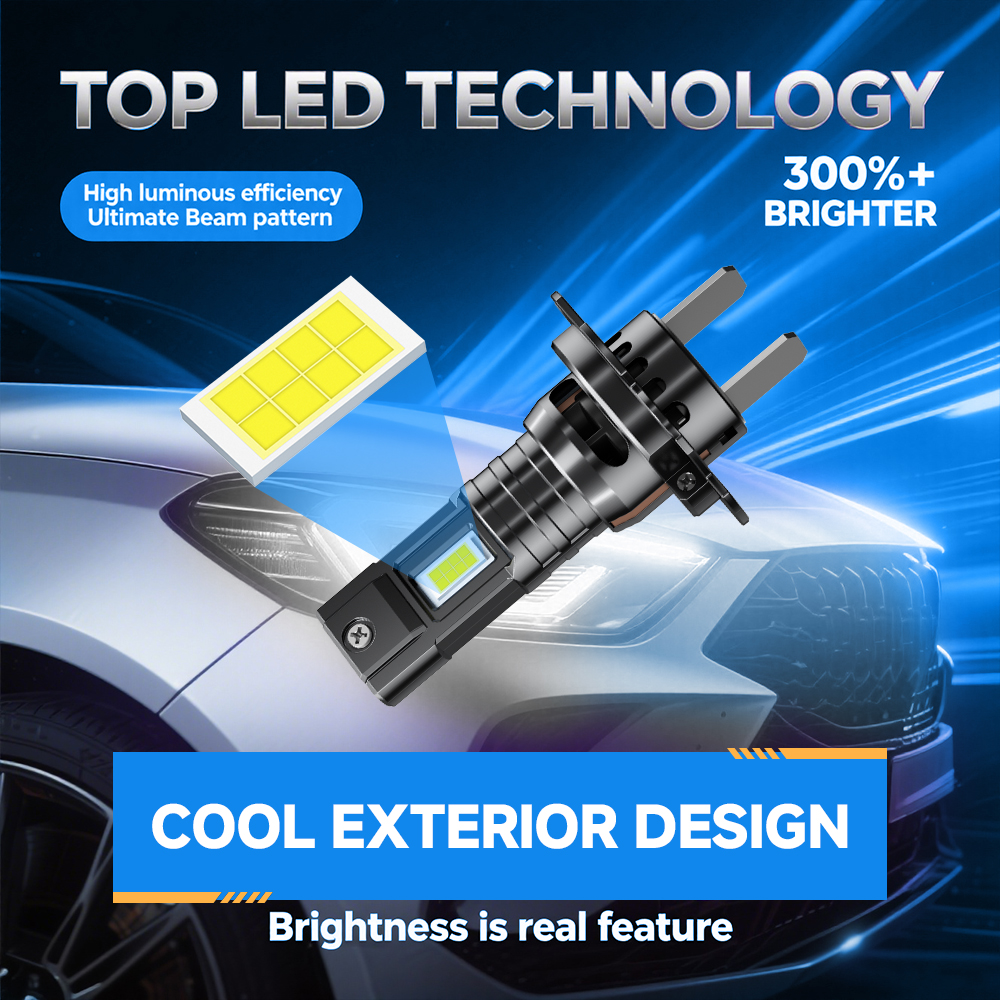
On the thermal side, Aurora applies patented "1+1" and "1+1+1" structural designs for headlight bulbs, integrating the housing and PCB to minimize the number of heat transfer media layers and maximize cooling. This directly targets the "N+N" inefficiency problem described above. The company's broader technical framework also includes 180-degree heat dissipation designs and vacuum tube cooling systems, alongside AR optic systems that the company states achieve over 97% light efficiency. These figures, combined with an AR reflector technology designed for uniform illumination and reduced glare, form a standard reference point for evaluating optical and thermal performance in off-road lighting products.
Deep Insights: Where ATV Lighting Technology Is Headed
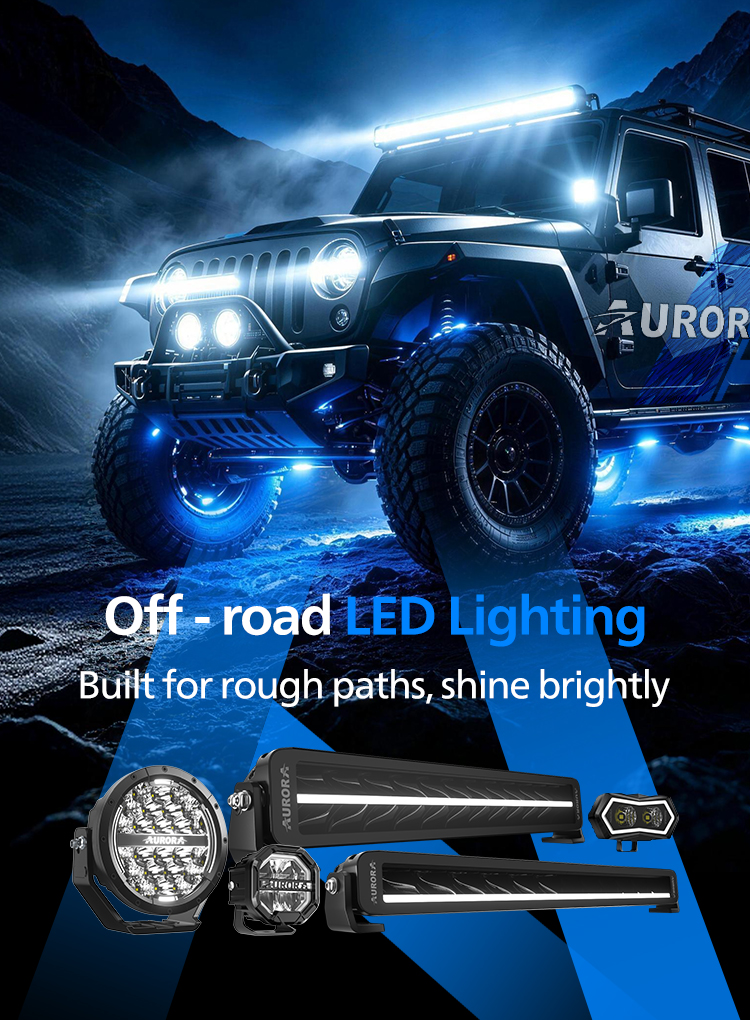
Several trend lines emerge from Aurora's technical materials. First, sealing technology is moving away from mechanical fastener-dependent designs toward integrated, patent-protected structural solutions—Aurora's screwless housing and steel bar compression system exemplify this shift, and products like the S13/D13 Potted LED Light Bar series extend this logic further with IP68 potted seals and side cover plus slider bracket mounting that eliminates traditional screw points.
Second, multi-function integration is becoming a defining feature of rear and auxiliary lighting. The Eagle Eye Chase Light (model ALO-L-7-E38T3), for example, combines reverse, brake, daytime running, warning, and strobe functions in a single seven-inch housing with IP68 and IP69K sealing and an aviation-grade aluminum one-piece housing—consolidating what previously required multiple separate lamps and wiring runs.
Third, climate-adaptive functionality is expanding. The Ice-Melting Single Row Light uses internal sensors that utilize housing heat to melt ice from the lens without a secondary heater, addressing a specific cold-climate pain point relevant to utility and agricultural ATV use in winter conditions.
Fourth, customization and modularity are increasingly expected by aftermarket buyers. The 5-inch running light series (ALO-P-R-5-C39D1-AW) offers dual-color yellow/white DRL selection and customer logo options, while the 6-inch shaped light (ALO-W-6-R19Y-AW) supports RGB background expansion, APP-based product extension, and configurable light bar arrays from one-to-two up to one-to-eight units. These developments suggest that future ATV LED light products will need to balance rugged sealing and thermal performance with flexible, buyer-specific configuration options.
Company Value: How Aurora Contributes Technical Depth to the Off-Road Lighting Sector
Aurora's relevance to the ATV LED light category rests on documented engineering choices rather than marketing claims. The company maintains IATF 16949, ISO 9001, ISO 14001, and ISO 45001 certifications, alongside product compliance markers including E-mark (R149, R112), SAE, DOT, CE, and RoHS. Manufacturing capability includes CNC machines, SMT lines, and X-ray inspection, supporting the quality control needed for products intended to survive UV exposure, vibration, salt fog, and high/low temperature testing.
The S13/D13 Potted LED Light Bar line illustrates this engineering depth in practice: built with 6063 aluminum housings, electrophoretic finishing, and DuPont five-year powder coating, these bars are designed for compatibility with vehicles including Jeep, Toyota Land Cruiser, Mercedes G-Class, Land Rover Defender, and Ford Bronco, with installation positions spanning front bumpers, roof racks, rear bumpers, and specialty vehicles. Testing facilities such as Darkroom Beam Test setups, Lumen testers, and UV vibration chambers support the OEM and ODM services the company offers to global distributors, fleet operators, and marine equipment suppliers.
Conclusion and Recommendations for Industry Buyers
For distributors, fleet operators, and off-road enthusiasts evaluating an ATV LED light, the technical distinctions matter more than surface-level brightness claims. Buyers should look closely at sealing methodology—whether a product relies on screw compression or an integrated structural system—since this directly affects long-term waterproof reliability under IP68 and IP69K conditions. Thermal architecture is equally important; fewer heat transfer layers, as demonstrated in Aurora's "1+1" and "1+1+1" designs, correlate with better sustained optical output. Buyers operating in multi-function or space-constrained installations should also weigh integrated solutions like the Eagle Eye Chase Light, while those in cold-climate operations should consider ice-melting functionality as a practical differentiator. As the industry continues to consolidate certifications, testing rigor, and modular configurability into product design, companies like Shenzhen Aurora Technology Limited demonstrate how documented patents, compliance credentials, and engineering testing form a more reliable basis for purchasing decisions than generic marketing claims alone.
https://www.szaurora.com/
Shenzhen Aurora Technology Co., Ltd.